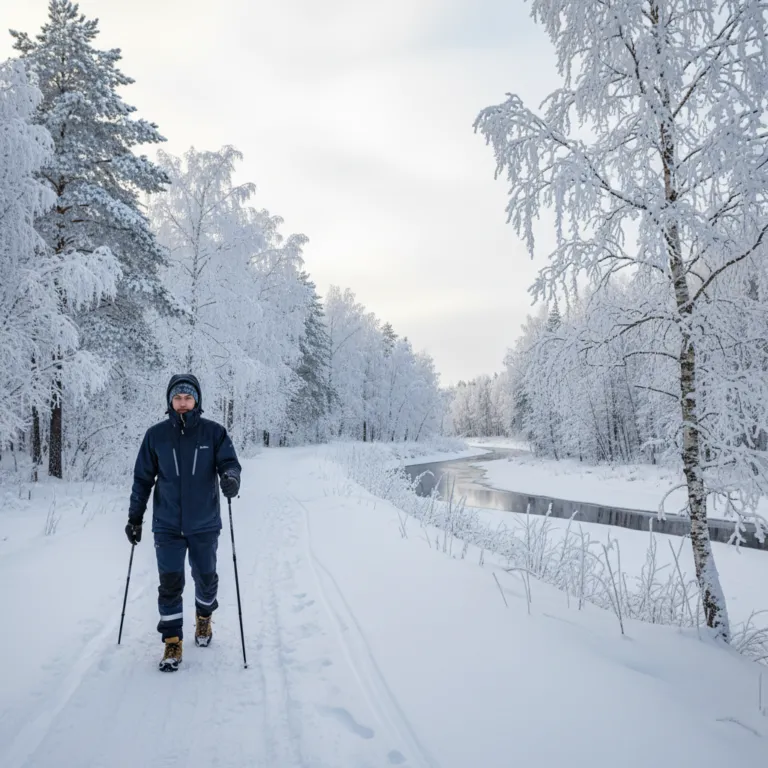
Nordic Walking Pole Straps: How to Put On, Adjust and Use Them
Nordic walking pole straps are half-glove harnesses that wrap around your hand so you can push the pole back through the strap and then open your hand behind your hip without dropping the pole. To use them, slide your hand in from below, close the strap snugly around the base of your thumb and the back of your hand, and let the strap, not your fingers, carry the force. A simple wrist loop, the kind found on trekking poles, only stops the pole from falling; it doesn’t let you release the grip.
Quick Answer
Put your hand into a Nordic walking strap from below, fasten it snug but not tight around the thumb and the back of the hand, and push the pole back through the strap with the heel of your hand. Close your hand lightly as the pole plants and open it as your arm passes your hip; the strap keeps the pole with you.
- Glove strap vs loop: a glove-style strap lets you open your hand; a basic loop makes you hold on the whole time.
- Left and right: most Nordic straps are shaped for one hand and are often marked L and R.
- Fit test: with your hand fully open, the pole should hang from the strap and stay under control.
- Biggest mistake: clamping the handle (“white-knuckle grip”) instead of pushing through the strap.
- Trekking straps are different: hand up through the loop from below, then grip over the strap.
How Do Nordic Walking Pole Straps Work?
In Nordic walking the pole is a pushing tool, not a cane. The International Nordic Walking Federation (INWA) describes poles used “diagonally behind the body,” and its public technique page notes that the strap lets the hand open naturally while it stays connected to the pole.
Pellegrini and colleagues (PLoS One, 2018) list a “grasp/release” hand pattern among the INWA-style criteria, and every deviation from that standard technique they tested gave lower muscle activation and energy use.
There are three common strap designs:
| Strap type | Where you find it | Can you open your hand? | Best for |
|---|---|---|---|
| Basic wrist loop | Trekking poles, budget “walking sticks” | Not really; you have to keep holding the handle | Hiking, balance, rough terrain |
| Glove-style (half-glove) strap | Dedicated Nordic walking poles (Exel, Swix, LEKI and others) | Yes, the pole hangs from the strap | Nordic walking on paths and pavement |
| Click-in glove system | Premium Nordic poles (for example LEKI’s Trigger and Shark systems) | Yes, and the strap can unclip from the handle | Frequent walkers who take poles on and off often |
Our poles buying guide ranks the strap as the single most important feature for technique, ahead of shaft material.
How to Put On Nordic Walking Pole Straps, Step by Step
The thumb loop confuses many beginners. Here is the usual sequence for a glove-style strap:
- Find left and right. Look for an L or R marking on the strap or grip.
- Open the strap fully. Undo the hook-and-loop tab (or detach the strap if your poles have a click-in system).
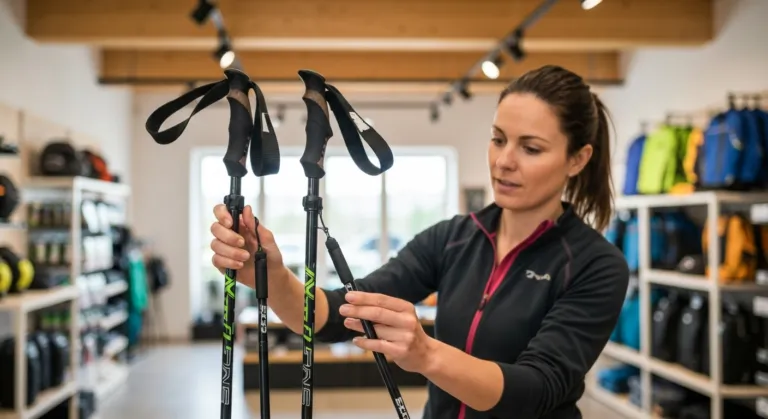
- Slide your hand in from below. Your fingers go through the main opening and your thumb through the thumb loop, the way cross-country skiers put on their straps. Don’t drop your hand in from the top.
- Close the strap. Wrap the tab around the back of your hand and fasten it so the strap sits around the base of the thumb and across the back of the hand, not tight on the wrist bones.
- Click in (click-in systems only). Push the strap’s clip into the top of the handle until it locks. A button or lever on the grip releases it again.
- Take hold lightly. Wrap your fingers loosely around the handle. Then let go completely: the pole should hang from the strap, angled slightly back.
With click-in systems you can leave the straps on your hands and simply unclip the poles at a gate or café stop.
How to Adjust Walking Pole Straps
Most glove straps adjust with a hook-and-loop tab. Stand with the pole planted slightly behind you and run these checks:
- Open-hand test: open your fingers wide. The handle should stay close to your palm instead of swinging away, and you should be able to close your hand on it again without fumbling.
- Push test: press back through the strap with the heel of your hand. You should feel the pressure spread across the strap, not in one spot on the wrist.
- Circulation test: after a few minutes of walking your fingers shouldn’t feel cold, pale, numb or tingly. If they do, loosen the strap. Our buying guide warns that some low-quality budget straps can restrict blood flow.
- Glove test: if you walk in gloves in winter, adjust the strap while wearing them. A strap set for a bare hand will feel far too tight over a glove.
Adjusting LEKI pole straps works the same way. On LEKI’s Trigger and Shark systems, the strap itself is fitted with its tab and then clicked into the handle, so adjust the strap first and click in second. If the handle still feels wrong, check your length with our pole length calculator.
Why Does the Hand Open Behind the Hip?
The Nordic walking arm action is a long swing from the shoulder. The pole plants angled back, you push it back past your hip, and at the end of the push your hand opens. Coaching sources agree: LEKI tells walkers to open the hand completely on the follow-through, and INWA instructors at Bristol & Bath Nordic Walking teach an active release, pressing the heel of the hand through the strap.
A good cue to remember is “grip in front, release behind.” Close your hand lightly as the pole plants beside your front foot, push through the strap, open your hand as your arm passes your hip, and let the strap bring the pole forward again. Relaxed fingers save your forearms, and in one r/nordicwalking blister thread a walker said they barely hold the grip and let the strap take the force.
Switch on Gripping too tight in the lab below and watch the hand close-up: the correct hand squeezes at the plant and opens behind the hip, while the fault keeps the fist closed all the way back.
For the full movement, including where the pole should land, see the GaitLab Motion Lab and our guide to the biomechanics of a perfect Nordic walking step.
How to Use Trekking Pole Straps (and Why They’re Different)
Trekking poles usually have a simple adjustable wrist loop. Used properly, it still helps. Push your hand up through the loop from below, then bring your hand down and grip the handle with the strap running between your palm and the grip. That way you can lean some weight into the strap instead of squeezing the handle. Adjust it so your hand sits comfortably at the top of the grip.
What a loop can’t do is let you open your hand and keep control of the pole. In one r/nordicwalking thread, walkers who had switched from trekking loops to Nordic glove straps said their thumb and wrist pain went away. When one Reddit user asked about loop straps with no thumb piece, an instructor replied that they won’t give full propulsion.
Loop straps still make sense on rocky mountain trails; see our Leki vs TrailBuddy comparison.
Trekking pole straps for your backpack
Many daypacks have pole loops or side compression straps for stowing poles. Folding poles such as the Leki Micro Flash Carbon (about 15 inches folded) fit inside a daypack; a telescoping pole at about 24 inches usually rides outside.
Can You Use Nordic Walking Poles Without Straps?
You can, but you lose the point of the design: without the strap you must squeeze the handle to push and can’t release behind the hip. In one elbow-pain thread a walker replied that the strap is integral to the technique. If straps hurt, fix the fit or replace them.
Do You Need Gloves for Nordic Walking?
Gloves are optional. A glove-style strap already covers part of the hand, so most walkers only need a thin, breathable liner glove in cold or wet weather, or on long walks where the strap rubs. In winter, note that an aluminum shaft can feel icy even through gloves; carbon stays more comfortable. See our Nordic walking winter tips.
Common Nordic Walking Strap Mistakes
- Putting the hand in from the top. On r/nordicwalking, a walk leader told a daughter that her mother’s straps were on wrong and could hurt her wrists in a fall. The advice was to put the hand up through the strap from below.
- Too loose or too tight. Loose straps make you grab the handle again; tight ones press on the wrist and chill the fingers.
- White-knuckle grip. Holding on hard all the way back. Our Nordic walking technique mistakes guide covers this with the other common faults.
- Pushing down instead of back. Instructors blame this, not the pole, for most elbow complaints.
Quick troubleshooting table
| What you notice | Likely cause | What to try |
|---|---|---|
| Pole swings away when the hand opens | Strap too loose | Tighten the tab one step and repeat the open-hand test |
| Numb, cold or tingling fingers | Strap too tight or pressing on the wrist | Loosen it and move the strap toward the base of the thumb |
| Blisters on the palm or fingers | Gripping the handle instead of pushing through the strap | Relax the fingers; push with the heel of the hand; try a thin glove |
| Rubbing at the thumb | Left and right swapped, or the strap is the wrong size | Check the L/R markings; try a different strap size |
| Sore wrist or thumb with trekking poles | Loop strap forces a constant grip | Try poles with glove-style straps |
If pain is new or severe, or comes with swelling, numbness or tingling that doesn’t go away when you loosen the strap, stop and see a doctor or physiotherapist. Readers with arthritis or earlier hand and wrist injuries should check with a professional before changing their technique.
Replacement Straps for Walking Poles
Sweat salt slowly breaks down strap webbing, so our best Nordic walking poles guide recommends rinsing straps in cold water and air-drying them, never leaving them wet in a bag.
When you buy replacement wrist straps, including LEKI replacement straps, match the system, not just the brand. Click-in straps are made for particular handles and generally won’t fit another brand’s grip, and they may not fit an older generation of the same brand’s system either. Check your grip model before you order, and size the strap for the gloves you walk in.
Nordic Walking Poles With Glove Strap Systems
Leki Micro Flash Carbon
Carbon fiber · Folds to 15″ · Shark grip strap system · Speed Lock+
Buy on AmazonOpens the product page on Amazon, where you can see the current price and delivery options.
Swix CT5 Carbon
High-mod carbon · EasyCross cross-strap design · Cross-country ski heritage
Buy on AmazonOpens the product page on Amazon, where you can see the current price and delivery options.
Exel Nordic Walker Carbon
Carbon blend · 65mm rubber asphalt paws included · Scandinavian Nordic walking brand
Buy on AmazonOpens the product page on Amazon, where you can see the current price and delivery options.
Not sure which suits you? Our guide on how to choose Nordic walking poles goes through length, material and strap fit.
Frequently Asked Questions
How do you put on Nordic walking pole straps?
Find the left and right strap (often marked L and R), open the tab, and slide your hand in from below so your thumb goes through the thumb loop. Fasten the tab around the back of your hand so the strap sits snugly around the base of the thumb. On click-in systems, fit the strap first, then click it into the top of the handle.
How tight should walking pole straps be?
Snug enough that the handle stays close to your palm when you open your hand fully, and loose enough that your fingers never go cold, pale, numb or tingly. Push back through the strap with the heel of your hand; the pressure should feel spread out, not concentrated on the wrist bones. Adjust with the gloves you normally wear.
What is the difference between Nordic walking straps and trekking pole straps?
A Nordic walking strap is a half-glove that holds your hand to the pole, so you can push through it and open your hand behind your hip. A trekking pole strap is a simple loop that stops the pole from falling but still needs a steady grip. Trekking loops suit rough mountain trails; glove straps suit Nordic walking.
Can I Nordic walk without straps?
You can walk with the poles, but it isn’t really Nordic walking technique. Without the strap you have to squeeze the handle to push and can’t release your hand behind the hip, which tires the forearm and can cause blisters. If the straps feel uncomfortable, adjust them or buy replacements instead of leaving them off.
Do I need special gloves for Nordic walking?
No. A glove-style strap already protects much of the hand, so a thin, breathable liner glove is usually enough for cold or wet days or long walks. Avoid bulky padded gloves because they make the strap fit badly and the hand release clumsy. Always adjust the strap while wearing the gloves you plan to walk in.
Can I replace the straps on my walking poles?
Usually, yes. Many brands sell replacement straps, but click-in straps only fit handles made for that system, and not always an older generation from the same brand. Check your grip model before you order and choose the size for your hand or glove. Poles with basic loops generally can’t take a click-in Nordic strap.