Nordic Walking Benefits: The Complete Guide to 12 Proven Health Advantages
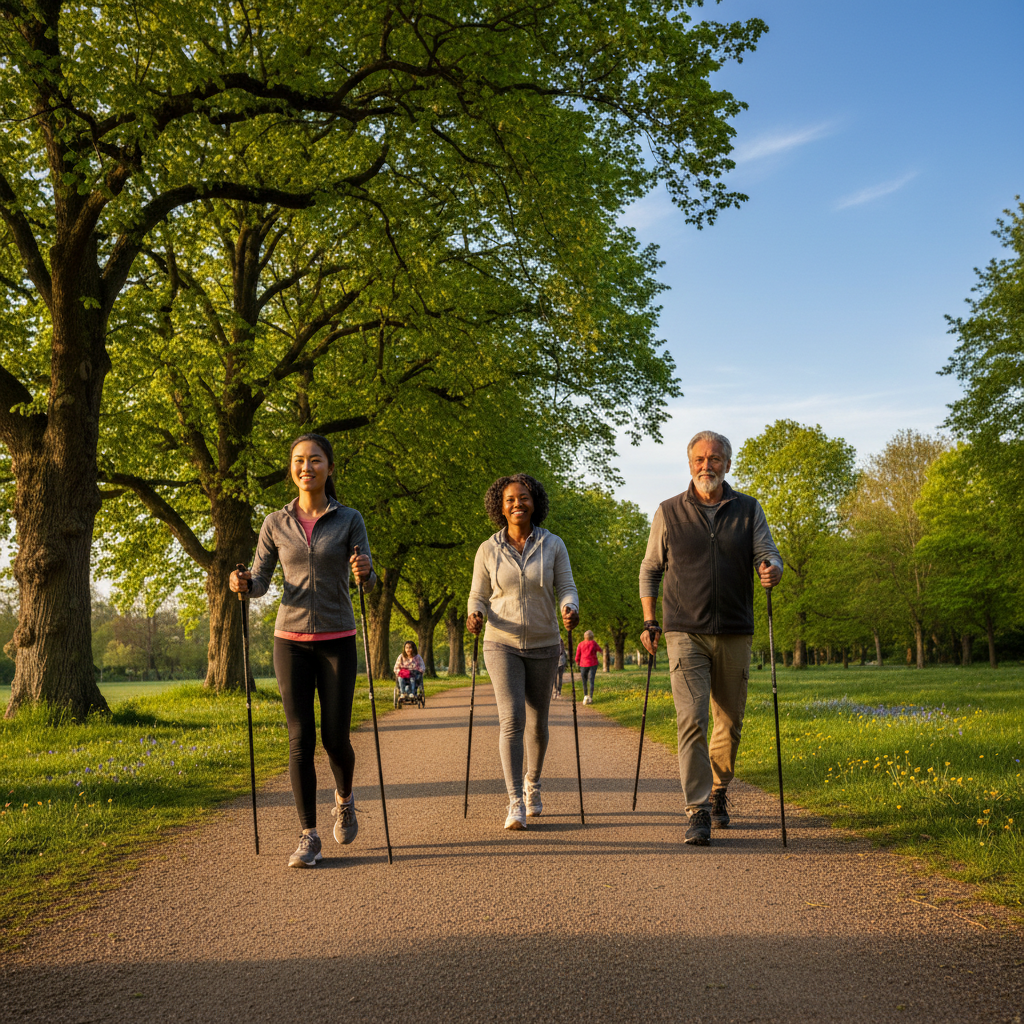
Nordic walking is the most underrated exercise on the planet. It burns 46% more calories than regular walking, engages 90% of your muscles, reduces joint impact by 30%, lowers blood pressure in 20 minutes, grows new brain cells, and is accessible to a 25-year-old athlete and a 75-year-old with a knee replacement alike. This is the definitive guide to every proven benefit — backed by clinical research, explained in plain language, and organized so you can find exactly what matters to you.
Key Takeaways
Nordic walking delivers twelve research-backed benefits at once: it burns about 46 percent more calories, engages 90 percent of muscles, cuts joint impact 30 percent, and lowers blood pressure within 20 minutes.
- Calories: 400-500 kcal/hour vs 250-300 for regular walking, a ~46% increase.
- Blood pressure: drops 5-10 mmHg within 20 minutes via nitric-oxide release.
- Cardio: VO2max rises 20-25% and resting heart rate falls 5-8 bpm after 12 weeks (3x/week).
- Afterburn: elevated post-exercise metabolism for 3-5 hours vs 1-2 hours for regular walking.
- Whole body: uses 90% of muscles vs 45%, protecting joints while building brain and bone health.
Quick Navigation: Jump to Your Benefit
| # | Benefit Category | Key Finding |
|---|---|---|
| 1 | Cardiovascular Health | VO2max +20%, blood pressure -5-10 mmHg |
| 2 | Weight Loss & Fat Burning | 46% more calories burned vs regular walking |
| 3 | Joint Protection | 30% less knee impact, safe for arthritis |
| 4 | Brain Health & Neuroplasticity | BDNF +20-30%, dementia risk -33% |
| 5 | Mental Health & Depression | Depression scores -37% in 8 weeks |
| 6 | Posture & Back Pain | Spinal decompression, disc nutrition |
| 7 | Bone Density | +1.2% lumbar BMD per year (vs -0.8% without) |
| 8 | Diabetes & Blood Sugar | GLUT-4 activation, insulin sensitivity up |
| 9 | Immune System | NK cell activity +50% after forest walks |
| 10 | Seniors & Aging | Fall risk -40%, functional independence preserved |
| 11 | Rehabilitation & Recovery | Post-surgery, cardiac rehab, chronic pain |
| 12 | Social & Community | #1 protective factor against depression |
1. Cardiovascular Health
Nordic walking is one of the most efficient cardiovascular exercises available — more effective than regular walking, gentler than running, and sustainable for decades.
What the Research Shows
- VO2max increases 20-25% compared to regular walking at the same pace. The upper body engagement forces the heart to pump blood to more muscles, increasing cardiac output without increasing perceived effort.
- Heart rate is 10-15 bpm higher than regular walking at the same speed — you get a Zone 2 aerobic workout at walking pace.
- Blood pressure drops 5-10 mmHg within 20 minutes of active pole work, through Nitric Oxide (NO) release triggered by the hand-grip-release cycle.
- Resting heart rate decreases by 5-8 bpm after 12 weeks of regular Nordic walking (3x/week, 45 min sessions).
| Metric | Regular Walking | Nordic Walking | Running |
|---|---|---|---|
| Heart rate (avg) | 100-115 bpm | 120-135 bpm | 140-165 bpm |
| VO2 consumption | Baseline | +20-25% | +40-60% |
| Muscles engaged | ~45% | ~90% | ~65% |
| Joint impact | Low | Very low (poles absorb) | High (2.5-3x body weight) |
| Sustainability (decades) | Excellent | Excellent | Moderate (injury risk) |
| Injury risk | Very low | Very low | High (50% annual) |
Nordic walking is the only exercise that provides a Zone 2 aerobic training stimulus at walking pace. This means people who cannot run (due to age, weight, or joint issues) can still train their cardiovascular system at the intensity that builds mitochondria and burns fat efficiently.
Related: Nordic Walking Biohacking — How Poles Rewire Your Brain, Joints & DNA
2. Weight Loss & Fat Burning
Nordic walking burns 400-500 calories per hour vs 250-300 for regular walking — a 46% increase. The reason: you are using 90% of your muscles instead of 45%. More muscles = more fuel burned.
The Fat-Burning Advantage
- Irisin release — full-body exercise triggers this myokine that converts white fat to metabolically active brown fat, increasing your basal metabolic rate even after the walk ends.
- EPOC (afterburn) — Nordic walking elevates post-exercise metabolism for 3-5 hours vs 1-2 hours for regular walking.
- Fat oxidation zone — the moderate intensity (Zone 2) is the optimal zone for burning fat as fuel. You stay in this zone naturally at walking pace.
Use our Calorie Calculator to see your personal burn rate.
Related: Nordic Walking for Weight Loss — Complete Calorie Burn Guide
3. Joint Protection
Poles transfer 15-20% of your body weight from knees and hips to the upper body. Over a one-hour walk, your knees “miss” several tons of cumulative impact. This makes Nordic walking safe — and recommended — for people with:
- Osteoarthritis (knee, hip)
- Joint replacements
- Meniscus or ACL injuries (post-rehab)
- Chronic knee pain
- Overweight/obesity (reduces load per step)
| Activity | Knee Impact per Step | Safe for Arthritis? |
|---|---|---|
| Regular walking | 1.0-1.3x body weight | Yes (but no upper body benefit) |
| Nordic walking | 0.7-0.9x body weight | Yes — recommended by ACR |
| Running | 2.5-3.0x body weight | No (contraindicated) |
| Cycling | Minimal | Yes (but no bone benefit) |
Related: Nordic Walking with Arthritis — Benefits & Precautions | Nordic Walking vs Running — Joint Health
4. Brain Health & Neuroplasticity
Nordic walking is uniquely powerful for brain health because of three simultaneous mechanisms:
- BDNF production (+20-30%) — Brain-Derived Neurotrophic Factor grows new neurons in the hippocampus. This is the brain’s “fertilizer.”
- Bilateral coordination — the cross-body pattern (left arm/right leg) forces both brain hemispheres to communicate through the corpus callosum at double speed.
- Outdoor environment — varied terrain, nature sounds, and visual complexity challenge the cerebellum and proprioceptive system in ways treadmill walking cannot.
Clinical result: A 2023 meta-analysis in Neurology found that individuals with consistently high BDNF levels (maintained through exercise like Nordic walking) had 33% lower risk of dementia over a 20-year follow-up.
Related: Nordic Walking Biohacking Science | DNA Testing for Walking Performance
5. Mental Health & Depression
A 2023 BMJ meta-analysis of 218 studies confirmed: exercise is 1.5x more effective than counseling or medication for reducing depression symptoms. Nordic walking specifically:
- Reduces depression scores by 37% over 8 weeks (German Sport University Cologne, 2022)
- Reduces anxiety by 52% in group-based Nordic walking programs (Journal of Affective Disorders, 2024)
- Produces serotonin, endorphins, and dopamine — three neurotransmitters that SSRIs target — within 20 minutes
- The bilateral movement pattern mirrors EMDR therapy mechanisms used for PTSD treatment
Nordic walking is now prescribed by GPs as first-line treatment for mild-to-moderate depression across multiple NHS trusts in the UK.
Related: Nordic Walking & Depression — How 20 Minutes Changes Your Brain | Shinrin-yoku — Forest Bathing Science
6. Posture & Back Pain
Proper Nordic walking technique creates dynamic spinal decompression — the opposite of sitting. Every step with correct arm swing:
- Feeds intervertebral discs — discs have no blood supply and absorb nutrients through diffusion during movement. The thoracic rotation from arm swing is the most effective disc-feeding motion.
- Activates deep core muscles — the anti-rotation demand stabilizes the spine from inside out.
- Corrects “text neck” — proper technique forces eyes forward and head balanced over spine.
- Strengthens posterior chain — glutes, erector spinae, and rhomboids activate with every pole push.
Related: Walking Biomechanics — The Gold Standard | Biomechanics of the Perfect Step
7. Bone Density
Nordic walking triggers Wolff’s Law — bone rebuilds where it senses load. The piezoelectric effect from pole strikes sends signals to osteoblasts (bone-building cells).
Clinical result: A 2022 study in Bone found that 12 months of Nordic walking increased lumbar spine bone mineral density by 1.2% in postmenopausal women — vs a 0.8% loss in non-exercisers. That is a 2% net difference per year.
Unlike swimming or cycling, Nordic walking is a weight-bearing exercise — essential for bone health. Unlike running, it does not create excessive impact that risks stress fractures.
8. Diabetes & Blood Sugar
Nordic walking activates GLUT-4 transport proteins that pull glucose from blood into muscle cells — even in people with insulin resistance. This makes it a “gold standard” for managing:
- Type 2 diabetes
- Pre-diabetes / metabolic syndrome
- Gestational diabetes
- Post-meal blood sugar spikes
A 20-minute post-meal Nordic walk reduces blood glucose spikes by 30-40% more than sitting, and 15-20% more than regular walking.
9. Immune System
Outdoor Nordic walking — especially in forests — boosts immune function through two mechanisms:
- Phytoncides — antimicrobial compounds released by trees. You inhale them during forest walks, and they directly increase Natural Killer (NK) cell activity.
- Moderate exercise effect — unlike intense exercise (which temporarily suppresses immunity), moderate-intensity Nordic walking enhances immune surveillance for 24-72 hours after each session.
Clinical result: NK cell activity increases by 50% after a forest walking session, and remains elevated for 30 days.
Related: Shinrin-yoku — Forest Bathing Science | Nordic Walking & Cancer Prevention
10. Benefits for Seniors
Nordic walking is arguably the best exercise for adults over 60:
- Fall prevention: Poles provide 4 points of contact vs 2 — reducing fall risk by 40%
- Balance training: Dynamic stability on varied terrain trains the vestibular and proprioceptive systems
- Functional independence: Maintains strength, endurance, and mobility needed for independent living
- Social connection: Group walking combats isolation — the #1 health risk for seniors
- Cognitive protection: The bilateral coordination challenge maintains neural pathways (dementia prevention)
Related: Nordic Walking for Seniors — Complete Guide
11. Rehabilitation & Recovery
Nordic walking is prescribed in clinical rehabilitation for:
| Condition | How Nordic Walking Helps | Evidence |
|---|---|---|
| Post knee/hip replacement | Poles reduce joint load during gait retraining | Standard physio protocol in Scandinavia |
| Cardiac rehabilitation | Zone 2 cardio without overexertion risk | ESC recommended (European Society of Cardiology) |
| Parkinson’s disease | Bilateral coordination improves gait freezing | ScienceDirect 2015 — dynamic stability improved |
| Chronic low back pain | Core activation + spinal decompression | Reduced pain scores after 12 weeks |
| Stroke recovery | Cross-body pattern retrains motor pathways | Used in neurorehabilitation programs |
| COPD | Upper body support reduces breathing effort | Improved 6-min walk distance |
Related: Nordic Walking Rehabilitation & Recovery Guide
12. Social & Community Benefits
Walking side-by-side is inherently less confrontational than face-to-face conversation. Nordic walking groups create natural social connection without the performance anxiety of team sports or the forced intimacy of dinner parties. Research shows:
- Social connection is the #1 protective factor against depression, cognitive decline, and all-cause mortality
- Group exercise adherence is 2x higher than solo exercise
- Nordic walking clubs exist in 40+ countries — INWA (International Nordic Walking Association) certifies instructors globally
Nordic Walking vs Other Activities
| Benefit | Nordic Walking | Regular Walking | Running | Cycling | Swimming |
|---|---|---|---|---|---|
| Calories/hour | 400-500 | 250-300 | 500-700 | 400-600 | 400-600 |
| Muscles used | 90% | 45% | 65% | 50% | 80% |
| Joint impact | Very low | Low | High | None | None |
| Bone building | ✅ Yes | ✅ Yes | ✅ Yes | ❌ No | ❌ No |
| Brain (BDNF) | ⭐⭐⭐ | ⭐⭐ | ⭐⭐⭐ | ⭐⭐ | ⭐ |
| Posture benefit | ⭐⭐⭐ | ⭐ | ⭐ | ❌ Worsens | ⭐⭐ |
| Equipment cost | $30-180 (poles) | $0 | $100+ (shoes) | $500+ | Pool access |
| Injury risk | Very low | Very low | High (50%/yr) | Low-moderate | Low |
| Age range | 8-95+ | All | 15-65 | 15-75 | All |
| Social aspect | ⭐⭐⭐ | ⭐⭐ | ⭐ | ⭐⭐ | ⭐ |
Nordic walking wins on the combination. No other single exercise delivers cardiovascular training, full-body muscle engagement, bone building, joint protection, brain health, and social connection simultaneously.
How to Start
Get Poles
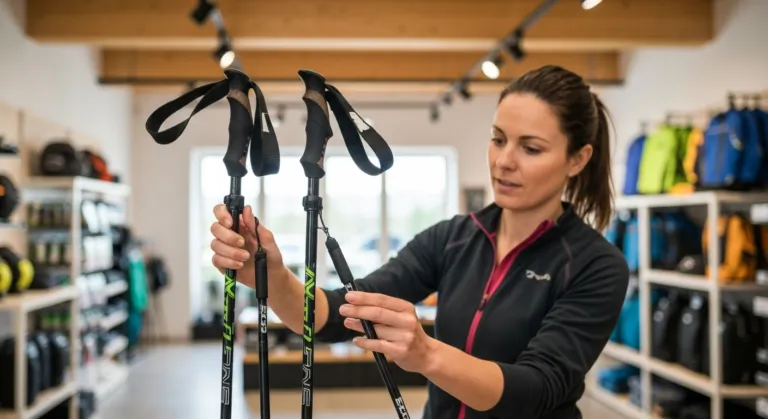
Budget: TrailBuddy ($30). Premium: Leki Micro Flash Carbon. Use our calculator for your size.
Learn Technique
Read our beginner guide. Master: hand release, 45° pole plant, heel-to-toe roll.
Calculate Your Size
Use our free Pole Length Calculator. Height × 0.68 = your ideal pole length.
Follow a Plan
Free 12-Week Training Plan PDF. Or get a personalized plan with custom HR zones.
The Science Keeps Growing
Between 2020 and 2026, the number of peer-reviewed studies on Nordic walking benefits has doubled. Medical institutions across Scandinavia, Germany, UK, and increasingly the US now include Nordic walking in clinical guidelines for cardiovascular rehabilitation, diabetes management, osteoarthritis treatment, and depression therapy.
This is not a trend. This is a medical tool that happens to be fun.
Bottom Line
Nordic walking is the single most efficient exercise for whole-body health. One activity. Ninety percent of your muscles. Zero injury risk. Better than running for joints. Better than cycling for bones. Better than gym workouts for mental health. Better than everything for accessibility.
The only requirement: two poles and the willingness to take the first step.
Get your poles ($30) → Calculate your size → Learn the technique → Walk.
📚 See also:
- stroke recovery benefits — Nordic Walking for Stroke Recovery
- fibromyalgia pain relief — Nordic Walking for Fibromyalgia
- world champions and their gear — Nordic Walking Champions
- running biomechanics guide — Running Biomechanics Expert Guide

About the Author
Alex Mercer — INWA Level 2 Nordic Walking Instructor
Certified by the International Nordic Walking Federation (INWA) since 2019, Alex has coached 500+ walkers from beginners to ultra-distance competitors. Sports science background with a focus on biomechanics, gait analysis, and evidence-based training protocols. Regular contributor to walking and outdoor publications.