Best Walking Pads & Under-Desk Treadmills in 2026 (Tested for Daily Steps)
GaitLab is reader-supported. When you buy through links on our site, we may earn an affiliate commission at no extra cost to you.
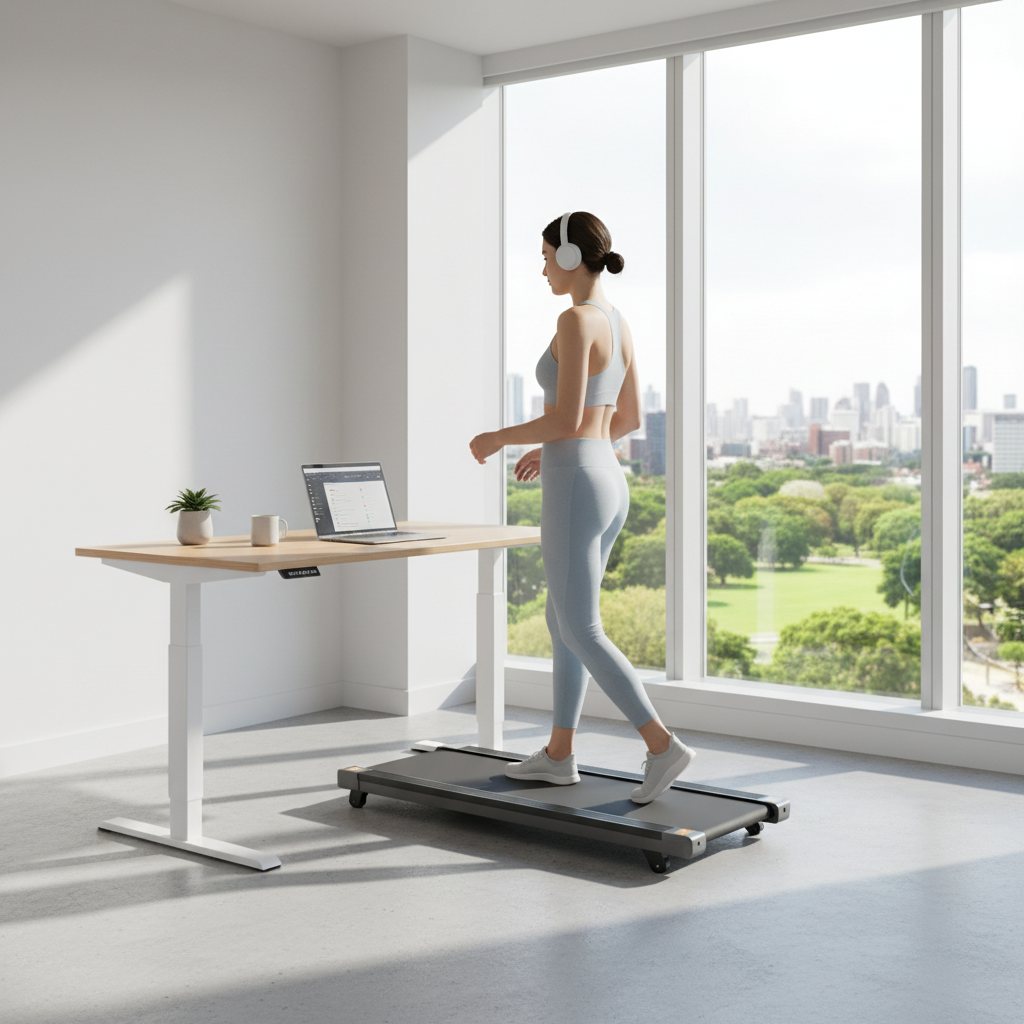
If your job keeps you glued to a chair, a walking pad is one of the simplest ways to stack up 7,000-10,000 steps without ever leaving your desk. That low-intensity movement (researchers call it NEAT, or non-exercise activity thermogenesis) may support better blood sugar control, circulation, and energy across a long workday. This guide breaks down the seven best walking pads and under-desk treadmills of 2026 — what actually matters in motor, noise, deck size, and incline, and exactly which model fits your space, weight, and budget.
Key Takeaways
- Best overall: The UREVO Under Desk Treadmill nails the sweet spot of quiet, slim, and affordable.
- Best budget: The Sperax Walking Pad 2-in-1 adds a fold-down handrail and light jogging without a big price jump.
- Aim for a deck at least ~16 inches wide and a motor of 2.0+ HP if you weigh over 200 lbs or want to jog.
- Walking pads are quiet (often under 45 dB at 2-3 mph) and slide under a couch — most under-desk models top out near 4 mph.
- Ease in gradually, mind your posture, and check with a doctor first if you have joint, heart, or balance concerns.
How We Picked & What Matters
Walking pads look interchangeable in product photos, but the daily experience varies a lot. Here’s what we weighted most when comparing models:
- Motor & weight capacity: A 1.5-2.0 HP motor handles steady walking; 2.0+ HP and a 220-300 lb capacity matter if you’re heavier or want occasional jogging. An underpowered motor strains and gets loud.
- Noise: The whole point is working while you walk. The best pads hum quietly under 45 dB at walking speed — quiet enough for calls.
- Deck size: Belt width (roughly 16-20 inches) and length determine comfort. Narrow decks feel cramped; longer ones suit taller users.
- Speed range & incline: Most under-desk pads run 0.5-4 mph. A handful add a small incline to raise intensity and engage your calves and glutes.
- Foldability & footprint: Folding decks or slim profiles store under a bed or sofa — essential in apartments.
- App & step tracking: Remote control is standard; an app with step history and speed presets is a nice motivator.
| Product | Best for | Standout | Price tier |
|---|---|---|---|
| UREVO Under Desk Treadmill | Best overall value | Quiet, slim, remote | $$ |
| WalkingPad P1 Foldable | Small spaces | Folds in half | $$$ |
| Egofit Walker Pro | Low desks | Compact + incline | $$ |
| Sperax Walking Pad 2-in-1 | Budget + jogging | Optional handrail | $$ |
| DeerRun Q1 Mini | Step tracking | App-connected | $$ |
| Goplus 2-in-1 Folding | Tight budgets | Foldable handrail | $ |
| Sole Walking Pad | Heavy daily use | Durable build | $$$ |
UREVO Under Desk Treadmill
The UREVO is the model we recommend to most desk workers because it gets the fundamentals right without overcharging. It’s slim enough to live permanently under a standing desk, runs quietly at walking speeds, and comes with a simple remote so you can nudge the pace mid-meeting without bending down. The belt is comfortable for steady 2-3 mph walking, and the LED readout keeps tabs on time, speed, and steps.
Who is it for? Anyone who wants a reliable, no-drama daily walker at a fair price. The trade-offs are honest: it’s a walking-only pad (no handrail, no real jogging), and very tall users may want a longer deck. But for the core job — racking up steps while you work — it’s hard to beat the value.
Pros
- Quiet at walking speeds
- Slim, stows under furniture
- Remote + step display
- Strong value for the price
Cons
- Walking only, no jogging
- No handrail for balance
- Deck may feel short for tall users
Price tier: $$
WalkingPad P1 Foldable
WalkingPad helped define this category, and the P1 is its small-space standout. The deck folds in half, shrinking the footprint so you can tuck it vertically in a closet or slide it behind a door — a genuine win for apartments and shared rooms. Build quality feels a notch above generic pads, and speed control via the companion app and foot-sensing modes is satisfyingly intuitive.
This premium polish comes at a premium price, and like most folding pads the maximum speed sits in the walking range rather than the jogging range. If you specifically need a unit that disappears between uses and you’re willing to pay for the brand’s refinement, the P1 earns its spot.
Pros
- Folds in half for storage
- Polished app + foot control
- Premium build quality
Cons
- Higher price
- Walking speeds only
- Narrower belt than some rivals
Price tier: $$$
Egofit Walker Pro
The Egofit Walker Pro is the pick for cramped setups and lower desks. It’s one of the most compact pads available, and crucially it adds a built-in incline — a rarity in this size class. That gentle slope lets you raise intensity and engage your calves and glutes at the same slow speed, which is a smart way to get more out of limited walking time.
Because it’s so small, the deck is short and the top speed is modest, so it’s best suited to walking rather than striding out. Taller users and faster walkers may feel boxed in. But if you sit at a low desk or just want the smallest, most fixed-position pad with an incline twist, it’s a clever choice.
Pros
- Built-in incline
- Very compact footprint
- Fits under low desks
Cons
- Short deck
- Lower top speed
- Cramped for tall users
Price tier: $$
Sperax Walking Pad 2-in-1
The Sperax is our value-forward “do more” pick. It’s a 2-in-1: use it flat under your desk for walking, or raise the included handrail when you want the stability to push the pace into a light jog. That flexibility, plus a budget-friendly price, makes it a versatile single purchase for households that want both a workday walker and an occasional cardio session.
The handrail adds reassurance for balance, but it also means a larger footprint when raised, and the unit is heavier to move than handrail-free pads. Build feel is good-not-premium. For the money, though, getting both walking and jogging modes in one machine is a strong deal.
Pros
- Optional fold-up handrail
- Light jogging capable
- Budget-friendly price
Cons
- Larger when handrail is up
- Heavier to move
- Build is functional, not premium
Price tier: $$
DeerRun Q1 Mini Walking Pad
If you’re motivated by data, the DeerRun Q1 Mini is built for you. Its app connectivity and clean step tracking make it easy to set daily goals and watch your streak grow — and seeing the numbers climb is genuinely effective at keeping you on the belt. The design is sleek and low-profile, sliding neatly under a desk or sofa when you’re done.
It’s a walking-focused pad, so don’t expect jogging speeds, and as with any app-based device the experience leans on the software working smoothly. For desk workers who want a stylish pad that feeds a step-tracking habit, the Q1 Mini is a satisfying pick.
Pros
- App-connected step tracking
- Sleek, slim design
- Easy goal setting
Cons
- Walking only
- Relies on the app experience
- Compact deck
Price tier: $$
Goplus 2-in-1 Folding Treadmill
The Goplus is the smart move when budget is the deciding factor. It’s a 2-in-1 with a foldable handrail, so you get under-desk walking plus the option to put up the rail for light jogging — a lot of capability for an entry-level price. It’s a popular pick precisely because it covers two use cases without stretching the wallet.
At this price, you’re trading away some refinement: it’s bulkier and heavier than the slimmest pads, and the components feel more basic. But if you want a flexible walk-and-jog machine and don’t want to spend much, the Goplus delivers the essentials.
Pros
- Low entry price
- Foldable handrail for jogging
- Two modes in one
Cons
- Bulkier and heavier
- Basic components
- Not the quietest
Price tier: $
Sole Walking Pad
Sole is best known for sturdy home treadmills, and that engineering reputation carries into its walking pad. The standout here is durability and a higher weight capacity — this is the pad to consider if you’re heavier, plan to use it for hours every day, or simply want a machine built to last rather than the cheapest option that does the job.
That robustness means it costs more and is heavier than featherweight pads, so it’s less about tucking away daily and more about a dependable, semi-permanent fixture. If longevity and a solid platform matter more to you than rock-bottom price, the Sole is worth the premium.
Pros
- Durable, premium build
- Higher weight capacity
- Reputable brand
Cons
- Higher price
- Heavier to reposition
- Overkill for light use
Price tier: $$$
How to Get Started
The fastest way to make a walking pad stick is to start absurdly easy and build from there. Try this:
- Week 1: Two 15-minute sessions a day at 1.5-2.0 mph during low-focus tasks — email, calls, reading. Let your body adapt before you chase a step count.
- Find your “thinking speed”: Most people type and concentrate comfortably around 1.8-2.5 mph. Faster than that and your accuracy drops; this isn’t a workout, it’s movement.
- Anchor it to a habit: Walk during every recurring meeting, or every time you’re on a podcast. Habit stacking beats willpower.
- Build to a target: Work up to 60-90 minutes of accumulated walking across the day, which puts most people in the 7,000-10,000 step range.
- Protect your floor and your downstairs neighbors: A rubber mat dampens noise and vibration and catches sweat and dust.
Safety note: Walking pads are low-impact, but ease in gradually and stop if you feel dizzy, short of breath, or sharp joint pain. If you have heart, balance, joint, or pregnancy-related concerns — or you’re returning to activity after an injury — check with your doctor before starting, and consider a model with a handrail for added stability.
Frequently Asked Questions
Are walking pads actually good for your health?
They can be a meaningful part of an active lifestyle. Replacing sitting with light walking adds NEAT, and research suggests breaking up long sedentary stretches with movement may help with circulation, blood sugar management, and energy. A walking pad won’t replace structured exercise, but for desk-bound people it’s an easy way to move far more than you otherwise would.
How many steps can I realistically get while working?
At a comfortable 2 mph, most people cover roughly 2,000 steps in about 20 minutes. Stitch together 60-90 minutes across a workday and 7,000-10,000 steps is very achievable — without changing your schedule or hitting the gym.
Are under-desk treadmills too loud for video calls?
Most quality walking pads are quiet at walking speeds, often under 45 dB, which is fine for calls. Noise rises with speed and with cheaper motors, so if calls are a priority, favor a well-reviewed pad like the UREVO and keep your pace in the 1.5-2.5 mph range.
Walking pad or full under-desk treadmill with a handrail?
If you only want to walk while you work and value a slim, hide-away design, a handrail-free walking pad is ideal. If you also want the option to jog or you want extra stability, a 2-in-1 with a fold-up handrail — like the Sperax or Goplus — gives you both at the cost of a larger footprint.
The Bottom Line
For most desk workers, the UREVO Under Desk Treadmill is the easiest recommendation — quiet, slim, and priced right for daily steps. If you’re watching every dollar but still want jogging flexibility, the Sperax 2-in-1 delivers, while heavier or all-day users will appreciate the durable Sole. Whichever you choose, the real win is simple: more steps, more often, right where you already spend your day.

About the Author
Alex Mercer — INWA Level 2 Nordic Walking Instructor
Certified by the International Nordic Walking Federation (INWA) since 2019, Alex has coached 500+ walkers from beginners to ultra-distance competitors. Sports science background with a focus on biomechanics, gait analysis, and evidence-based training protocols. Regular contributor to walking and outdoor publications.