Night Hiking Under the Stars: Gear, Technique, and the Art of Walking in the Dark
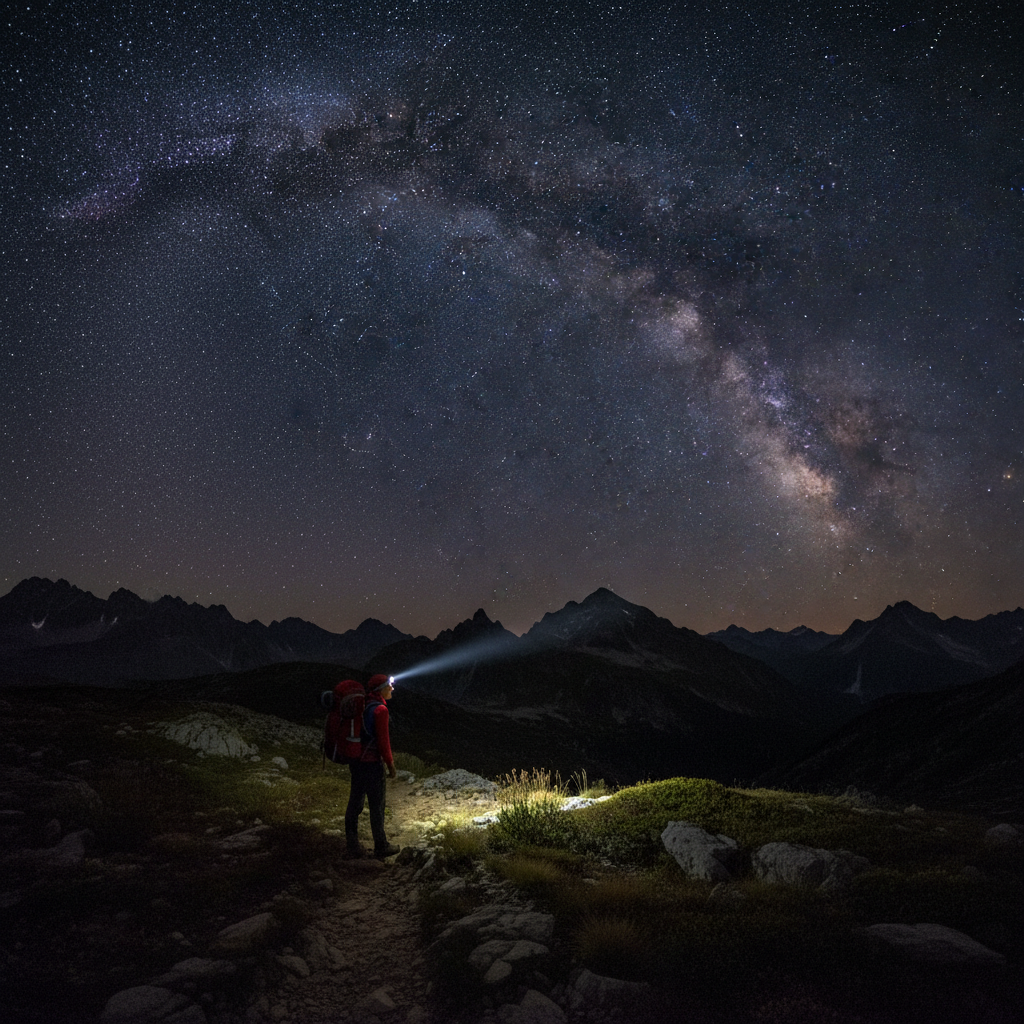
There is a version of every trail you think you know — and you have never seen it. At night, familiar paths become alien landscapes. Your headlamp carves a tunnel of light through darkness. Stars press down like a ceiling. Your senses sharpen: every snap of a twig, every rustle in the brush, every shift in the wind carries meaning. Night hiking is not about seeing less — it is about experiencing differently. And with the right preparation, it is one of the most transformative outdoor experiences available.
Key Takeaways
Night hiking demands a headlamp with at least 8 hours of runtime at medium because reduced visual input weakens proprioception and raises fall risk 40 to 60 percent on uneven terrain.
- Headlamp runtime: minimum 8 hours at a medium setting; carry spare batteries.
- Fall risk: weakened proprioception at night increases falls 40-60% on uneven ground.
- Safety kit: carry a satellite communicator such as the Garmin inReach Mini 2 as your lifeline.
- Heat advantage: desert and canyon hikes dangerous at 110F become comfortable around 75F after dark.
- Night vision: let your eyes adapt by walking without artificial light for 5-10 minutes on clear nights.
Why Hike at Night?
- Solitude. Popular trails that are crowded at noon are deserted at midnight. You have the mountain to yourself.
- Temperature. Summer desert and canyon hikes that are dangerous at 110°F become comfortable at 75°F after dark.
- Stars. Get far enough from city lights and the Milky Way appears as a physical presence — a glowing river overhead. Worth the trip alone.
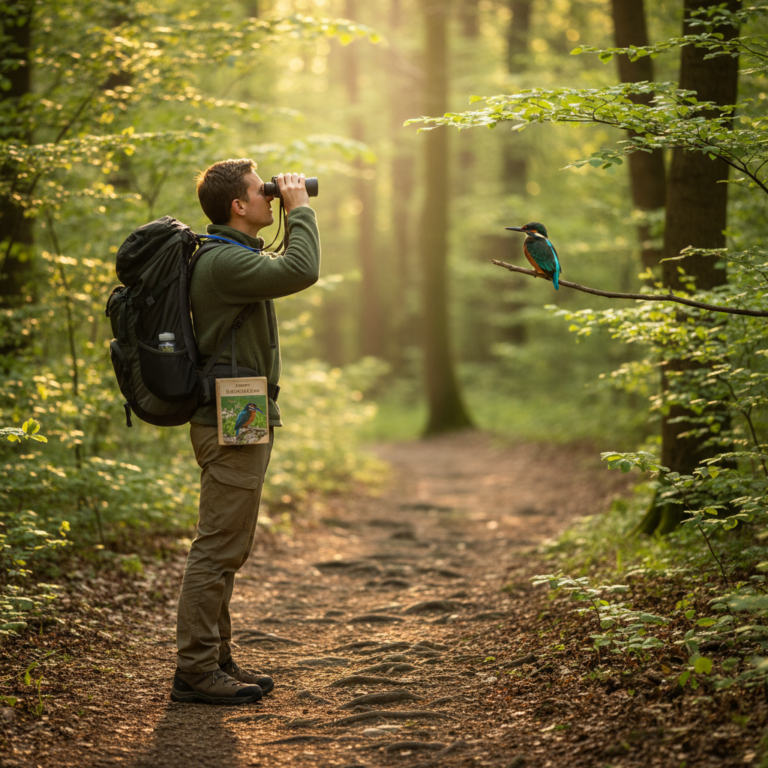
- Wildlife. Owls, foxes, coyotes, deer, bats. The nocturnal world is a parallel universe that day hikers never see.
- Mental reset. Night hiking forces presence. Your mind cannot wander — every step requires attention. It is enforced mindfulness with a view.
- Sunrise summits. Start at 3 AM, reach the peak at dawn. The sunrise from a summit you earned in the dark is unforgettable.
Night Hiking Safety: The Non-Negotiables
| Rule | Why |
|---|---|
| Know the trail in daylight first | Never night-hike a trail you have not done in daytime. Junctions, hazards, and terrain features need to be familiar. |
| Two light sources minimum | Primary headlamp + backup. If your headlamp fails, you are blind on a mountain. Non-negotiable. |
| Tell someone your plan | Route, start time, expected return. If you do not check in, they call rescue. |
| Stay on marked trails | Off-trail navigation at night is how people get lost. Stick to the path. |
| Carry a satellite communicator | Garmin inReach Mini 2 — your lifeline when cell service is zero. |
| Check moon phase | A full moon provides enough light to hike without a headlamp on open terrain. New moon = total darkness. Plan accordingly. |
| Wildlife awareness | Make noise. Carry bear spray in bear country. Know local nocturnal wildlife (snakes, mountain lions). |
Start your first night hike on a full moon in a familiar area. A wide, well-maintained fire road with open views is ideal. Work up to technical singletrack and new-moon darkness gradually over 3-4 nights out.
Headlamps: Your Most Critical Gear
A headlamp is to night hiking what boots are to day hiking — the single piece of gear that determines everything. Here is what to look for:
- Lumens (brightness): 300+ for trail hiking, 600+ for technical terrain, 1000+ for speed hiking or scrambling
- Beam distance: 80m minimum for trail, 150m+ for route-finding and scrambling
- Red light mode: Preserves night vision (takes 20 minutes to fully develop). Essential for map reading without blinding yourself.
- Battery life: Minimum 8 hours at medium setting. Rechargeable preferred with AAA backup.
- Weight: Under 100g for the headlamp itself. Heavy headlamps bounce and cause neck strain on long nights.
Best Headlamps for Night Hiking
Petzl Nao RL
1500 lumens · Reactive Lighting auto-adjust · 15h battery · 170m beam · 145g
BioLite HeadLamp 800 Pro
800 lumens · 8 modes · Moisture-wicking band · Rechargeable · 150g
Nitecore NU25 UL
400 lumens · 28g (!) · USB-C · Red/white dual LED · 12h runtime
Black Diamond Cosmo 350-R
350 lumens · Rechargeable + AAA · Red night vision · IPX8 · 73g
Night Vision: See the Unseen
Night vision devices are not essential for trail hiking, but they transform the experience. With digital night vision, you can observe nocturnal wildlife without a flashlight beam scaring them away. You can also navigate by moonlight and starlight without destroying your natural night adaptation.
Creative XP Night Vision Binoculars
Digital night vision · 984ft range in darkness · Photo/video recording · 4x zoom · Rechargeable
Be Seen: Reflective and Illuminated Gear
If you are hiking near roads, shared-use trails, or hunting areas, visibility is survival. Reflective gear and illuminated vests make you visible to vehicles, cyclists, and other trail users from 500+ feet.
Noxgear Tracer360 Illuminated Vest
Multicolor fiber optic LED · 360° visibility · Rechargeable · Adjustable · Waterproof
Nathan Streak Reflective Vest
360° reflective strips · Lightweight mesh · Adjustable fit · No batteries needed
Capture the Night Sky
One of the biggest rewards of night hiking is astrophotography — and your phone can do it. Modern smartphone night modes capture the Milky Way with a 20-30 second exposure. All you need is a stable platform.
Joby GorillaPod 3K
Flexible legs wrap around anything · 6.6 lb capacity · Ball head · 10.2 oz · Fits phone + camera
Peak Design Capture Camera Clip
Clip camera to backpack strap · Quick-release · Aluminum · Works with any camera · 3 oz
Night Hiking + Nordic Walking
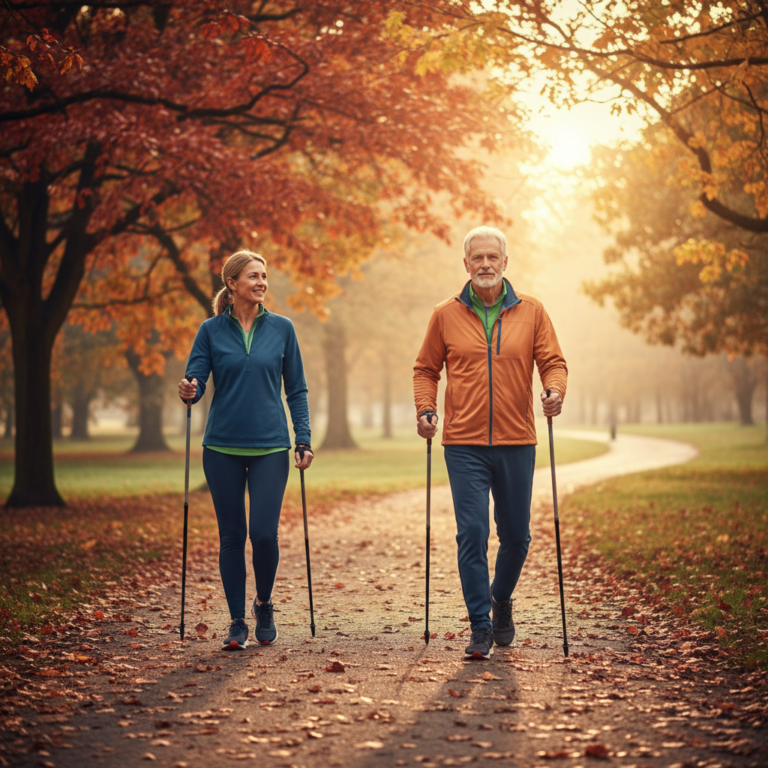
Nordic walking poles are an underrated night hiking tool. When your visual input is reduced, your proprioception (sense of body position) weakens — increasing fall risk by 40-60% on uneven terrain. Poles provide:
- Two extra contact points — four points of contact vs. two makes you dramatically more stable in the dark
- Terrain probing — your pole tip finds drop-offs, rocks, and puddles before your foot does
- Confidence — knowing you have a “safety net” lets you relax and enjoy the night instead of tensing up
For pole recommendations, see our Best Nordic Walking Poles guide.
The Night Hiking Checklist
| Category | Item | Notes |
|---|---|---|
| Light | Primary headlamp (600+ lumens) | Charged to 100% before departure |
| Light | Backup headlamp or flashlight | Different battery type than primary |
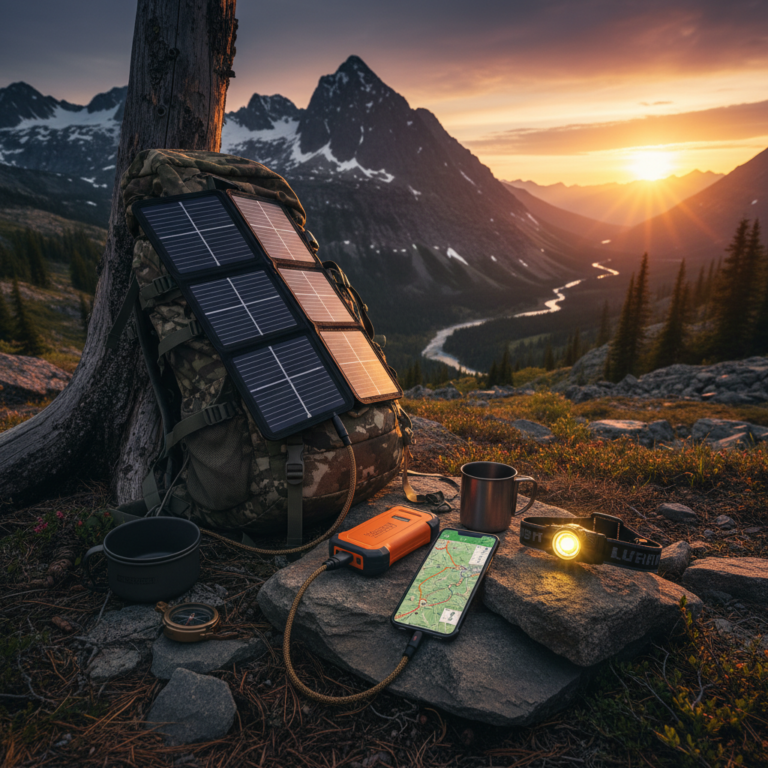
| Light | Extra batteries or power bank | Cold weather drains batteries 30-50% faster |
| Navigation | GPS device or phone with offline maps | Trails look different at night — do not rely on memory |
| Navigation | Compass | Works without batteries, always |
| Safety | Satellite communicator | Garmin inReach Mini 2 |
| Safety | Reflective vest or LED light | Near roads or shared trails |
| Safety | Whistle | Three blasts = universal distress signal |
| Warmth | Extra insulating layer | Temperatures drop 3-5°F per 1,000ft elevation + radiative cooling |
| Warmth | Hand warmers | HotHands — cheap insurance against cold fingers |
| Comfort | Trekking poles | Stability boost is critical in reduced visibility |
| Optional | Camp lantern | For breaks, map reading, group use |
Night Hiking Technique
Protect Your Night Vision
Your eyes need 20-30 minutes to fully adapt to darkness. Once adapted, you can see by starlight and moonlight alone on clear nights. One flash of white light resets the clock.
- Red light only for map reading, gear adjustments, and camp tasks. Red light does not destroy scotopic (rod-cell) vision.
- Look beside, not at, objects. Your peripheral vision is more sensitive in the dark (rod cells are concentrated outside the fovea).
- Turn off your headlamp. On clear nights with a half-moon or better, try hiking without artificial light for 5-10 minutes. Let your eyes adapt. The trail will appear.
- Avoid phone screens. Even a quick text check blasts your retinas and kills night adaptation for 20+ minutes.
Pacing and Movement
- Slow down 30-40%. Your normal daytime pace is too fast at night. Shorten your stride and lift your feet higher.
- Scan continuously. Move your head side-to-side slowly to sweep the trail with your headlamp beam. Do not fixate forward.
- Stop and listen. Every 10-15 minutes, pause for 30 seconds. Turn off your headlamp. Listen. Let your senses recalibrate.
Best Conditions for Night Hiking
| Condition | Rating | Notes |
|---|---|---|
| Full moon, clear sky | ⭐⭐⭐⭐⭐ | Can hike without headlamp on open terrain. Best for beginners. |
| Half moon, clear sky | ⭐⭐⭐⭐ | Good ambient light on exposed trails. Headlamp needed in forest. |
| New moon, clear sky | ⭐⭐⭐ | Total darkness — incredible stargazing but challenging hiking. Headlamp critical. |
| Overcast, any moon | ⭐⭐ | Zero ambient light. Headlamp only. Not recommended for first night hike. |
| Rain or fog at night | ⭐ | Headlamp beam reflects off moisture, reducing visibility. Postpone. |
Bottom Line
Night hiking unlocks a version of the outdoors that 99% of hikers never experience. The Milky Way from a mountain ridge. A fox crossing your headlamp beam. The sound of absolute silence. Start with a full-moon hike on a familiar trail, bring two headlamps and trekking poles, and give yourself permission to move slowly.
The darkness is not the enemy. It is the invitation.
Our Top Pick
📚 See also:
- microadventures: sleep under the stars — Microadventures Guide
- bushcraft skills for the wild — Bushcraft Skills Guide

About the Author
Alex Mercer — INWA Level 2 Nordic Walking Instructor
Certified by the International Nordic Walking Federation (INWA) since 2019, Alex has coached 500+ walkers from beginners to ultra-distance competitors. Sports science background with a focus on biomechanics, gait analysis, and evidence-based training protocols. Regular contributor to walking and outdoor publications.