Bushcraft 2.0: Thrive in the Wild With a Knife, Fire Steel, and Knowledge
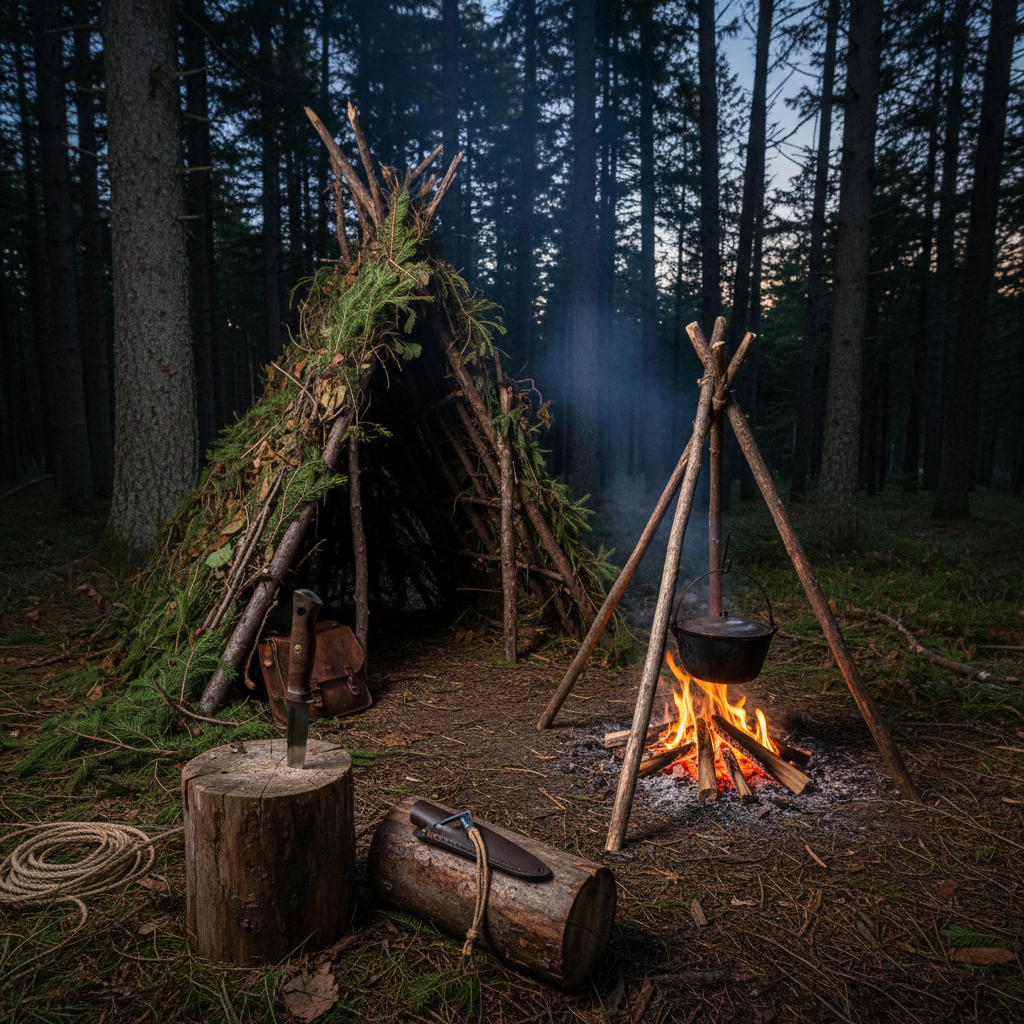
Your tent weighs 2 kg. Your stove runs on butane. Your water comes from a filter that cost $35. Now imagine all of that disappearing — and you are fine. Your shelter is woven from branches. Your fire started from a steel and a birch bark curl. Your water boils in a pot hung from a tripod you lashed together with paracord. This is bushcraft — the art of thriving in the wild with skill instead of gear. In 2026, it is not survivalism. It is the most empowering outdoor practice you can learn.
Key Takeaways
Bushcraft 2.0 builds five core wilderness skills – fire, shelter, knife work, water procurement and navigation – so you stay safe even when modern gear fails; a debris shelter alone can keep you warm to freezing.
- Five skills: fire craft, shelter building, knife skills, water procurement and navigation.
- Debris shelter: a 30 cm roof layer plus a 15 cm leaf bed keeps you warm to freezing temperatures.
- Fire: a ferro rod and birch-bark tinder start fire without matches or lighter.
- Foraging: begin with just 5 plants you can identify with 100% certainty in your region.
- Mindset: skills and knowledge reduce dependence on heavy, failure-prone equipment.
What Is Bushcraft 2.0?
Classic bushcraft was about survival — what to do when things go wrong. Bushcraft 2.0 is about choice — deliberately using primitive skills for the satisfaction, self-reliance, and deep connection to nature they provide. You carry a knife, a fire steel, a pot, and knowledge. The forest provides the rest.
| Dimension | Modern Camping | Bushcraft 2.0 |
|---|---|---|
| Shelter | Tent (2 min setup) | Lean-to, debris hut, tarp (30-60 min build) |
| Fire | Lighter or stove | Fire steel + natural tinder (birch bark, fatwood) |
| Water | Filter or tablets | Boil over fire + improvised container |
| Food | Freeze-dried meals | Foraged greens + basic provisions cooked over fire |
| Navigation | GPS + phone | Map, compass, natural signs (sun, moss, stars) |
| Mindset | Comfort and convenience | Skill, patience, and self-reliance |
Bushcraft is NOT about rejecting modern gear entirely. Carry a backup lighter, a first aid kit, and a phone for emergencies. The goal is skill development, not reckless minimalism. Practice shelters in your backyard before relying on them in the backcountry.
The 5 Core Bushcraft Skills
1. Fire Craft
Fire is warmth, water purification, cooking, light, morale, and signal — all in one. Learning to start a fire without a lighter, in wet conditions, is the single most empowering outdoor skill.
- Fire steel method: Strike a ferrocerium rod against a steel striker to produce 3,000°C sparks onto prepared tinder (birch bark, charcloth, fatwood shavings)
- Tinder bundle: Fine, dry material that catches a spark — processed birch bark, dried grass, cattail fluff, or cedar bark fibers
- Fire lay: Start with tinder, add pencil-thin kindling in a teepee shape, then finger-thick sticks, then wrist-thick fuel wood
Light My Fire Swedish FireSteel 2.0
12,000 strikes · 3,000°C sparks · Works wet · Emergency whistle built in · 50g
2. Shelter Building
A lean-to shelter built from deadfall wood and covered with leaves or pine boughs can be warmer than a tent — the key is insulation thickness. A 30-cm layer of debris on the roof and a 15-cm bed of leaves underneath keeps you warm to freezing temperatures.
- Lean-to: Ridgepole between two trees, angled branches, covered with debris. Quick, effective, wind-blocking.
- Debris hut: Full enclosure with body-width interior. Maximum warmth for solo overnight.
- Tarp shelter: A bushcraft tarp (3x3m) with paracord gives 20+ configurations. The bridge between primitive and modern.
3. Knife Skills
A bushcraft knife is your multi-tool — it carves tent pegs, processes firewood (batoning), prepares food, makes feather sticks for fire starting, and builds shelter components. One good knife replaces 10 specialized tools.
Morakniv Companion HD
Carbon steel · 4.1″ blade · Full tang · 104g · Scandi grind · Best under $20
Bahco Laplander Folding Saw
7″ blade · Cuts green and dry wood · 200g · Folds safely · Processes firewood in minutes
4. Water Procurement
Boiling is the oldest and most reliable water purification method. A metal container over fire kills all pathogens. In bushcraft, you carry a pot — everything else you build.
Stanley Heritage Camp Cook Set
Stainless steel · 24 oz pot + 2 cups · Nests together · Fire-ready · Lid doubles as pan
5. Foraging Basics
Start with 5 plants you can identify with 100% certainty in your region. Do NOT eat anything you are not absolutely sure about. Common safe starters:
- Dandelion — leaves, flowers, and roots all edible. Available everywhere.
- Wild garlic (ramsons) — unmistakable garlic smell when crushed. Spring staple.
- Nettles — cook to remove sting. Rich in iron and vitamins. Tea or soup.
- Blackberries/blueberries — obvious identification, available late summer.
- Birch sap — tap in early spring. Sweet, mineral-rich water alternative.
The Bushcraft Kit (Under 3 kg)
| Item | Weight | Why |
|---|---|---|
| Fixed-blade knife (Morakniv) | 104g | Carving, batoning, food prep, feather sticks |
| Folding saw (Bahco Laplander) | 200g | Process firewood without exhausting yourself |
| Fire steel + tinder | 80g | Primary fire method (+ backup lighter) |
| Metal pot (24 oz) | 340g | Boil water, cook food, melt snow |
| Tarp (3x3m silnylon) | 400g | Shelter, rain cover, ground sheet |
| Paracord (15m) | 100g | Ridgeline, lashing, guy lines, repairs |
| Wool blanket or sleeping bag | 1000g | Insulation (wool works when wet) |
| Water container (1L) | 150g | Carry water between sources |
| First aid + backup lighter | 150g | Safety net |
| TOTAL | ~2.5 kg |
Bushcraft Ethics
- Leave No Trace still applies. Dismantle shelters after use. Scatter fire remains. Pack out all waste.
- Use deadfall wood only. Never cut living trees for shelter or firewood unless survival depends on it.
- Know local laws. Many areas prohibit open fires, foraging, or wild camping. Check regulations before practicing.
- Respect wildlife. Food storage, scent management, and quiet movement are bushcraft fundamentals.
Bottom Line
Bushcraft is not about rejecting modernity — it is about building the confidence that comes from knowing you could. A Morakniv knife, a fire steel, and a pot. That is your entire technology stack. Everything else comes from the forest and your own two hands.
Frequently Asked Questions
What are the most important bushcraft skills to learn first?
Fire craft, shelter building, water procurement, knife skills, and navigation, in roughly that order of survival priority.
What is the single most reliable fire-starting tool?
A ferrocerium rod. It works when wet, performs in wind, and lasts for thousands of strikes, unlike matches or a lighter.
Is foraging safe for beginners?
Only with 100 percent certain identification. Start with five unmistakable local plants and never eat anything you cannot positively identify.
What is the difference between bushcraft and survival?
Bushcraft is thriving in the wild long-term using skills and knowledge, while survival is short-term emergency response to an unplanned situation.

About the Author
Alex Mercer — INWA Level 2 Nordic Walking Instructor
Certified by the International Nordic Walking Federation (INWA) since 2019, Alex has coached 500+ walkers from beginners to ultra-distance competitors. Sports science background with a focus on biomechanics, gait analysis, and evidence-based training protocols. Regular contributor to walking and outdoor publications.