Cold Plunge & Infrared Sauna at Home (2026): Best Recovery & Longevity Tools for Walkers
GaitLab is reader-supported. When you buy through links on our site, we may earn an affiliate commission at no extra cost to you.
After a long hike or a brisk 10K walk, your legs are buzzing, your mind is wired, and you want to come back fresher tomorrow. Deliberate heat and cold — an infrared sauna session, a cold plunge, or both in sequence — has become one of the most popular at-home recovery rituals among active adults, and a slice of the longevity research is genuinely promising. This guide breaks down the best cold plunge tubs and infrared saunas you can set up at home in 2026, what the evidence actually supports, how to fit it into your space and budget, and how to ease into a contrast protocol without overdoing it.
Key Takeaways
- Top pick overall: the Ice Barrel Cold Plunge — durable, upright, and space-smart for serious daily cold exposure.
- Best budget: an inflatable cold plunge tub gets you into the water for a fraction of the price and packs away when you’re done.
- Best heat for small spaces: the HigherDOSE Infrared Sauna Blanket — sauna-style heat that folds into a closet.
- The evidence is strongest for recovery, sleep, and mood; longevity claims are promising but still emerging. Treat it as a feel-good habit, not medicine.
- Safety first: heat and cold therapy can be risky with certain heart, blood-pressure, or pregnancy conditions — get medical clearance and ease in slowly.
How we picked — and what actually matters
Hot-and-cold gear ranges from a $90 inflatable barrel to five-figure built-in saunas. For walkers and hikers who want real recovery without remodeling the garage, we focused on equipment that’s practical to live with. Here’s what we weighed:
- Space & setup: Will it fit on a patio, balcony, or spare corner? Upright cold tubs save floor space; sauna blankets disappear into a closet.
- Cold strategy: Ice top-ups (cheapest), or a built-in chiller that holds a set temperature with no hauling bags of ice.
- Insulation & water retention: Better insulation means colder water for longer and fewer ice runs.
- Heat type: Infrared blankets and tents warm your body directly at lower air temps than a traditional sauna — gentler to tolerate and easier to power from a standard outlet.
- Durability & cleaning: Drains, filters, replaceable liners, and rugged materials decide whether you’re still using it in a year.
- Value: What you actually get per dollar — not just the lowest sticker.
| Product | Best for | Standout | Price tier |
|---|---|---|---|
| Ice Barrel Cold Plunge | Daily, dedicated cold therapy | Upright, durable, space-saving | $$$ |
| HigherDOSE Infrared Sauna Blanket | Heat in tight spaces | Premium build, folds away | $$$ |
| Inflatable Cold Plunge Tub | Budget & portability | Packs away, lowest entry cost | $ |
| Cold Plunge Tub with Chiller | No-ice convenience | All-in-one chiller + filter | $$$ |
| LifePro Infrared Sauna Blanket | Best-value heat | Most sauna per dollar | $$ |
| SereneLife Portable Sauna Tent | Sit-up sauna, head out | Chair + heater bundle | $$ |
| Sun Home / Portable Sauna Tent | Roomier home sessions | More interior space | $$ |
The best cold plunge & infrared sauna tools for 2026
Ice Barrel Cold Plunge
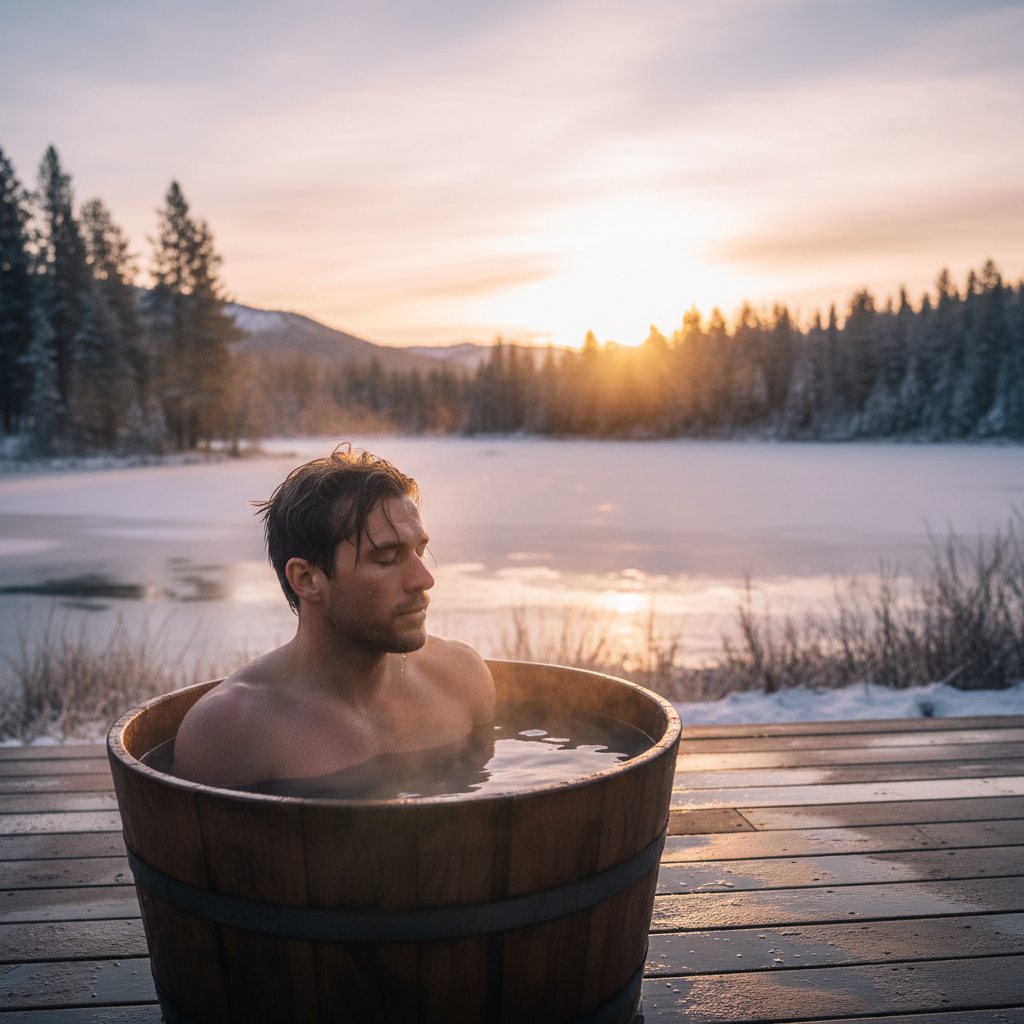
If cold exposure is going to be a daily ritual rather than an occasional novelty, a dedicated barrel is the upgrade that sticks. The Ice Barrel’s upright design lets you sit submerged to the shoulders while taking up roughly the footprint of a trash can — a real advantage on a small patio or balcony. The rugged, weather-resistant build is made to live outdoors year-round, and the included lid keeps debris out and cold in between sessions.
It’s best for the walker or hiker who already knows they like the cold and wants a durable, no-nonsense setup. The honest trade-offs: it relies on ice or ambient cold rather than a built-in chiller (you can add one separately), and the seated, vertical posture suits most people but won’t appeal to anyone who prefers to lie flat. For longevity and consistency, though, this is the one most people keep using.
- Upright design saves floor space
- Tough, weatherproof construction
- Comfortable shoulder-deep immersion
- Lid included to hold the cold
- No built-in chiller (ice or add-on)
- Premium price
- Vertical posture isn’t for everyone
Price tier: $$$
HigherDOSE Infrared Sauna Blanket
For heat without a dedicated room, the HigherDOSE blanket is the benchmark. It wraps your body in far-infrared warmth, so you get a deep, sweaty session lying on the couch or floor, then fold the whole thing into a closet afterward. The build quality is a clear step above budget blankets — even heat distribution, a sturdy zipper, and easy-wipe layers make it pleasant to use several times a week.
It’s ideal for anyone short on space who still wants a sauna-style sweat after a long walk. The trade-offs are real: it’s the priciest blanket here, your head stays outside the heat (some people love this, others want full-body warmth), and you’ll want a towel or insert layer to keep it clean. If you want premium heat that disappears when you’re done, this is it.
- Even, comfortable far-infrared heat
- Folds flat for easy storage
- High-quality, durable materials
- Simple to clean between sessions
- Premium price
- Head stays outside the heat
- Best used with a towel/liner
Price tier: $$$
Inflatable Cold Plunge Tub
The smartest way to find out if cold therapy is for you without a big spend. An inflatable plunge tub sets up in minutes, holds enough water to submerge most of your body, and packs down into a bag when you’re traveling or short on space. Many include an insulated lid and a drain, so day-to-day use is genuinely easy.
This is the best budget pick and the right call for renters, travelers, and anyone testing the waters. Be honest about the limits: insulation is modest, so without a chiller you’ll be adding ice for each session, and the lighter materials won’t match a rigid barrel for longevity. But dollar for dollar, nothing else gets you plunging this fast.
- Lowest entry price
- Packs away and travels easily
- Fast setup, usually drains cleanly
- Great for trying cold therapy
- Needs ice without a chiller
- Modest insulation
- Less durable than a rigid tub
Price tier: $
Cold Plunge Tub with Chiller
The convenience king. An all-in-one tub with an integrated chiller and filtration unit holds your target temperature on demand — no hauling ice, no guesswork. Set it to, say, the low 50s°F, and the water is ready whenever you are. The filter and circulation keep the water clean for longer between changes, which matters a lot if more than one person uses it.
It’s best for households that plunge regularly and value frictionless, repeatable sessions. The trade-offs: it’s a bigger investment, the chiller draws power and needs a nearby outlet, and the unit takes up a permanent spot. If recurring ice runs are the thing that would kill your habit, the chiller pays for itself in consistency.
- No ice — holds a set temperature
- Built-in filtration keeps water clean
- Consistent, repeatable sessions
- Great for shared household use
- Higher upfront cost
- Uses electricity, needs an outlet
- Takes a permanent footprint
Price tier: $$$
LifePro Infrared Sauna Blanket
If the HigherDOSE is the premium benchmark, the LifePro blanket is the value play that delivers most of the experience for noticeably less. You get the same core idea — full-body far-infrared heat with adjustable temperature settings — in a package that’s friendly to first-time sauna users and easy to store. For many walkers, the difference in real-world use is smaller than the price gap suggests.
It’s the best choice for budget-conscious buyers who still want a legitimate sweat at home. The honest notes: materials and finish aren’t quite as plush as the top-tier option, heat-up and even-ness can be slightly less refined, and as with any blanket your head stays outside. But as an affordable entry into infrared heat, it’s hard to beat.
- Excellent price-to-performance
- Adjustable heat settings
- Folds away for storage
- Beginner-friendly
- Finish less plush than premium rivals
- Heat evenness slightly less refined
- Head stays outside the heat
Price tier: $$
SereneLife Portable Sauna Tent
Prefer to sit up rather than lie down? A portable sauna tent is the answer. The SereneLife bundle typically includes the zip-up tent, a folding chair, and a heater, letting you sit inside with your head poking out the top while your body sweats. It’s a more “sauna-like” upright experience than a blanket, and it still collapses for storage when you’re finished.
This suits anyone who finds blankets claustrophobic or simply wants to read or scroll during a session. The trade-offs to expect: tents can feel a bit less premium, setup takes a couple of minutes each time, and interior room is cozy rather than spacious. For a sit-up sweat at a fair price, it’s a strong, practical pick.
- Sit-up posture, head stays out
- Chair and heater usually included
- Collapses for storage
- Reasonable price
- Setup needed each session
- Snug interior space
- Build feels less premium
Price tier: $$
Sun Home / Portable Sauna Tent (Roomier Option)
For those who want a little more breathing room than a standard tent, a roomier portable sauna gives you space to settle in comfortably. The extra interior volume makes longer sessions feel less cramped, which is welcome if you like to stretch your legs or use the time to wind down after a demanding hike. Like other tents, it packs down between uses.
It’s the pick for home users who value comfort and plan to make sauna time a regular ritual. Be aware that bigger means it takes a touch more space to store and set up, heat-up time can be marginally longer for the larger volume, and pricing sits above the most basic tents. If a slightly more spacious sweat appeals, it’s a sensible step up.
- Roomier, more comfortable interior
- Good for longer wind-down sessions
- Still folds away when not in use
- Upright, head-out design
- Needs more storage/setup space
- Slightly longer heat-up
- Costs more than basic tents
Price tier: $$
How to get started: a simple contrast protocol
You don’t need a complicated routine. A common, approachable pattern looks like this:
- Warm up: 15–25 minutes in the sauna or blanket at a temperature you can comfortably tolerate. Sip water before and after.
- Then cold: 1–3 minutes in cold water in the roughly 50–59°F range. Breathe slowly and deliberately — the urge to gasp is normal; control it.
- Finish on your goal: ending warm feels relaxing and can support sleep; ending cold tends to leave you alert and energized.
- Frequency: start with 2–3 sessions a week and adjust based on how you recover and sleep.
Ease in gradually. Begin with shorter, milder exposures and add time as your tolerance grows over several weeks. Hydrate, never plunge alone if you’re new to deep cold, and stop immediately if you feel dizzy, numb, chest discomfort, or unusually breathless. Consistency at a comfortable dose beats heroics you can’t sustain.
FAQ
Do I really need both a cold plunge and a sauna?
No. Each delivers benefits on its own — heat for relaxation and post-walk soreness, cold for that refreshed, alert feeling and recovery. Contrast (alternating hot and cold) is popular and pleasant, but plenty of people get great results from just one. If budget or space is tight, pick the one you’ll actually use consistently and start there.
How cold and how long should a plunge be?
For most people, water in the roughly 50–59°F (10–15°C) range for 1–3 minutes is a sensible target. Beginners should start warmer and shorter, then build up over weeks. Colder and longer isn’t inherently better, and it raises the risk of cold shock — prioritize controlled breathing and a temperature you’ll come back to.
Is an infrared sauna blanket as good as a real sauna?
A blanket warms your body directly with infrared rather than heating a room, so the experience differs, but for at-home sweating, relaxation, and convenience it’s a strong, space-saving substitute. Traditional and infrared saunas each have their fans; for apartments and small homes, a blanket or tent is far more realistic to own and use regularly.
Will cold plunging help me lose weight?
Don’t count on it as a weight-loss tool. Research on cold exposure and metabolism is interesting but early, and any direct effect is modest. The more reliable wins are improved recovery, mood, and sleep — which can support the daily walking and activity that genuinely move the needle on long-term health.
The bottom line
For a do-it-all, last-for-years cold setup, the Ice Barrel Cold Plunge is our top pick, with an inflatable plunge tub the smart, low-risk way to start. Pair either with the HigherDOSE blanket (or the value-driven LifePro) and you’ve got a complete, space-friendly recovery ritual for after your longest walks and hikes. Get your doctor’s okay, ease in at comfortable doses, and let the habit — not the extremes — do the work.

About the Author
Alex Mercer — INWA Level 2 Nordic Walking Instructor
Certified by the International Nordic Walking Federation (INWA) since 2019, Alex has coached 500+ walkers from beginners to ultra-distance competitors. Sports science background with a focus on biomechanics, gait analysis, and evidence-based training protocols. Regular contributor to walking and outdoor publications.
Similar Posts
Nordic Walking Nutrition: What to Eat Before, During and After
Fuel your Nordic walking sessions with science-backed nutrition strategies covering pre-walk meals, on-trail snacks, and post-exercise recovery foods.
Best Electrolytes & Hydration for Walkers and Hikers in 2026
Plain water can leave you flat, crampy, or lightheaded on long walks and hot hikes. Here are seven electrolyte picks for 2026, ranked, with honest guidance on sodium, sugar, and how to dose for the miles and the heat.
Rucking for Longevity: Best Weighted Vests & Rucking Gear in 2026
Rucking — walking with weight — may be one of the most efficient low-impact ways to build strength, bone density and cardio fitness after 40. Here are the best weighted vests and rucking packs for 2026, plus a safe way to start.
The Biomechanics of a Perfect Step: Nordic Walking Technique Guide
Most pain in Nordic walking comes from six technique errors that alter normal gait biomechanics. This guide breaks down each phase of the gait cycle and shows you how to optimize postural alignment.
How to Maintain Your Nordic Walking Poles
7 min read✅Reviewed September 2026 · Prices and availability checked Nordic walking poles are a long-term investment, and proper maintenance keeps them performing at their best season after season. Whether you own fixed-length carbon poles or adjustable aluminum ones, these simple care routines will extend their lifespan significantly. Key Takeaways AM Alex Mercer INWA Level…
Best Standing Desks & Active Workstation Gear (2026): Sit Less, Move More
Our ranked guide to the best standing desks and active workstation gear for 2026 — top value, premium, and budget picks, plus converters, anti-fatigue mats, monitor arms, and how to build a sit-stand-walk setup that pairs with a walking pad.