Nordic Walking in Winter: Tips and Safety
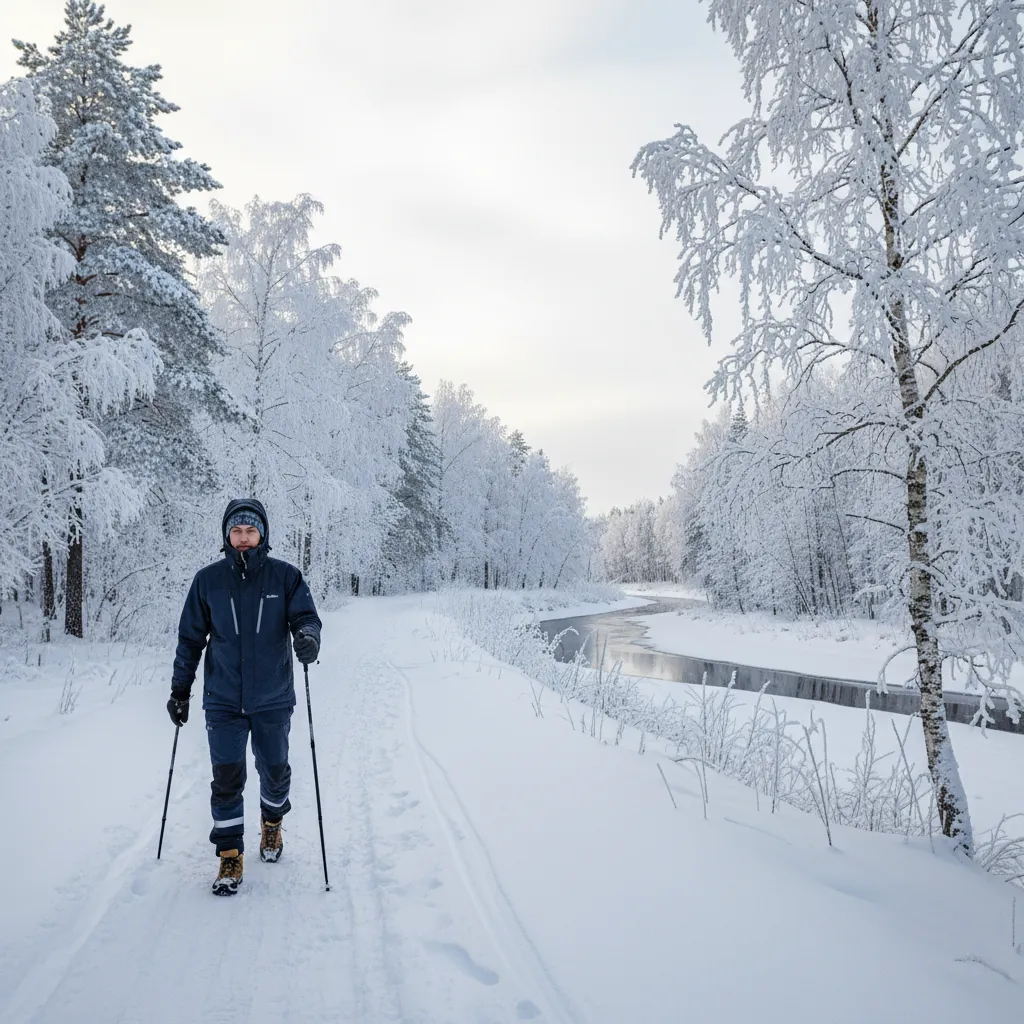
Cold weather does not have to end your Nordic walking season. In fact, winter walking can burn more calories as your body works to maintain core temperature. With the right preparation, you can walk safely and comfortably even in snow and ice.
Key Takeaways
Nordic walking continues safely through winter with the right layering and traction; cold weather can burn more calories, but paces run 5 to 10 percent slower at the same heart rate.
- Body heat: you generate significant warmth within the first 5 to 10 minutes, so start slightly cool.
- Pace: expect 5 to 10% slower speeds at the same heart rate, and train by effort, not pace.
- Traction: add snow baskets and ice tips; never walk alone on icy terrain.
- Warm-up: do 3 to 5 minutes of dynamic stretches indoors before heading out.
- Layering: dress so you feel slightly cold at the trailhead to avoid heavy sweating later.
Essential Winter Gear
- Base layer: Merino wool or synthetic moisture-wicking fabric
- Mid layer: Fleece or lightweight insulated jacket
- Outer layer: Windproof and water-resistant shell
- Accessories: Thermal gloves, neck gaiter, warm hat covering ears
- Footwear: Waterproof boots with good traction
- Pole tips: Carbide tips (remove rubber paws for snow/ice)
Dress for 10°C warmer than the actual temperature. You will generate significant body heat within the first 5-10 minutes. If you are comfortable standing still, you are overdressed for walking.
Safety Tips for Icy Conditions
Pros
- Nordic poles provide extra stability on ice
- Burns more calories in cold weather
- Less crowded trails
- Beautiful winter scenery
Cons
- Risk of slipping on black ice
- Shorter daylight hours
- Need additional gear
- Cold can aggravate joint conditions
Shorten your stride on icy surfaces, keep your center of gravity low, and use your poles actively for balance. Use the carbide tips (remove rubber paws) for maximum grip on hard-packed snow and ice. Walk on fresh snow rather than compacted trails when possible — it provides better traction.
Warm-Up Routine for Cold Weather
Spend 3-5 minutes indoors doing dynamic stretches before heading out: arm circles, leg swings, torso rotations, and gentle squats. This warms the muscles and reduces the risk of strains in cold temperatures. Start your walk at an easy pace for the first 5 minutes.
Shop Winter Walking GearYaktrax Walk — Ice Traction for Walking →
Smartwool Merino Base Layer — Stay Warm →
Winter Training: How Cold Weather Changes Your Nordic Walking
Cold air is denser than warm air, which means your heart works slightly harder at the same pace in winter. This is why identical sessions feel more effortful in January than June — it is not fitness regression, it is physics. Accept that winter paces are 5-10% slower at the same heart rate and train by effort, not speed.
Cold temperatures also change pole technique requirements. Ground frost and compacted snow require more aggressive tip planting for grip. Plant the pole slightly more vertically (80-85 degrees instead of 70-75 degrees) in icy conditions to maximize tip-to-surface contact area. A flatter plant angle that works on summer asphalt becomes a slip risk on ice.
Layering System for Nordic Walking in Winter
- Base layer: Merino wool or synthetic moisture-wicking material. Never cotton — cotton absorbs sweat and stays wet, causing chill when you slow down.
- Mid layer: Lightweight fleece or softshell. Zippered chest pocket to allow ventilation during intense segments.
- Outer layer: Windproof, water-resistant shell. Must have underarm vents for temperature regulation. Nordic walking generates significant heat — you need to dump it efficiently.
Start sessions slightly cold. If you are warm at the trailhead, you will be sweating heavily at 10 minutes. The ideal sensation: slightly cool but not cold at the start. Within 5-8 minutes of walking, your body temperature rises to the correct operating level.
Safety Rule: Never Walk Alone on Icy Terrain in Winter
A fall on ice in isolated terrain with no phone signal or companion is a genuine medical emergency. Walk with a partner, carry a fully charged phone in an inside pocket (cold kills battery), and tell someone your planned route and expected return time before every winter session.
Cold-Weather Technique Adjustments: How Winter Changes Your Nordic Walking
Nordic walking technique requires meaningful adjustment in winter conditions. The same movement patterns that work perfectly on dry asphalt become dangerous on ice-covered paths. Understanding these adjustments prevents falls and allows year-round training without interruption.
Shorten your stride. On any surface with reduced friction — wet leaves, packed snow, early morning frost — reduce stride length by 15-20%. A shorter stride keeps your center of gravity more directly over your support foot, reducing the lateral force that causes slipping. This feels unnatural at first (it reduces pace significantly) but becomes second nature within 2-3 winter sessions.
Plant poles more aggressively. In summer, poles are often planted with a light, almost casual touch. In winter, plant them with intention — a firm plant that establishes secure contact before transferring body weight. On compressed snow or ice, rotate your wrist slightly outward so the spike bites at a more perpendicular angle to the surface.
Adjust your arm extension. Full rear extension becomes more hazardous in winter because it momentarily transfers more weight to the pole — and if the pole slips at that moment, you lose balance entirely. Reduce rear arm extension by 10-15 degrees in icy conditions. You sacrifice some propulsion efficiency but gain significantly more stability.
Clothing Layering System for Sub-Zero Sessions
The three-layer system applies to Nordic walking but with an important modification: you will generate considerably more upper-body heat than regular walkers due to arm activation. Start conservatively and expect to remove layers within 10-15 minutes. A base layer with aggressive moisture wicking, a mid layer with good breathability (not a heavy fleece), and a windproof outer shell is the proven combination for -5°C to -15°C conditions. Below -15°C wind chill, protect exposed skin on any session longer than 30 minutes.
Maximizing Winter Nordic Walking: Training Targets and Session Planning
Winter Nordic walking rewards structured session planning more than summer walking does, for one primary reason: weather windows are unpredictable and often short. A structured session plan allows you to maximize the value of any available window rather than deciding what to do when you are already outside with 45 minutes before conditions deteriorate.
Short-window sessions (20-30 minutes): Prioritize intensity over duration. A 25-minute Zone 3 session (70-80% max HR) produces comparable cardiovascular stimulus to a 45-minute Zone 2 session. In winter, this trade-off is particularly valuable — you can maintain full fitness with shorter, higher-intensity windows when conditions allow longer sessions less frequently.
Full winter sessions (50-70 minutes): Maintain Zone 2 throughout. The thermogenesis effect (additional calorie burning from heat production in cold air) adds 10-15% to effective calorie expenditure at temperatures below 0°C. This means a 60-minute winter walk at Zone 2 pace burns roughly the equivalent of a 66-70 minute summer session at the same heart rate — a meaningful bonus for walkers who track caloric expenditure.
Route planning for winter: Pre-walk the route on a mild day and note the highest-risk surfaces — typically north-facing slopes that stay in shadow and freeze earlier, drainage channels across the path, and any bridge surfaces (bridges freeze before flat ground due to air circulation beneath). Know your bail-out options before you need them. A route with a 15-minute shortcut back to the start is safer than the same distance with no shortcut, particularly in deteriorating conditions.
Frequently Asked Questions
Can I do Nordic walking in snow?
Yes. Replace rubber tip paws with snow baskets for soft snow. The carbide tips provide excellent grip on packed snow and ice. Nordic walking in snow burns 30-50% more calories.
What temperature is too cold for Nordic walking?
With proper layering, Nordic walking is safe down to -15C for most people. Below that, protect exposed skin, shorten sessions, and watch for frostbite signs on cheeks and fingertips.