Trekking for Beginners: Gear and Routes
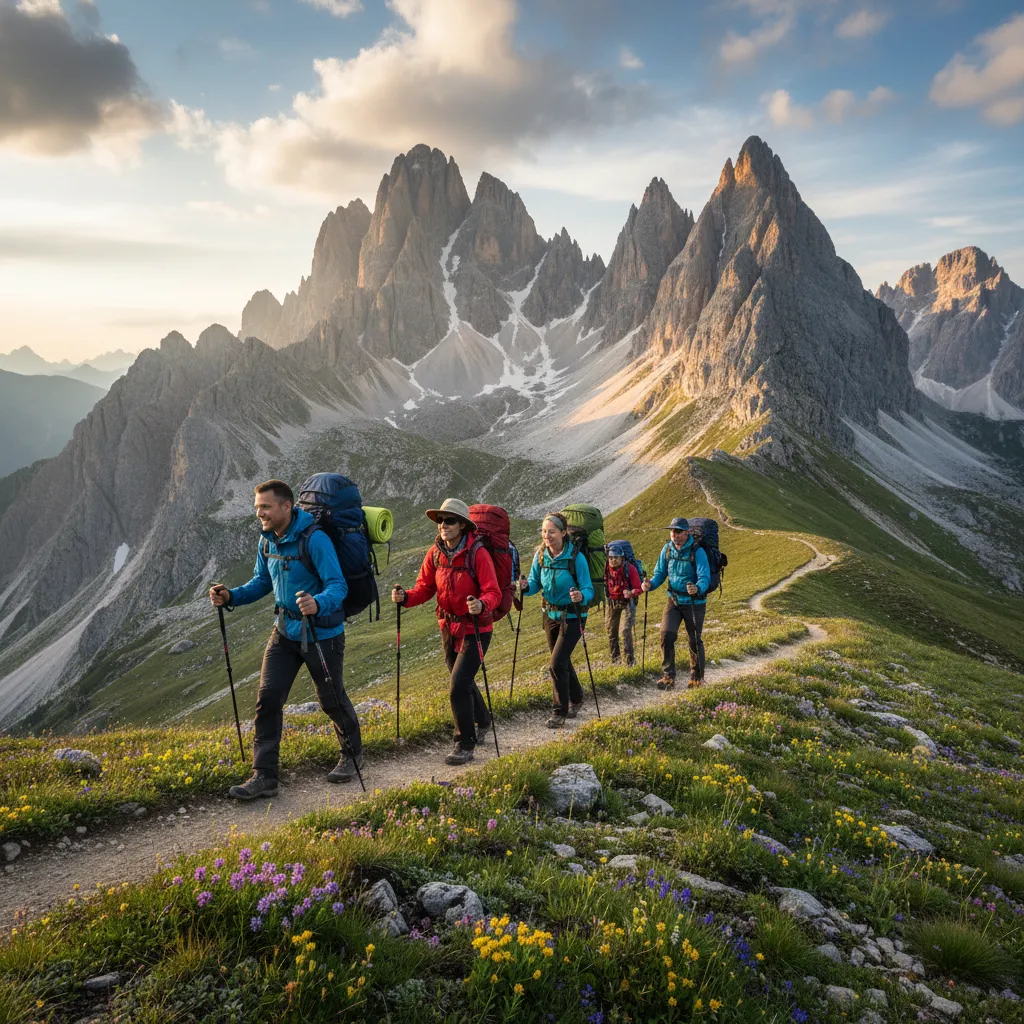
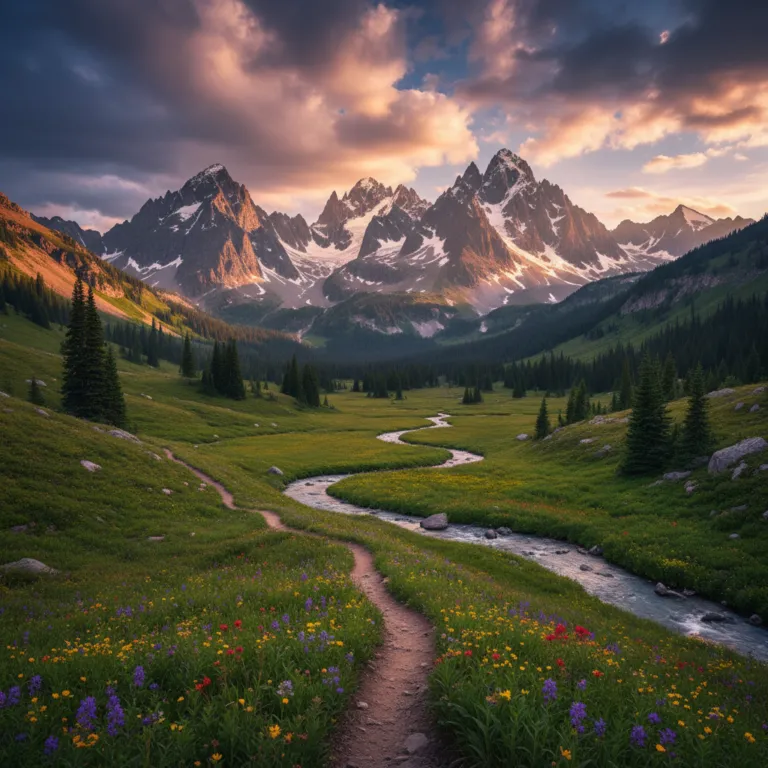
Trekking combines the physical benefits of hiking with the adventure of exploring new landscapes. Whether you dream of alpine meadows or coastal trails, this guide covers everything a beginner needs: gear essentials, route planning, fitness preparation, and safety tips.
Start with day hikes of 5-10 km on well-marked trails before attempting overnight treks. Build your distance gradually over 4-6 weeks. Your joints and feet need time to adapt to trail surfaces.
Key Takeaways
Beginner trekkers should start with 5 to 10 km day hikes on well-marked trails, train for 6 to 8 weeks beforehand, and keep first multi-day routes under 12 km with less than 500 m of elevation gain.
- First routes: 8 to 12 km, under 500 m gain, well-marked paths with accessible trailheads.
- Build distance: increase gradually over 4 to 6 weeks before attempting overnight treks.
- Fitness prep: train 3 to 4 sessions per week starting 6 to 8 weeks out.
- Pack training: start with 5 kg and add 1 to 2 kg per week up to your expected load.
- Gear rule: test every new item on a short hike before committing it to a long trek.
Essential Gear Checklist
Pros
- Low barrier to entry — start with day hikes
- Develops fitness progressively and naturally
- Improves navigation and outdoor self-reliance
- Mental health benefits: stress reduction, focus
- Community and social aspect of group treks
- Accessible worldwide on any budget
Cons
- Initial gear investment can be significant
- Physical preparation needed for multi-day routes
- Weather dependency and trip planning required
- Risk of blisters and muscle soreness early on
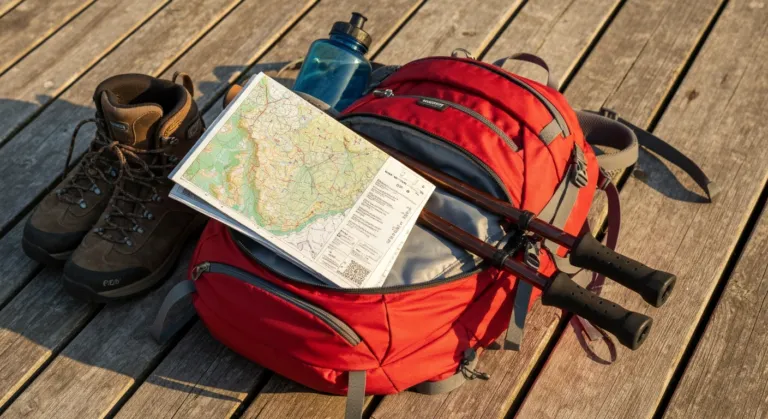
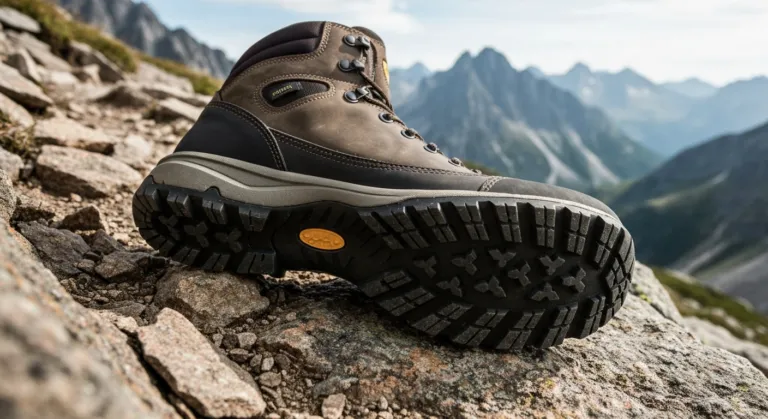
- Footwear: Waterproof hiking boots with ankle support
- Backpack: 20-30L daypack with hip belt
- Trekking poles: Adjustable, with carbide tips
- Clothing: Moisture-wicking layers, rain jacket
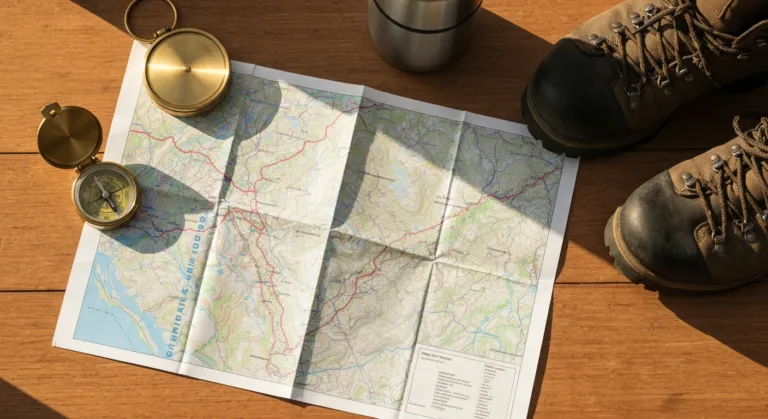
- Navigation: Map, compass, phone with offline maps
- Safety: First aid kit, whistle, headlamp
Choosing Your First Route
Look for trails rated “easy” or “moderate” on platforms like AllTrails or Komoot. Ideal first treks are 8-12 km with less than 500m elevation gain, well-marked paths, and accessible trailheads. Always check weather forecasts and trail conditions before heading out.
Fitness Preparation
Start training 6-8 weeks before your first serious trek. Combine Nordic walking (for cardio and upper body) with stair climbing (for leg strength) and core exercises (for stability with a loaded pack). Aim for 3-4 training sessions per week.
The single best exercise to prepare for trekking is walking with a weighted backpack on varied terrain. Start with 5 kg and add 1-2 kg per week until you match your expected pack weight.
Beginner Trekking Gear Essentials
Merrell Moab 3 GTX — Best Beginner Hiking Boots →
Osprey Talon 22 — Perfect Day Hiking Pack →
TrailBuddy Trekking Poles — Budget-Friendly →
Sawyer Squeeze — Essential Water Filter →
See also:
- fastpacking for lightweight multi-day trips — Fastpacking Guide
- wilderness bushcraft skills — Bushcraft Skills Guide
Building Your First-Trek Fitness: A 6-Week Preparation Plan
The most common reason first-time trekkers have a difficult experience is insufficient cardiovascular and muscular preparation, not lack of gear or navigation skill. A 6-week preparation plan that mirrors the demands of trail trekking prevents the majority of first-trek discomfort.
- Weeks 1-2: 3 × 30-minute walks on any terrain. Focus on brisk pace, comfortable effort. Introduce a backpack with 3-4kg in week 2.
- Weeks 3-4: Add elevation. Walk stairs, hills, or use a treadmill at 6-8% incline for 15-minute segments. Increase pack weight to 6kg.
- Weeks 5-6: One 2-hour continuous walk per week on varied terrain with 8-10kg pack. This simulates a full trekking day at half distance.
Foot Care: The Overlooked Priority
Blisters end more first treks early than any other single cause. Prevention is simple: address hot spots (early redness/warmth) immediately with Leukotape or blister plasters — do not wait for the blister to form. Carry a small blister kit in your hip belt pocket, not your main pack.
Trim toenails short (2mm from the end of the toe) 5 days before a trek. Long nails contact the boot front on descents and cause black toenails — painful and slow to heal. This single preparation step prevents one of the most common trekking injuries.
What to Do When Things Go Wrong
Weather changes faster in the mountains than forecasts predict. Always carry one more warm layer than you think you need. If caught in unexpected rain without waterproofs, move faster to generate heat and find shelter immediately — wet + cold + fatigue is the combination that causes hypothermia, not temperature alone.
Planning Your First Multi-Day Trek: The 12-Week Preparation Timeline
Most first trekking injuries happen not on the trail but in the final week before departure — a short, sharp training spike as hikers panic about fitness. The correct preparation model distributes load across 12 weeks with progressive increases that build the specific fitness demands of multi-day hiking: sustained aerobic output, eccentric quad strength for descents, and load-bearing endurance.
Weeks 1-4: Base building. Three walks per week, 45-60 minutes each on flat to rolling terrain. Focus on weekly consistency rather than any single long session. This phase builds aerobic base and begins conditioning the connective tissue of ankles and knees — which adapts more slowly than cardiovascular fitness and is the limiting factor for most beginners.
Weeks 5-8: Elevation introduction. Add one hilly session per week. Seek out any available incline — stairs, parking garage ramps, or actual hills. Descents matter as much as ascents: the eccentric loading of quadriceps during downhill walking is the primary cause of leg soreness after trekking, and it is only trained by doing actual descents.
Weeks 9-12: Specificity phase. Add weight to your daypack (start at 4kg, build to your planned trek weight). Walk on the same surface type you will encounter on the actual trek. If possible, complete one 15-20km day hike in full gear. This is your rehearsal — identify any gear discomfort (hotspots, chafing, straps digging in) while there is still time to address it before the actual trip.
The Gear Test Rule
Never bring untested gear on a multi-day trek. Every item in your pack — boots, socks, rain jacket, sleeping system — should have been used in training conditions at least once before the actual trip. Gear failures and comfort problems compound over consecutive days in a way that a single day hike does not reveal. Test everything.
Understanding Trail Ratings: What Difficulty Labels Actually Mean
Trail difficulty ratings are not standardized internationally, which creates genuine confusion for first-time trekkers comparing routes from different countries or published by different organizations. Understanding the most common rating systems prevents seriously misjudging a route.
SAC (Swiss Alpine Club) scale: Used across the Alps, 6 categories from T1 (well-maintained trail, no special equipment needed) to T6 (summit routes requiring route-finding and some scrambling). Most accessible multi-day Alpine routes rate T2-T3. The Tour du Mont Blanc is predominantly T2 with some T3 sections.
UK grades: No formal standardized system, but routes are typically described by maximum elevation gain, distance, and terrain character (moorland, rocky ridge, scramble). A “moderate” UK grade typically equates to SAC T2; “strenuous” to T2-T3; “challenging” to T3-T4.
US National Forest / NPS grades: Easy/Moderate/Strenuous descriptions with no standardized definitions — a “strenuous” trail in Florida is meaningfully different from “strenuous” in the Rockies. Always cross-reference with elevation gain per mile (anything above 500ft/mile is genuinely demanding) and AllTrails community reports, which provide real-world difficulty calibration.
The most reliable approach for first trekkers evaluating a route: ignore the difficulty label, look at total elevation gain (not just summit elevation), look at daily elevation gain and loss separately (descent is often harder than ascent), and read recent trip reports from people with a stated fitness level similar to yours.
Frequently Asked Questions
What is the best distance for a first trek?
Start with 8-12km on well-marked, moderate terrain. Allow 4-6 hours including breaks. Your first trek should build confidence, not test your limits.
Do I need hiking boots for trekking?
For well-maintained trails, trail shoes may suffice. For rocky, wet, or multi-day terrain, mid-cut hiking boots with ankle support and waterproofing are recommended.
What should I pack for a day trek?
Essentials: water (2L minimum), food/snacks, first aid kit, map/GPS, rain jacket, sun protection, headlamp, and an emergency whistle. Always tell someone your route.