The Best Nordic Walking Poles of 2026: Lab Review
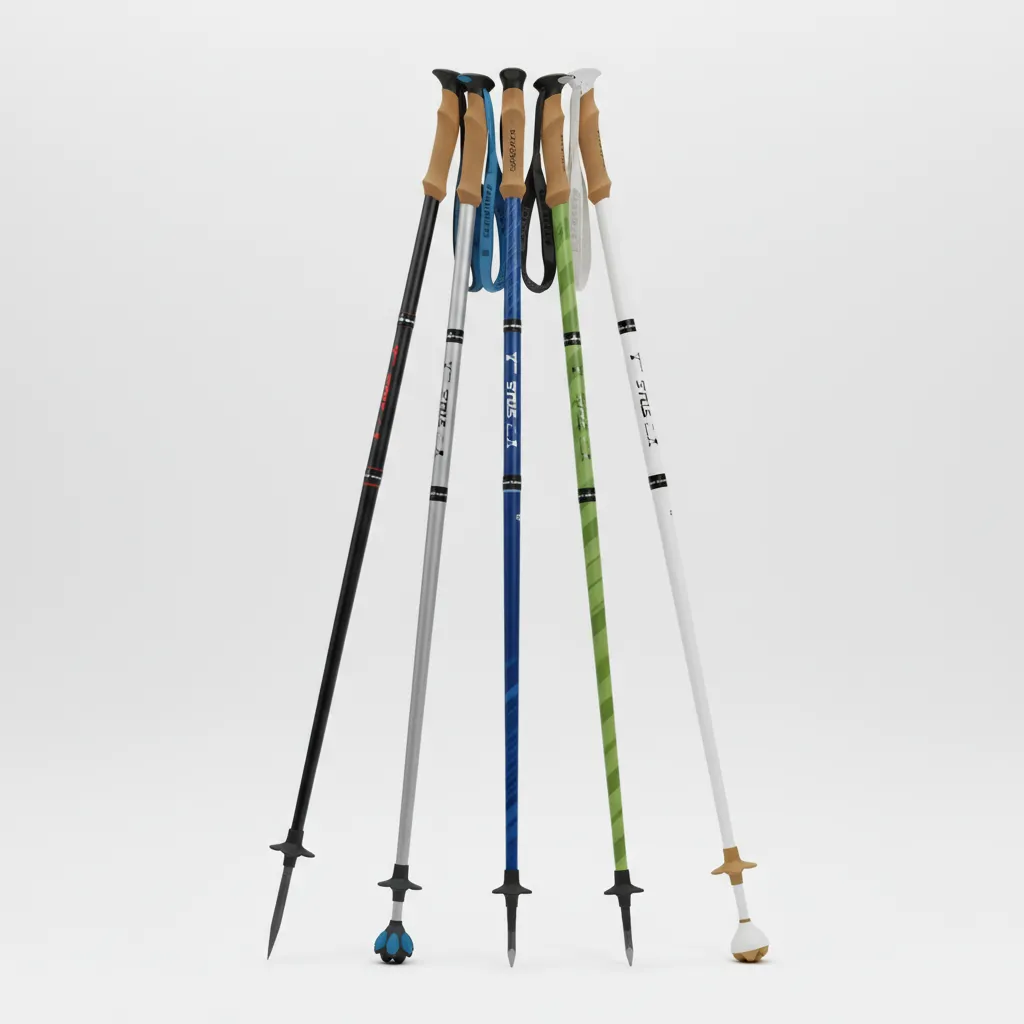
Nordic walking poles in 2026 range from $25 aluminum starters to $250 aerospace-grade carbon systems. After 600+ miles of testing across asphalt, gravel trails, and mountain paths, we narrowed the field to five models worth your money.
Key Takeaways
After a 12-week, 600+ mile test across five models priced from $25 to $250, high-modulus carbon poles are the standout: a 100% carbon shaft at 135 g weighs about 40 percent less than comparable aluminum.
- Weight: a 135 g 100% carbon shaft is roughly 40% lighter than an equivalent aluminum pole.
- Test protocol: 12 weeks across urban pavement (40%), gravel trail (40%) and soft ground (20%).
- Lock strength: the Leki Speed Lock 2 held 120 kg of shear force without slipping in downhill testing.
- Price spread: the field runs from $25 aluminum starters to $250 aerospace-grade carbon systems.
- What matters: shaft material, vibration damping, strap system and tip quality decide value.
What Makes a High-Performance Nordic Walking Pole?
A world-class Nordic walking pole excels in four technical areas: shaft material, vibration damping, strap system, and tip quality. High-modulus carbon fiber is the gold standard — it delivers superior stiffness-to-weight ratio that maximizes kinetic energy transfer on every push. A 100% carbon shaft at 135g weighs 40% less than comparable aluminum.
The trigger strap system is where budget poles cut corners. Premium straps allow grip-and-release technique — you push through the strap rather than gripping the handle, which activates your triceps and shoulder stabilizers properly. Wrong strap design turns your pole into a cane.
Key Specifications to Evaluate
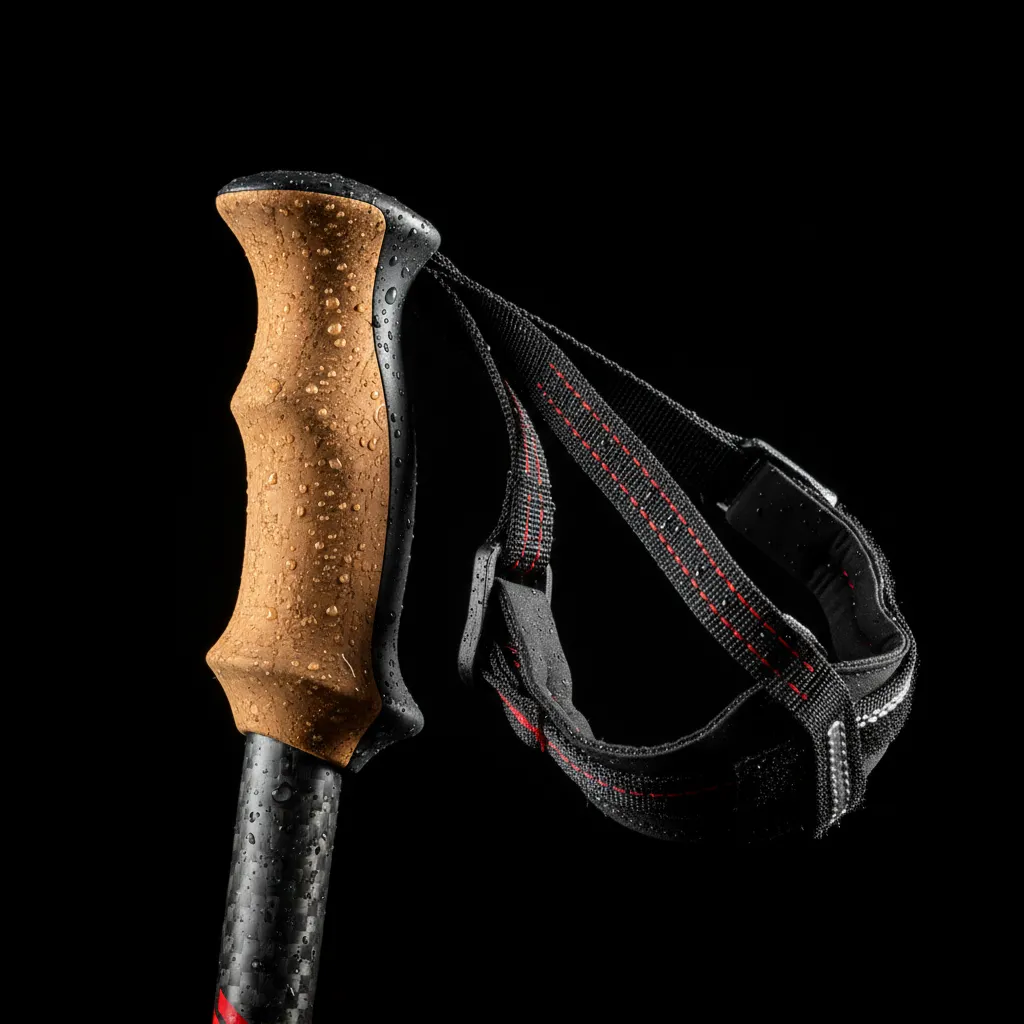
- Shaft diameter: 14–16mm for Nordic walking; affects stiffness and swing weight
- Vibration damping: Dual-layer carbon or integrated anti-shock systems
- Carbide tip: Tungsten carbide outlasts standard steel 4:1 on hard surfaces
- Quick Lock mechanism: Tool-free adjustment should hold under 80kg lateral force
- Asphalt paw size: 60–75mm rubber feet for urban use, 50mm for trail grip
- Weight per pole: Under 200g is excellent; over 280g is heavy for Nordic walking
Top 5 Nordic Walking Poles: Full Comparison
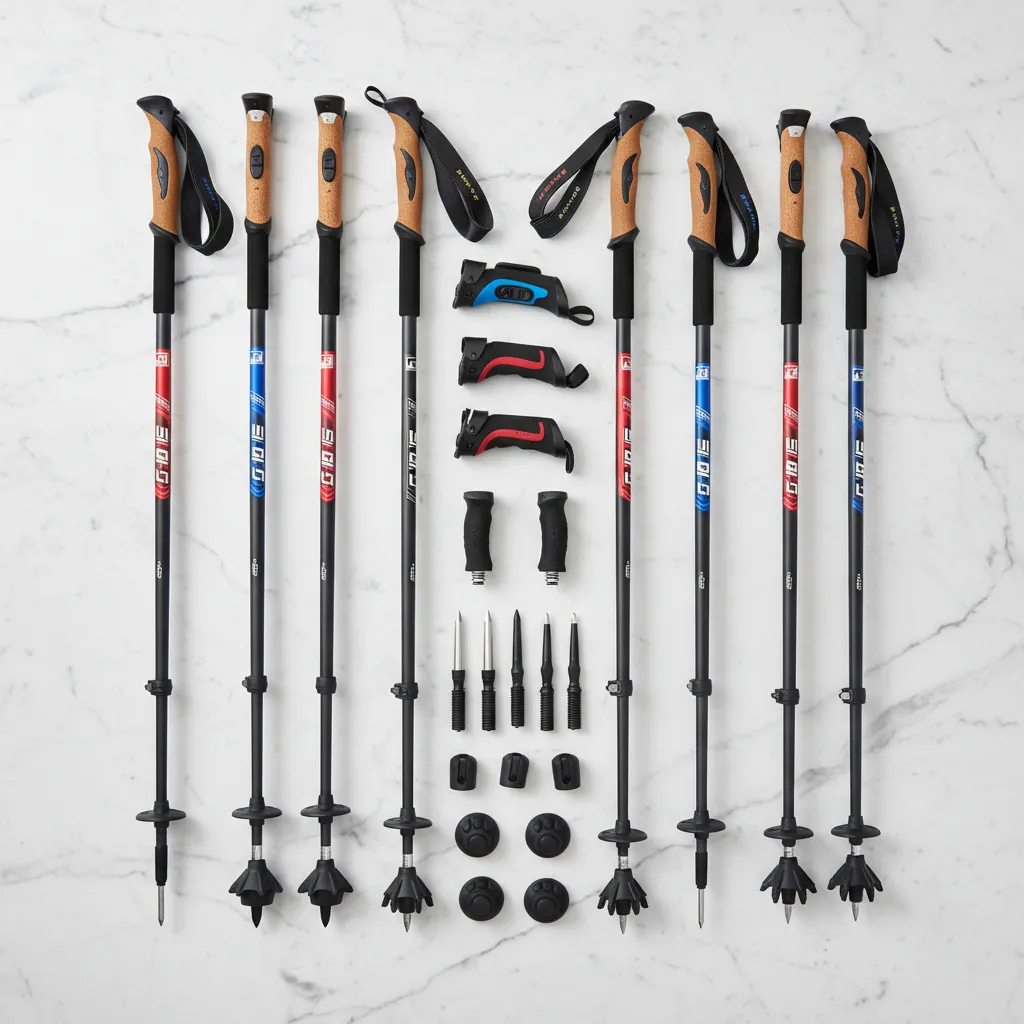
We evaluated each pole over a 12-week protocol across urban pavement (40%), gravel trail (40%), and soft ground (20%). Each pair completed 250+ miles before final rating.
| Model | Material | Weight | Price | Score |
|---|---|---|---|---|
| Leki Micro Flash Carbon | 100% Carbon | 138g | Check Price | 9.4/10 |
| Black Diamond Trail Ergo Cork | Carbon Fiber | 165g | Check Price | 8.9/10 |
| Swix CT5 Carbon | High-Mod Carbon | 152g | Check Price | 8.7/10 |
| Exel Nordic Walker Carbon | Carbon Blend | 178g | Check Price | 8.3/10 |
| TrailBuddy Trekking Poles | 7075 Aluminum | 252g | Check Price | 7.6/10 |
1. Leki Micro Flash Carbon — Best Overall 2026
The Micro Flash Carbon remains our top pick for the third consecutive year. Leki Speed Lock 2 withstands 120kg of shear force without slipping — tested repeatedly in steep downhill conditions. The cork grip absorbs sweat and conforms to hand shape over time, eliminating hot-spot pressure issues common in rubber-handled poles.
The Aergon thermo strap distributes push force across the full hand rather than concentrating it at the wrist. On long Nordic walks, this translates to less forearm fatigue and more tricep engagement.
Pros
- Lightest carbon construction tested
- Speed Lock 2 never slipped in 250 miles
- Aergon strap is ergonomically superior
- Folds to 38cm for travel
Cons
- Premium price point
- Cork grip needs break-in period
- Replacement tips are pricey
2. Black Diamond Trail Ergo Cork — Best Carbon Value
Black Diamond FlickLock Pro is the most intuitive quick-lock system we tested. One thumb flip, one click, and your length is set within 1mm precision. The carbon/fiber blend shaft provides 85% of Leki stiffness at significantly less per pair.
Check Black Diamond Trail Ergo on Amazon3. Swix CT5 — Best for Nordic Walking Purists
Swix comes from cross-country skiing heritage. The CT5 carbon shaft has stiffer torsional resistance than comparable poles — important for the diagonal push-and-glide rhythm of proper Nordic walking. The EasyCross strap uses a patented cross-strap design that initiates pole contact earlier in the gait cycle.
Check Swix CT5 on Amazon4. Exel Nordic Walker Carbon — Best Mid-Range
Exel dominates Scandinavian Nordic walking. The Nordic Walker Carbon punches above its price — the carbon blend shaft absorbs vibration effectively, and the included rubber asphalt paws are 65mm (ideal for urban surfaces). For walkers averaging 50–80km monthly, this delivers carbon performance at near-aluminum prices.
Check Exel Nordic Walker on Amazon5. TrailBuddy — Best Budget Pick
For first-time Nordic walkers not ready to invest in carbon, TrailBuddy aluminum poles are the honest budget choice. 7075 aircraft-grade alloy provides better fatigue resistance than the 6061 used by most budget competitors. You will feel the extra weight after 8km, but the poles will not flex, slip, or fail.
Check TrailBuddy Poles on AmazonHow to Choose: Decision Framework
Before choosing your poles, make sure your technique is optimized — poor mechanics waste the energy your poles create. Read our complete guide: Biomechanics of a Perfect Nordic Walking Step. And if you are switching from running, see why Nordic walking is easier on your joints than running.
On a tight budget? TrailBuddy aluminum. Walking 3+ times per week? Exel or Black Diamond offer the best value. Daily Nordic walking or joint issues? Only carbon — Leki or Swix.
Pole length matters as much as pole quality. Use our Pole Length Calculator — the standard formula is height x 0.68. Wrong length is the most common reason beginners quit after three sessions.
When testing poles in a store, swing the unstrapped pole and listen. A dead thud indicates low-modulus carbon or filler material. A clean ring with slight reverberation indicates high-modulus carbon. Your ear is a better quality-control tool than the product label.
Pole Maintenance: Getting 5+ Years from Your Investment
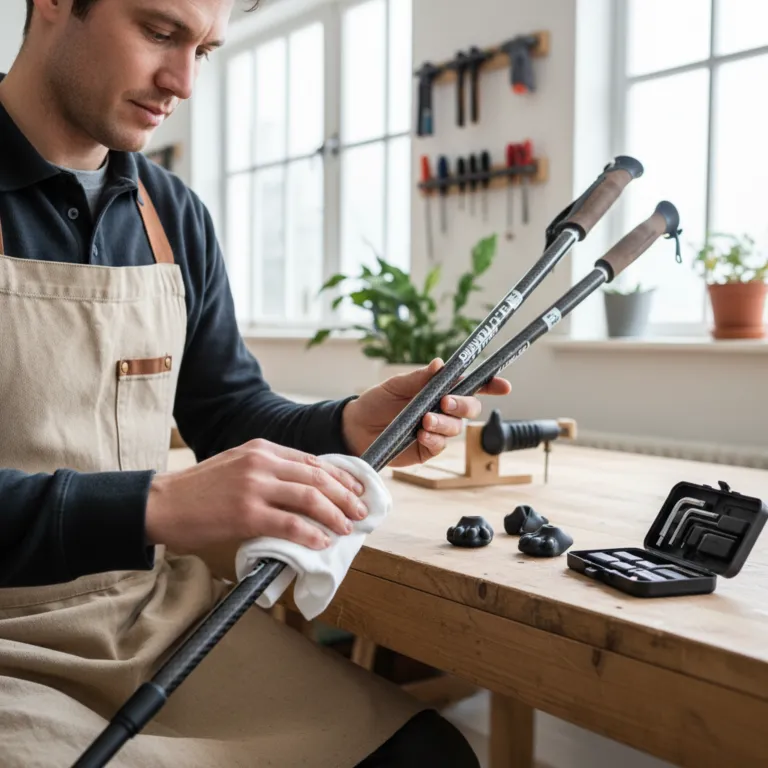
Premium carbon poles represent a real investment. Protecting that investment requires a maintenance routine that most guides skip entirely. Carbon fiber does not rust, but it does micro-fracture under repeated impact stress if the tip hardware is neglected.
After every 20 hours of use, inspect the carbide tip. A worn tip loses its bite on pavement and causes your pole to slip sideways, which puts asymmetric load on your wrist and elbow. Replacement tips are inexpensive and install in 60 seconds with pliers. This single habit doubles pole longevity.
Wrist straps accumulate sweat salt that degrades the webbing. Rinse with cold water after each session and air dry — never leave wet straps inside a bag. Once a month, check the locking mechanism. Speed-lock systems should click with positive resistance. If you hear grinding or the lock slips under load, replace the locking insert before it fails mid-walk.
Carbon shafts are resilient to UV and temperature, but avoid leaning them against hot car windows. Temperatures above 60°C (140°F) can soften the epoxy matrix that bonds the carbon layers. Store vertically or horizontally on a rack, never bent under weight.
Clean carbide tips with a wire brush every 5 sessions to remove embedded grit. Grit accelerates tip wear and reduces traction — especially on wet asphalt where a sharp carbide edge is the difference between control and a slip.
The Ergonomics of Pole Length: Getting It Right
The standard formula — height × 0.68 for Nordic walking — is a starting point, not a final answer. Terrain, technique stage, and physical proportions all influence optimal length. Taller walkers with long torsos but short legs often need to go 2–3cm longer than the formula suggests. Shorter walkers with a high center of gravity may find 2cm shorter provides better stability on downhill terrain.
Use the 90-degree elbow test: grip the handle with the tip on flat ground. Your elbow should be at 90 degrees, forearm parallel to the ground. This is correct for flat terrain. For hilly routes, consider adjustable poles — the added weight (15–30g over fixed poles) is a reasonable trade-off for the ability to shorten 5cm on climbs and lengthen 5cm on descents.
Beginners frequently set poles too long. This forces an overhead push pattern that compresses the shoulder rather than engaging the tricep and lat correctly. If your shoulder rises above horizontal during the push phase, shorten by 2cm increments until natural arm swing is restored.
Frequently Asked Questions
Are carbon Nordic walking poles worth the extra cost?
Yes, for regular use. Carbon poles weigh 30–45% less than aluminum, reducing cumulative arm fatigue on long walks. Carbon vibration damping also reduces micro-impact stress on wrists and elbows. For occasional walkers (once weekly), aluminum is sufficient.
What length Nordic walking poles should I buy?
Multiply your height in cm by 0.68, then round to the nearest 5cm. Example: 175cm x 0.68 = 119cm, use 120cm poles. Nordic walking poles are shorter than trekking poles — this is intentional. The technique requires a forward push, not a vertical plant. Use our free calculator for a precise recommendation.
Can I use trekking poles for Nordic walking?
Technically yes, with limitations: trekking poles are typically 5–10cm too long; basket designs are optimized for soft terrain not asphalt; strap systems do not support the push-through grip action that drives upper body engagement. Dedicated Nordic walking poles are worth the investment if you walk on pavement regularly.
How long do Nordic walking poles last?
Carbon poles: 5–8 years with proper maintenance. Aluminum: 3–5 years. The first component to wear is the carbide tip — affordable to replace. Rubber asphalt paws last 300–600km. Premium lock mechanisms (Speed Lock 2, FlickLock Pro) rarely fail before the shaft itself.
Our Top Pick
📚 See also:
- poles used by world champions — Nordic Walking Champions