Nordic Walking in Winter: Cold Weather Gear and Safety Guide
Winter doesn’t end Nordic walking season — it transforms it. Fresh snow, crisp air, and empty trails make cold-weather walking one of the most rewarding outdoor experiences. With the right gear and safety knowledge, Nordic walking in winter is not only possible but exceptional.
Key Takeaways
Winter Nordic walking comes down to a three-layer clothing system plus pole adjustments – snow baskets, ice tips, and lengthening poles 2 to 3 cm to offset thick gloves.
- Layering: base, mid and outer layers; expect to remove the mid layer after 10-15 minutes.
- Pole length: add 2-3 cm to compensate for the higher grip height with winter gloves.
- Traction: fit snow baskets and ice tips for snow and frozen ground.
- First 15 minutes: should feel easy as the body warms its extremities.
- Adherence: outdoor training drop-off of 40-60% in winter is beaten by habit and the right gear.
The Benefits of Winter Walking
Pros
- Burns 10-15% more calories than summer (thermogenesis boost)
- Poles provide critical stability on icy terrain
- Winter air quality often better than summer smog
- Empty trails — more peaceful and reflective sessions
- Cold adaptation improves immune function
- Maintains fitness and mood through winter months
Cons
- Ice traction required on glazed surfaces
- Layering system requires investment in quality clothing
- Darkness limits training windows at high latitudes
- Exposed hands at high risk below -10°C wind chill
- Wet snow clogs rubber tips — ice spikes needed
- Snow-covered terrain provides additional resistance, increasing calorie burn by 30–50%
- Cold air triggers thermogenesis — additional calorie burning to maintain body temperature
- Natural light exposure (even through clouds) maintains vitamin D levels and circadian rhythms
- Reduced inflammation response in cold air benefits arthritis sufferers
- Mental health benefits of outdoor activity are amplified in winter months when mood dips are common
Essential Winter Clothing: The Layering System
Base Layer
Merino wool is the gold standard for cold-weather base layers — it wicks moisture, insulates when wet, and resists odor through multi-day use. Synthetic alternatives (polyester, polypropylene) dry faster but lack merino’s natural odor resistance. Avoid cotton at all temperatures below 10°C — it loses all insulating properties when wet.
Mid Layer
Fleece (Polartec 100/200) or a lightweight down jacket. Nordic walking generates significant body heat, so you’ll often need to remove the mid layer after 10–15 minutes of walking — choose one that fits in a backpack pocket. Grid fleece offers excellent warmth-to-weight ratio for active use.
Outer Layer
A soft-shell jacket offers excellent breathability for active walking in light precipitation. Hard-shell (Gore-Tex) for heavy rain/snow. Key features for Nordic walking: underarm zip vents, articulated sleeves that allow full arm swing, tight cuffs that seal against pole grips.
Extremities: Where Heat Loss Matters Most
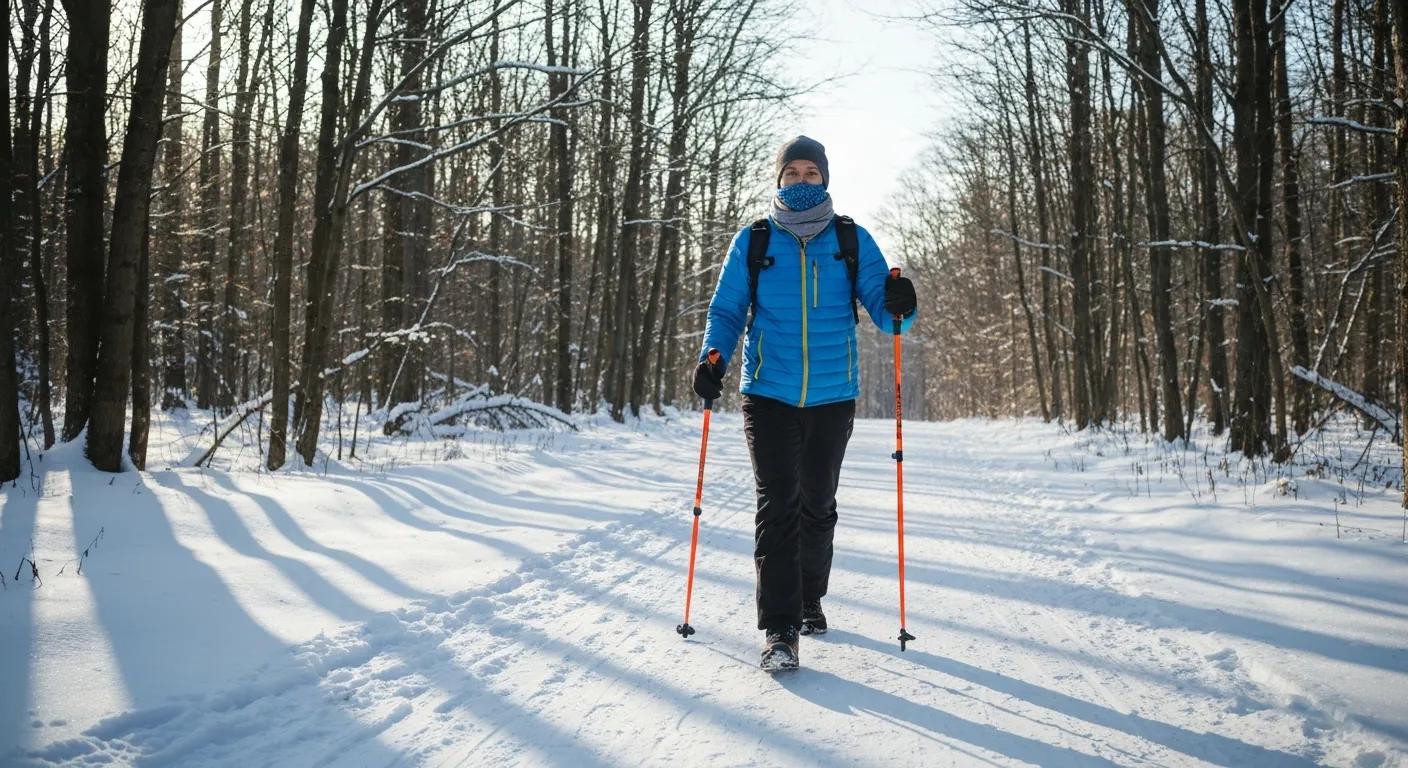
- Head: A fleece hat covering the ears eliminates significant heat loss. Replace with headband if overheating
- Hands: The strap system makes gloves critical — thin liner gloves under a removable mitten work for extreme cold. Waterproof gloves for wet snow conditions
- Feet: Waterproof boots essential. Wool socks, never cotton. Toe warmers (chemical hand warmers placed under toes) for temperatures below -10°C
- Face: Neck gaiter/balaclava for temperatures below -5°C; protects breathing passages and prevents cold-induced coughing
Pole Adjustments for Winter
Snow Baskets
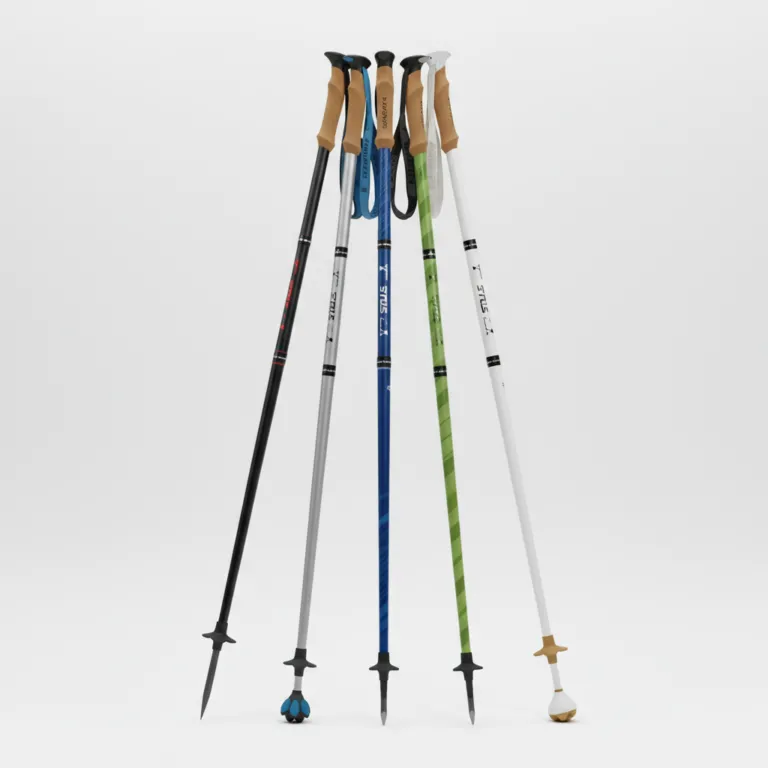
Replace summer rubber tips with snow baskets — larger circular baskets that prevent poles sinking into soft snow. Most poles have a twist-lock system for swapping. Snow baskets come in two sizes: small (packed snow, light powder) and large (deep, unpacked powder).
Ice Tips
On icy or compressed snow surfaces, exposed carbide tips provide superior grip compared to rubber boots. If walking on a mix of ice and dry pavement, keep rubber boots on the poles but slow down and shorten stride length on icy patches.
Length Adjustment
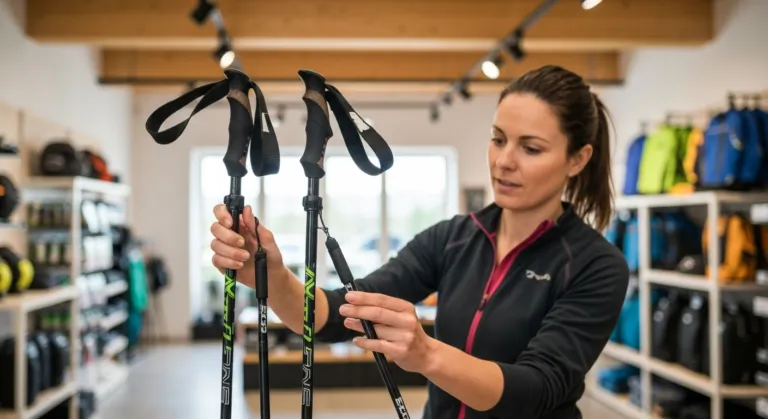
With thick winter gloves, your effective hand position changes — adjust pole length up by 2–3 cm to compensate for reduced grip height. Verify the 90-degree elbow position with full winter gear on before heading out.
Footwear for Winter Nordic Walking
- Insulated waterproof boots: Essential for snow and wet conditions. Look for 200g Thinsulate rating for temperatures down to -10°C
- Ice traction devices: Yaktrax, Microspikes, or similar devices attach to boots and provide grip on ice. Carry these even when ice isn’t expected — conditions change
- Gaiters: Low gaiters prevent snow entering boot tops; essential in deep snow conditions
Safety Protocols for Cold Weather
- Tell someone your route and expected return time — weather can change rapidly in winter
- Recognizing hypothermia: Uncontrollable shivering, confusion, slurred speech, loss of coordination. Stop, add insulation, seek shelter, call for help
- Recognizing frostbite: Numbness, pale or grey skin, waxy texture. Do not rub — rewarm slowly with body heat. Seek medical attention
- Avalanche awareness: If walking in mountain terrain after heavy snowfall, check local avalanche forecasts and carry appropriate safety equipment
- Shortened days: In winter, darkness comes early. Turn back earlier than planned to avoid navigation in darkness
Warming Up in Cold Weather
Cold muscles tear more easily — extend your warm-up to 10 minutes of easy walking before increasing pace. Do arm circles and shoulder rolls before planting poles. The first 10–15 minutes of a winter walk should feel easy — your body is warming its extremities and directing blood flow appropriately.
There’s no such thing as bad weather for Nordic walking — only inadequate clothing. Scandinavia’s Nordic walkers continue year-round through conditions that would stop most outdoor enthusiasts.
Winter Nordic walking rewards those who embrace it with uncrowded trails, dramatic landscapes, and the deep satisfaction of exercising comfortably in conditions that drive others indoors. Invest in the right gear once, and winter becomes not the end of the season, but its most beautiful chapter.
Explore More
Related tools: Winter Calorie Calculator | Pole Length Calculator
Recommended reading: Trekking Gear Guide | Poles Buying Guide
The single biggest winter Nordic walking mistake is under-dressing the core and over-dressing the limbs. Your core generates heat that warms your extremities through blood circulation. A quality 100g down vest under a wind jacket does more for hand temperature than doubling your glove thickness.
Essential Winter Walking Gear on Amazon
Yaktrax Walk — Ice Traction Cleats →
Smartwool Merino 250 Base Layer →
Lightweight Insulated Mid-Layer →
Buff Merino Wool Neck Gaiter →
Nordic Walking Ice Spike Tips →
Building Your Winter Training Habit: Psychology and Consistency
Winter training adherence drops by 40-60% for outdoor athletes in northern latitudes between November and March. The primary barrier is not cold — it is the decision friction of cold-weather preparation. Removing this friction is the key to winter consistency, not willpower.
The single most effective strategy: prepare your kit the night before. Lay out every item you will wear on a chair by the door. In the morning, you put it on and walk — the decision was already made the previous evening. This removes the 5-minute preparation delay that, in warm weather, is trivial but in cold weather often leads to “I’ll go tomorrow.”
A secondary strategy: walk earlier in the day when possible. Winter afternoon weather is less predictable than morning, daylight is limited, and motivation decreases as the day progresses. A 7am Nordic walk before work consistently outperforms the intended 5pm session that gets cancelled when the meeting runs late and the temperature drops.
Reflective Gear and Visibility in Low-Light Conditions
Winter means more sessions in low-light conditions: early morning, late afternoon, or overcast grey days with poor contrast. Reflective strips on your jacket, a headlamp for true dawn/dusk sessions, and high-visibility colors (orange, yellow, lime green) are not optional in areas with road crossings or cyclist-shared paths. Nordic walking poles themselves are largely invisible to drivers — your clothing must do the visibility work.
A rear blinky red LED light clipped to your backpack adds 30g and is visible from 500+ meters behind you. This single piece of gear eliminates the primary risk of winter road-adjacent Nordic walking: being struck by a vehicle in poor visibility.
Frequently Asked Questions
What temperature is too cold for Nordic walking?
With correct layering, Nordic walking is practical down to about -20°C air temperature (-15°C with low wind). Below this, exposed skin risk becomes serious even during exercise. The key variable is wind chill, not air temperature — a calm -15°C day is safer than a windy -5°C day. Always check the wind chill forecast, not just temperature.
Do I need special poles for winter Nordic walking?
Your regular poles work fine in winter with one modification: replace rubber paw tips with ice-spike tips when temperatures drop below -3°C. Rubber becomes rigid and loses grip in cold conditions. Ice-spike tips provide reliable traction on compressed snow and black ice. Baskets are useful in deep snow to prevent pole sinking.
How do I prevent my hands from freezing while Nordic walking?
Use the Nordic walking glove-strap properly (open hand technique) — this keeps blood flowing to the fingertips. In temperatures below -10°C, add a thin liner glove inside your trekking glove. Avoid cotton gloves entirely. Chemical hand warmers in your jacket pocket provide a quick rewarming option for rest stops.