Photo Hiking: The Complete Camera and Gear Guide for Trail Photographers
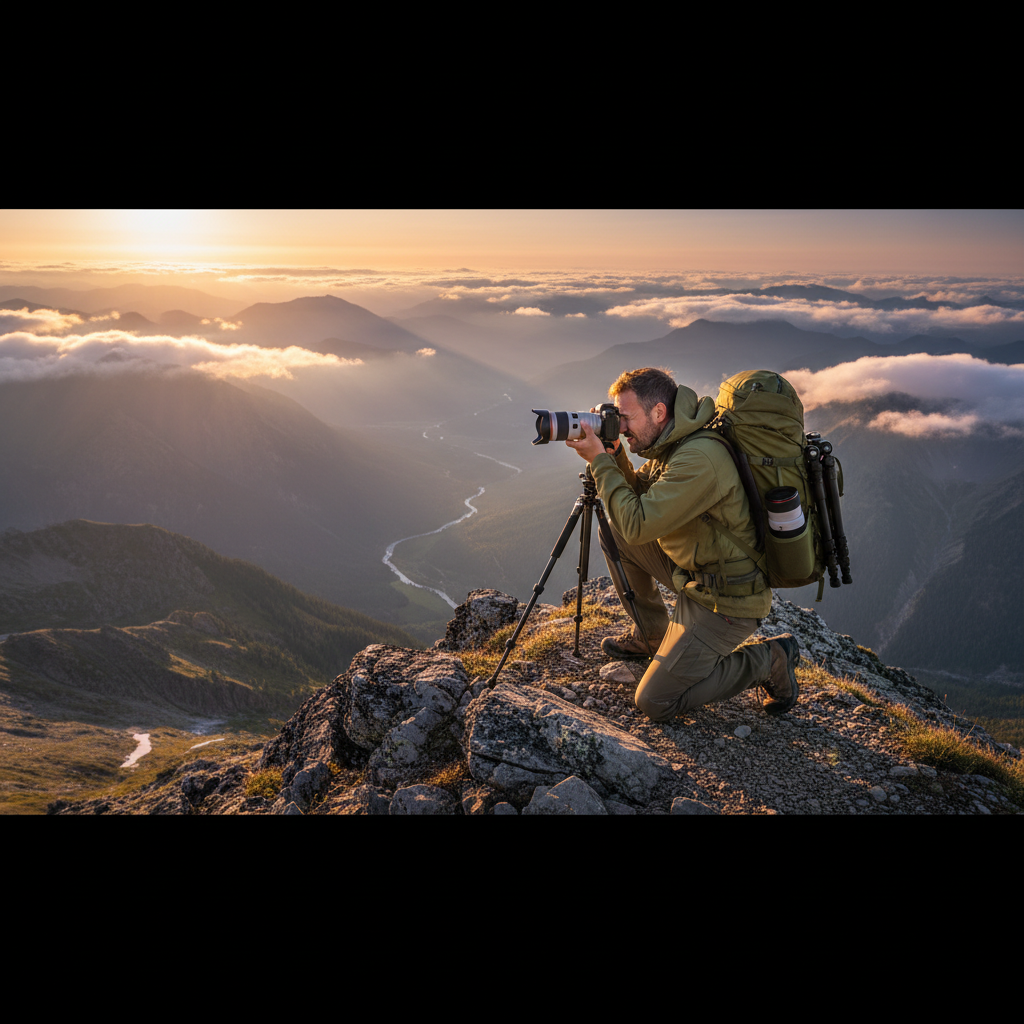
A photo hike is not a hike with a camera. It is a fundamentally different way of moving through the landscape — slower, more intentional, with every ridgeline evaluated as a composition and every shift of light treated as an event. The challenge: carrying enough gear to capture the moment without turning your pack into an anchor. This guide covers the cameras, lenses, tripods, bags, and techniques that let you shoot like a pro without hiking like a pack mule.
Key Takeaways
For photo hiking, a weather-sealed APS-C mirrorless body paired with one versatile zoom is the sweet spot of image quality and pack weight – the Sony a6400 (24.2 MP, 14.2 oz) with an 18-135 mm lens covers nearly every trail scene.
- Body: APS-C mirrorless like the Sony a6400, 24.2 MP, 425-point AF, weather-sealed, 14.2 oz.
- One-lens strategy: an 18-135 mm zoom covers wide to telephoto in a package lighter than a water bottle.
- Best light: shoot the golden and blue hours, roughly 45 minutes either side of sunrise and after sunset.
- Cold warning: at 32F batteries lose 30-50% capacity, so keep a power bank in your pack.
- Astro setup: use the widest, fastest lens (f/2.8 or wider, 14-24 mm equivalent).
Choosing a Camera for the Trail
The best trail camera is the one you actually carry. A 3 lb DSLR left at camp because it is “too heavy” takes zero photos. Here is the hierarchy:
| Camera Type | Weight | Image Quality | Best For | Trade-off |
|---|---|---|---|---|
| Smartphone | 7 oz | ⭐⭐⭐ | Casual, social sharing, always in pocket | Small sensor, limited in low light |
| Action camera | 5-6 oz | ⭐⭐⭐ | Video, POV, rugged conditions, water | Wide-angle only, tiny sensor |
| APS-C mirrorless | 14-18 oz (body) | ⭐⭐⭐⭐⭐ | Serious landscape, wildlife, astro, print | Need lenses, more weight |
| Full-frame mirrorless | 20-24 oz (body) | ⭐⭐⭐⭐⭐ | Professional quality, max dynamic range | Heavy with lenses, expensive |
| 360 camera | 7 oz | ⭐⭐⭐ | Immersive content, reframing later | Requires editing, niche output |
Our rule: If your camera system (body + lens + tripod) weighs more than 3 lbs total, you will leave something behind on hard days. Build your kit around this weight ceiling. An APS-C mirrorless with a travel zoom and ultralight tripod hits this perfectly.
Best Cameras for Photo Hiking
Sony Alpha a6400
24.2MP APS-C · 425-point AF · 4K video · 14.2 oz body · Flip-up screen · Weather-sealed
Fujifilm X-T30 II
26.1MP APS-C · Film simulations · 4K · 13.1 oz · Vintage dials · Beautiful JPEG colors
GoPro HERO 12 Black
27MP photos · 5.3K60 video · HyperSmooth 6 · Waterproof 33ft · 5.6 oz · Mount anywhere
Insta360 X4
8K 360° video · 72MP photos · Invisible selfie stick · AI editing · Waterproof 33ft
The One Lens Strategy
For most photo hikers, one versatile zoom lens covers 95% of trail scenarios. Changing lenses on a dusty trail risks sensor contamination and costs time you could spend shooting.
Sony E 18-135mm f/3.5-5.6 OSS
7.5x zoom range · Optical stabilization · 11.2 oz · Covers wide to telephoto · Sharp
Tamron 17-70mm f/2.8 Di III-A
Constant f/2.8 · Vibration Compensation · 18.6 oz · Stunning low-light · Sharp corner to corner
Tripods: Stability Without the Weight
A tripod unlocks the shots a handheld camera cannot: silky waterfalls, sharp night skies, long-exposure sunsets, and tack-sharp group shots. The key is finding one light enough to carry without thinking about it.
Peak Design Travel Tripod (Carbon)
2.8 lbs · Folds to 15.4″ · 60″ max height · Phone mount included · Arca-Swiss compatible
Joby GorillaPod 5K Kit
1.5 lbs · Flexible wrappable legs · Ball head · 11 lb capacity · Wraps around trees and rocks
Manfrotto Element Traveller Small
2.4 lbs · 56″ max height · Folds to 12.6″ · Ball head · Twist locks · Shoulder bag included
Camera Bags and Carry Systems
The eternal dilemma: camera bag or hiking pack? The best solution is a hybrid — a pack designed for both trail gear and camera gear with quick-access panels.
Lowepro PhotoSport BP 24L AW III
24L · Rear camera access · Rain cover · Hip belt · Fits body + 2-3 lenses + tripod · 2.9 lbs
Peak Design Everyday Sling 6L
6L · Quick-draw access · Fits mirrorless + lens · Padded dividers · Weatherproof
Essential Accessories
Peak Design Capture Clip v3
Clip camera to pack strap · Quick-release plate · 3 oz · Arca-Swiss · Hands-free hiking
Peak Design Slide Camera Strap
Adjustable length · Quick-connect anchors · Seatbelt-grade nylon · Sling or neck · 5.3 oz
SanDisk Extreme Pro 128GB SDXC
200MB/s read · V30 U3 · 4K video ready · ~2,000 RAW photos · Backup: always carry two
Lenspen NLP-1 Lens Cleaner
Carbon compound tip · Retractable brush · 0.5 oz · Cleans smudges, dust, fingerprints instantly
K&F Concept ND1000 + CPL Filter (67mm)
10-stop ND for waterfalls · CPL cuts glare · Multi-coated · Slim frame · No vignetting
Photo Hike Techniques
The Golden Hours
Light is everything. The best landscape photos are shot in two windows:
- Sunrise hour (golden hour + blue hour): 45 min before sunrise to 45 min after. Warm, directional, long shadows.
- Sunset hour: Same window. The most photographed and for good reason.
- Midday: Harsh, flat light. Shoot waterfalls (ND filter), macro details, forest canopy, or rest.
- Blue hour: 30 min after sunset. Sky goes deep blue. Requires tripod. Magical for camps and silhouettes.
Composition Rules for Trail Shots
| Rule | What It Does | Trail Example |
|---|---|---|
| Leading lines | Guides eye into the frame | Trail path vanishing into mountains |
| Rule of thirds | Places subject off-center | Summit at top-third intersection |
| Foreground interest | Adds depth and scale | Wildflowers in front of mountain backdrop |
| Frame within frame | Creates visual depth | Shoot through a cave mouth or tree arch |
| Scale reference | Shows how big the landscape is | Person standing on ridge, dwarfed by peaks |
| Reflections | Doubles the visual impact | Mountain lake mirror shot at dawn |
Waterfall Photography
Silky waterfalls require three things:
- Tripod — any movement ruins the shot at slow shutter speeds
- ND filter (10-stop) — allows shutter speeds of 1-30 seconds in daylight
- Settings: ISO 100, f/8-f/11, shutter 1-4 seconds. Adjust ND density to reach target shutter speed.
Night Sky Photography
Milky Way shots from the trail are the crown jewels of photo hiking. Essential setup:
- Camera: APS-C or full-frame with good high-ISO performance
- Lens: Widest and fastest available (f/2.8 or wider, 14-24mm equivalent)
- Tripod: Mandatory. Even a GorillaPod works.
- Settings: ISO 3200-6400, f/2.8, 15-25 seconds (use 500 rule: 500 ÷ focal length = max exposure before star trails)
- Timing: New moon nights, away from cities (your backcountry camp is perfect)
For more on nighttime shooting, see our Night Hiking Guide.
The Photo Hiker’s Kit by Trip Type
| Trip | Camera | Support | Accessories | Total Weight |
|---|---|---|---|---|
| Day Hike (casual) | Smartphone | GorillaPod or none | Battery case | ~7 oz added |
| Day Hike (serious) | Sony a6400 + 18-135mm | Peak Design Capture Clip | SD card, Lenspen, ND filter | ~1.8 lbs |
| Weekend | Sony a6400 + 18-135mm | GorillaPod 5K + Capture Clip | Extra battery, SD cards, Lenspen, filter set | ~2.8 lbs |
| Multi-Day Photo Trek | a6400 + 18-135mm + fast prime | Peak Design Travel Tripod + Capture | 2 batteries, 2 SD cards, filter kit, power bank | ~4.5 lbs |
Power Management for Photographers
A dead camera battery at sunset on the best ridge of your trip is heartbreaking. Plan power like you plan water:
- Carry 2-3 camera batteries — one in body, others in warm pocket
- Power bank charges via USB-C — most modern mirrorless cameras charge from USB. Keep a power bank in your pack
- Cold drains batteries fast — at 32°F, batteries lose 30-50% capacity. Sleep with batteries in your sleeping bag
- Turn off image review — “chimping” (checking every shot on screen) is the #1 battery killer
Nordic Walking + Photography
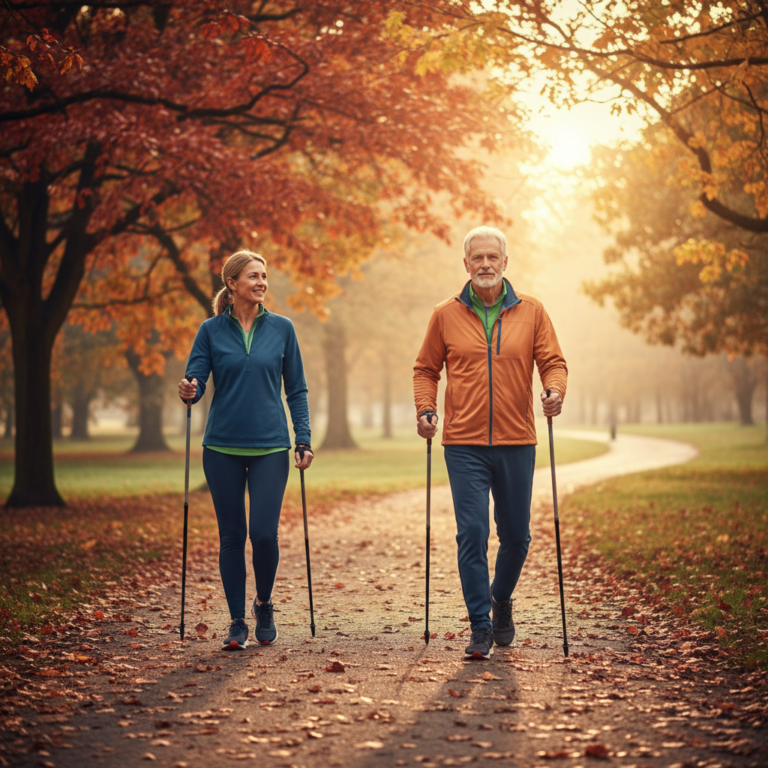
Nordic walking poles and a camera might seem incompatible, but the Peak Design Capture Clip changes everything. Camera rides on your chest strap, accessible in 2 seconds. Poles in hands. When you see a shot, plant poles, unclip camera, shoot, reclip, walk. The upright Nordic walking posture also gives you a higher vantage point for landscape compositions than a hunched backpacker.
Bottom Line
The best camera system for the trail weighs under 3 lbs and lives on your chest strap, not buried in your pack. A Sony a6400 with the 18-135mm zoom, a Capture Clip, and a GorillaPod gives you professional-quality landscapes, wildlife, and night sky shots — all in a package that does not slow you down.
The mountain does not pose. Be ready.
Our Top Pick

About the Author
Alex Mercer — INWA Level 2 Nordic Walking Instructor
Certified by the International Nordic Walking Federation (INWA) since 2019, Alex has coached 500+ walkers from beginners to ultra-distance competitors. Sports science background with a focus on biomechanics, gait analysis, and evidence-based training protocols. Regular contributor to walking and outdoor publications.