Salomon X Ultra 360 vs X Ultra 5: Which One to Buy
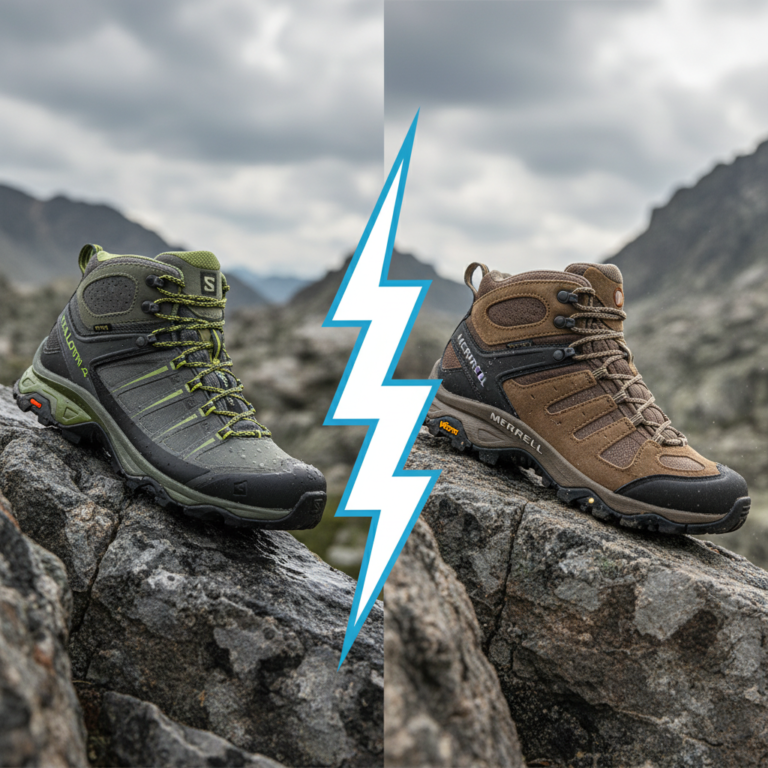
Short answer: the Salomon X Ultra 5 is the higher-tier, more protective model, and the X Ultra 360 is the lower-priced, simpler take on the same recipe. In their low GORE-TEX versions both use Salomon’s Advanced Chassis, EnergyCell foam, an All-Terrain Contagrip outsole, Quicklace and a GORE-TEX membrane, and Salomon lists the same 13 oz weight per men’s shoe. The extra money for the X Ultra 5 buys a Kevlar-reinforced Matryx upper, Active Support wings that hold the foot more firmly, a terrain rating that includes rocky and technical trails, and a men’s Wide option.
Quick Answer
Choose the X Ultra 5 GTX if you hike rocky, steep or technical trails, carry a heavier pack, want the tougher upper, or need a Wide fit. Choose the X Ultra 360 GTX if you mostly hike mixed, moderate trails and want the lower price tier with the same GORE-TEX membrane, outsole name and official weight.
- Price tier: the X Ultra 360 is the cheaper line, in both the low and Mid versions.
- Weight (Salomon spec): identical for the low GTX versions: 13 oz per men’s shoe and 11 oz per women’s shoe. In the Mid GTX, the 360 is lighter (14 oz against 16 oz).
- Upper: the 360 uses a welded synthetic and textile upper with recycled content; the X Ultra 5 uses Matryx textile with Kevlar yarn and a stitched construction.
- Fit: the X Ultra 5 adds Active Support wings and comes in men’s Wide. In RunRepeat’s measurements its toe box was narrower than the X Ultra 360’s.
- Outsole wear: both use All-Terrain Contagrip, but RunRepeat measured less wear on the X Ultra 5 GTX (0.8 mm) than on the X Ultra 360 (1.3 mm).
Our Picks at a Glance
Salomon X Ultra 5 GTX
13 oz per men’s shoe (Salomon spec) · GORE-TEX · Matryx upper with Kevlar yarn · Active Support · Quicklace · Regular and Wide
Salomon X Ultra 360 GTX
13 oz per men’s shoe (Salomon spec) · GORE-TEX · welded upper with recycled materials · Quicklace · Regular width
Salomon X Ultra 5 Mid GTX
16 oz per men’s shoe (Salomon spec) · GORE-TEX · Matryx upper · traditional laces · Regular and Wide
Salomon X Ultra 5 GTX (women’s)
11 oz per women’s shoe (Salomon spec) · GORE-TEX · Matryx upper · Active Support · Quicklace
Official Specs: X Ultra 360 GTX vs X Ultra 5 GTX
All figures below come from the product pages on salomon.com (US), checked October 23, 2026. Salomon gives weight per shoe rounded to the ounce and does not publish heel drop or stack height on these pages, so we leave those to the measurement table further down.
| Spec (Salomon) | X Ultra 360 GTX | X Ultra 5 GTX |
|---|---|---|
| Price tier | Lower (entry point to the X Ultra family) | Higher |
| Salomon’s terrain rating | Mixed | Rocky and technical, Mixed |
| Weight per shoe, men’s low | 13 oz | 13 oz |
| Weight per shoe, women’s low | 11 oz | 11 oz |
| Weight per shoe, men’s Mid GTX | 14 oz | 16 oz |
| Upper | Synthetic / textile, welded (stitch-free), recycled materials | Matryx textile with Kevlar yarn, stitched construction |
| Fit features | SensiFit | SensiFit plus Active Support wings |
| Chassis | Advanced Chassis | Advanced Chassis |
| Midsole | EnergyCell EVA | EnergyCell EVA |
| Cushioning (Salomon’s label) | Soft and protective | Soft and protective |
| Insole | Molded OrthoLite sockliner | Molded OrthoLite sockliner |
| Outsole | All-Terrain Contagrip | All-Terrain Contagrip |
| Waterproofing | GORE-TEX membrane | GORE-TEX membrane |
| Lacing | Quicklace (low); regular laces (Mid) | Quicklace (low); regular laces (Mid) |
| Widths on salomon.com (US) | Regular | Regular and Wide (men’s GTX and Mid GTX) |
What Independent Measurements Show
Salomon’s spec sheet makes the two shoes look almost identical. RunRepeat cuts shoes apart and measures them in men’s US 9, which shows where they really differ. One caveat: RunRepeat measured the non-waterproof X Ultra 360, not the GTX, so its weight is not a like-for-like comparison with the X Ultra 5 GTX.
| Measurement (RunRepeat, men’s US 9) | X Ultra 360 (non-GTX) | X Ultra 5 GTX |
|---|---|---|
| Weight per shoe | 367 g / 12.9 oz | 377 g / 13.3 oz |
| Heel-to-toe drop (measured) | 15.5 mm | 12.0 mm |
| Heel stack | 34.4 mm | 32.4 mm |
| Forefoot stack | 18.9 mm | 20.4 mm |
| Midsole softness (AC, lower is softer) | 49.3 | 53.0 |
| Toe box width at big toe | 72.7 mm | 70.2 mm |
| Width at widest point | 97.9 mm | 91.1 mm |
| Lug depth | 4.5 mm | 4.0 mm |
| Outsole wear in abrasion test (lower is better) | 1.3 mm | 0.8 mm |
| Heel counter stiffness (1 to 5) | 4 | 5 |
Drop and stack are RunRepeat measurements, not Salomon figures.
Head-to-Head: Where They Differ
Price tier
The X Ultra 360 is Salomon’s lower-priced X Ultra, in both low and Mid form. If you want a GORE-TEX Salomon with ankle coverage on a tighter budget, the 360 Mid is the one to look at. Street prices change often, so compare current prices before deciding.
Fit and width
This is where the two shoes differ most. The X Ultra 5 adds Active Support, which Salomon describes as mobile wings that hold the foot in place and adapt to its shape and volume. RunRepeat measured its toe box at 70.2 mm at the big toe and 91.1 mm at the widest point, against 72.7 mm and 97.9 mm for the X Ultra 360, and calls the X Ultra 5 GTX a narrow, particularly snug fit. If you have narrow or average feet and want a locked-in feel on uneven ground, that is an advantage. If you have a wide forefoot, the regular X Ultra 5 may feel tight; the X Ultra 5 Wide GTX or Mid Wide GTX are the Salomon answers, since the 360 is not sold in Wide on salomon.com (US). For very wide feet, our Salomon vs Merrell comparison covers the roomier Moab 3.
Sizing: RunRepeat’s owner votes say both low shoes run about half a size small (28 votes for the X Ultra 5 GTX, 64 for the X Ultra 360), while the X Ultra 5 Mid GTX was voted true to size (33 votes). Try them on late in the day with your hiking socks, and buy where returns are free.
Cushioning and ride
Both midsoles are EnergyCell EVA foam, both use a molded OrthoLite sockliner, and Salomon labels both “soft and protective”. The measured numbers differ more than the labels suggest: the X Ultra 360 had a slightly softer midsole reading and a higher heel with a lower forefoot (a 15.5 mm measured drop against 12.0 mm). RunRepeat notes that the X Ultra 5 GTX can feel firm and unforgiving on easy, hard-packed trails. Neither is a plush, max-cushion shoe.
Chassis and stability
Both shoes are built on Salomon’s Advanced Chassis, a molded insert in the outsole meant to give lateral support without blocking natural foot movement. The X Ultra 5 combines it with Active Support and a stitched upper, and RunRepeat measured its heel counter at the top of its 1-to-5 stiffness scale (the 360 scored 4). RunRepeat’s X Ultra 360 review points readers who need confidence on technical terrain to the X Ultra 4, the X Ultra 5’s predecessor, and lists “not for technical terrain” among the 360’s cons. That matches Salomon’s own terrain labels: “Mixed” for the 360, “Rocky and technical, Mixed” for the X Ultra 5.
Outsole and grip
Salomon gives both shoes the same All-Terrain Contagrip label, described as built for wet, dry, hard and loose surfaces. The lugs on the 360 measured slightly deeper (4.5 mm against 4.0 mm), but the X Ultra 5 GTX lost only 0.8 mm of rubber in RunRepeat’s abrasion test against 1.3 mm for the 360. Salomon itself calls the X Ultra 5’s Contagrip “long lasting”. For frequent hikers, that slower wear is a clear reason to pay more.
Upper and durability
The X Ultra 360 GTX has a welded, stitch-free synthetic and textile upper with a protective mudguard and toecap, made with up to 50% recycled materials according to Salomon. The X Ultra 5 uses Matryx, a textile woven with individually coated Kevlar yarn that Salomon describes as abrasion resistant, plus a stitched upper construction.
Waterproofing
No difference in principle: both GTX versions use a GORE-TEX membrane, as do both Mid GTX boots. Like any waterproof hiking shoe, they breathe less than a mesh shoe; RunRepeat rated the X Ultra 5 GTX below the category average for breathability. If you hike mostly in hot, dry weather, the non-waterproof X Ultra 360 (which Salomon also lists) is worth a look. To keep the outer fabric shedding water, see how to waterproof hiking shoes.
Weight
On paper it is a tie in the lows: 13 oz per men’s shoe and 11 oz per women’s shoe for both GTX versions. RunRepeat’s numbers are also close (367 g for the non-waterproof 360, 377 g for the X Ultra 5 GTX). The Mids are a different story: Salomon lists the X Ultra 360 Mid GTX at 14 oz and the X Ultra 5 Mid GTX at 16 oz per men’s shoe.
X Ultra 360 Mid GTX vs X Ultra 5 Mid GTX
Both Mids drop Quicklace for traditional laces and add a higher collar. The X Ultra 360 Mid GTX keeps the welded, recycled-material upper and is about 2 oz lighter per shoe on Salomon’s spec sheet. The X Ultra 5 Mid GTX has the Matryx upper (with PU-coated leather, according to Salomon), Active Support and a Wide version. RunRepeat measured the X Ultra 5 Mid GTX at 437 g in men’s US 9 and noted a firm midsole, so it suits hikers who want a stable, grounded boot more than soft cushioning. For multi-day trips with a loaded pack, pick the X Ultra 5 Mid GTX; for day hikes where you just want ankle coverage, the 360 Mid is the value pick.
Which One Should You Buy?
| Your situation | Buy |
|---|---|
| Rocky, steep or technical trails | Salomon X Ultra 5 GTX |
| Mixed, moderate day hikes on a budget | Salomon X Ultra 360 GTX |
| Backpacking or heavier loads | Salomon X Ultra 5 Mid GTX |
| Women’s fit, technical trails | Salomon X Ultra 5 GTX (women’s) |
| Wide forefoot, want a Salomon | Salomon X Ultra 5 Wide GTX |
| Ankle coverage at the lowest price | Salomon X Ultra 360 Mid GTX |
| Hot, dry weather | Salomon X Ultra 360 (non-waterproof) |
Comparing more brands? Our top 10 trekking boots for 2026 puts both Salomons next to heavier backpacking boots, and the trekking boots buying guide explains how to choose between low shoes and mids.
A Note for Nordic Walkers
Both shoes work for Nordic walking on trails, gravel and wet, rooty paths, where the grip and lateral support help when you plant the poles on uneven ground. On pavement or smooth park paths, most walkers are better served by a lighter, more flexible walking shoe; see our best walking shoes for 2026.
Frequently Asked Questions
Is the X Ultra 5 worth it over the X Ultra 360?
Yes, if you hike rocky or technical trails often, need a Wide size, or want the more durable upper and slower-wearing outsole. For occasional hikes on mixed, moderate trails, the X Ultra 360 gives you the same membrane, chassis and official weight in the lower price tier.
Which is lighter, the X Ultra 360 or the X Ultra 5?
In the low GTX versions, Salomon lists both at 13 oz per men’s shoe and 11 oz per women’s shoe. In the Mid GTX versions the X Ultra 360 is lighter: 14 oz against 16 oz per men’s shoe.
Do the X Ultra 360 and X Ultra 5 fit the same?
No. The X Ultra 5 is the snugger shoe. RunRepeat measured a narrower toe box on the X Ultra 5 GTX (70.2 mm at the big toe against 72.7 mm), and Salomon adds Active Support wings to hold the foot. Owner votes on RunRepeat say both low versions run about half a size small.
Which is better for wide feet?
Among these two, the X Ultra 5 Wide GTX or X Ultra 5 Mid Wide GTX, because the X Ultra 360 is only sold in a regular width on salomon.com (US). The regular X Ultra 360 measured roomier than the regular X Ultra 5, so it can also work for slightly wider feet.
How We Compared
This comparison is written by Evgen Polishchuk, a Nordic walking athlete from Kyiv, Ukraine (club Nordic Brovary, 1st sports category); he is not a coach or a physician. The picks are based on Salomon’s official US product pages, independent measurements published by RunRepeat, and the owner fit votes RunRepeat aggregates. We did not use figures we could not trace to one of these sources. Prices are described only as tiers because they change often.
Sources
- Salomon specifications (salomon.com, US, checked October 23, 2026): X Ultra 360 GTX (men), X Ultra 360 GTX (women), X Ultra 360 Mid GTX, X Ultra 360 (non-waterproof), X Ultra 5 GTX (men), X Ultra 5 GTX (women), X Ultra 5 Mid GTX, X Ultra 5 Wide GTX, X Ultra 5 Mid Wide GTX.
- Independent measurements and owner fit votes: RunRepeat pages for the X Ultra 5 GTX, X Ultra 360 and X Ultra 5 Mid GTX.