How to Choose Trekking Boots: Complete Buyer’s Guide 2026
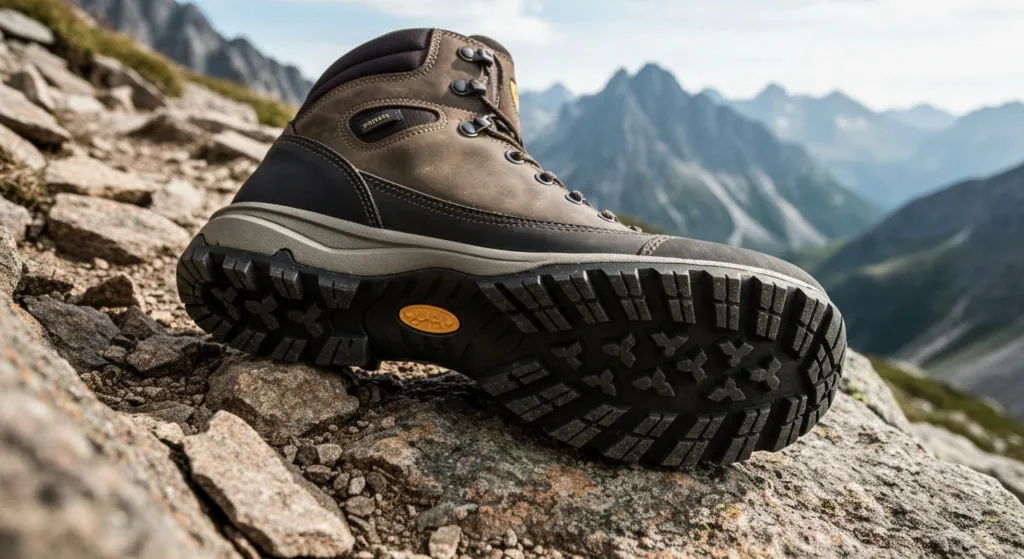
The right trekking boots can make the difference between a memorable adventure and a painful ordeal. With hundreds of options on the market, this guide breaks down exactly what to look for based on your terrain, distance, and foot type.
Key Takeaways
Choose trekking footwear by terrain and load: trail-running shoes for fast light trails, mid-cut boots for packs up to 15 kg, and high-cut mountaineering boots for technical ground and loads over 20 kg.
- Weight rule: every 100 g on your feet costs roughly the energy of 1 kg on your back.
- Fit: leave 1 to 1.5 cm of toe space when standing to prevent downhill toe-banging.
- Outsole: look for deep, multi-directional lugs of 4 to 6 mm for off-trail grip.
- Load match: mid-cut boots handle up to ~15 kg; over 20 kg or technical terrain needs high-cut support.
- Trade-off: 900-1200 g boots protect on rough ground; 500 g shoes win on speed and light loads.
Types of Trekking Footwear
Pros
- Waterproof membranes (Gore-Tex) keep feet dry in rain
- Ankle support reduces sprain risk on uneven terrain
- Vibram outsoles provide reliable grip on rock and mud
- Structured midsole reduces foot fatigue on long days
- Wide-toe-box options available for most foot shapes
- Modern boots break in faster than leather predecessors
Cons
- Waterproof boots take longer to dry when saturated
- High-cut boots restrict ankle mobility on easy trails
- Quality trekking boots cost $150-400
- Fit issues cause blisters if not tested pre-trip
- Heavier than trail runners (add 200-400g per boot)
Before diving into features, understand the three main categories:
Trail Running Shoes
Lightweight, flexible, fast-drying. Best for day hikes on well-maintained trails with minimal technical terrain. Not suitable for heavy packs or multi-day trips.
Hiking Boots (Mid-Cut)
The most popular choice for weekend trekkers. Offer ankle support, waterproofing options, and moderate sole stiffness. Suitable for most trails with packs up to 15 kg.
Mountaineering Boots (High-Cut)
Maximum support and insulation for technical terrain, snow, and loads over 20 kg. Heavier but essential for serious multi-day trekking and alpine routes.
Key Features to Evaluate
1. Waterproofing
Gore-Tex and eVent are the gold standards. They keep feet dry in rain and stream crossings but reduce breathability. If you trek primarily in hot, dry conditions, non-waterproofed boots with good ventilation may serve you better — wet feet from sweat are as problematic as wet feet from rain.
2. Ankle Support
Higher ankle collars provide more support but restrict natural movement. If you have a history of ankle sprains or plan to carry heavy loads on rocky terrain, high-cut boots are worth the trade-off in flexibility.
3. Sole and Outsole
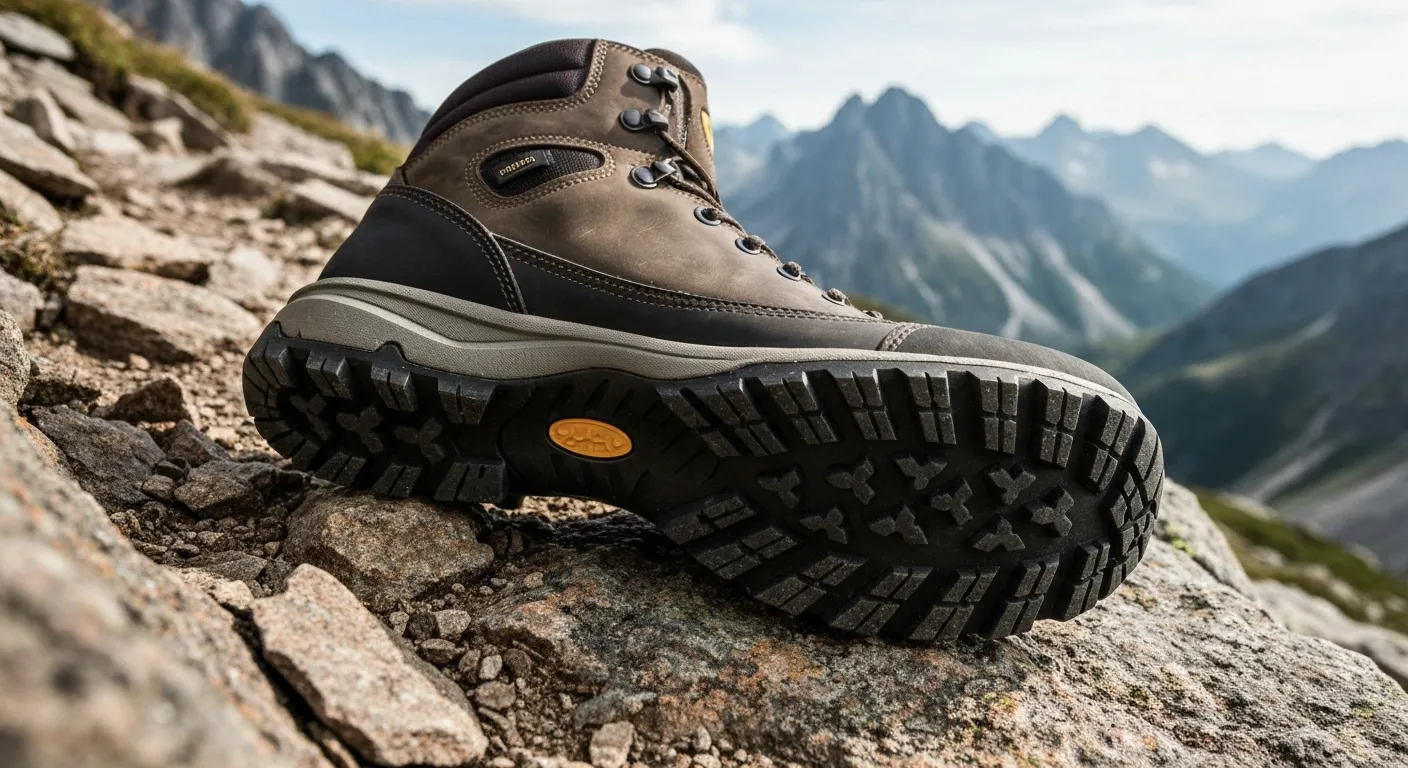
Vibram is the benchmark sole material, offering excellent grip on wet rock, mud, and loose scree. Look for deep, multi-directional lugs (4–6 mm) for off-trail use. A stiffer midsole reduces foot fatigue over long distances and protects against sharp rocks.
4. Fit and Volume
Boot fit is the single most important factor. Your toes should have 1–1.5 cm of space in front when standing (account for downhill toe-banging). The heel should cup snugly with zero lift when walking. Wide-foot trekkers should specifically seek “wide” models or European brands like Hanwag or Lowa which traditionally cut wider.
| Foot Issue | What to Look For |
|---|---|
| Wide forefoot | Wide-width models, Salomon X Ultra Wide, Merrell Wide |
| High arch | Add custom insoles; look for removable footbeds |
| Low arch/flat feet | Motion control models; avoid minimal cushioning |
| Narrow heel | European-last boots (Scarpa, La Sportiva) tend to fit narrower |
Weight vs. Protection Trade-Off
Every 100 grams on your feet equals roughly 1 kg on your back in terms of energy expenditure. Ultralight trekking shoes (500g/pair) are increasingly capable, but for rough terrain and loads above 12 kg, the protection of boots in the 900–1200g range is worthwhile.
Breaking In: Essential Before Any Long Trek
Never wear new boots on a multi-day trek. Break them in over 3–6 weeks with progressively longer walks wearing the same socks you’ll use trekking. Leather boots require more break-in time than synthetic models.
Rule of thumb: your boots should have at least 80 km on them before you trust them on a week-long trek.
Top Picks by Category (2026)
- Best all-around: Salomon X Ultra 4 Mid GTX — lightweight, proven grip, excellent fit
- Best for wide feet: Merrell Moab 3 Mid Wide — comfortable out of the box, great value
- Best premium: Scarpa Zodiac Plus GTX — Italian craftsmanship, ideal for technical terrain
- Best budget: Columbia Newton Ridge Plus — solid protection for casual trekkers
- Best ultralight: Hoka Speedgoat 5 — trail running performance for fast-and-light hikers
Caring for Your Boots
Extend boot life significantly with proper care: clean mud after each use, dry naturally away from heat, re-apply DWR waterproofing treatment annually, and replace insoles every season. Well-maintained leather boots can last 10+ years; synthetic boots typically 1,500–3,000 km.
The best boot is the one that fits your specific foot shape and intended use. When in doubt, visit a specialist shop where staff can analyze your gait and recommend models suited to your anatomy.
Explore More
Related tools: Calculate your hiking pace
Recommended reading: Multi-Day Trekking Gear Packing List | Trekking for Beginners
Try boots on in the afternoon when feet are slightly swollen — the same condition they will be in after 3 hours on trail. Wear your trekking sock thickness and check that your toes do not touch the front on a slight downhill lean. That toe clearance prevents black toenails on long descents.
Our Top Pick
Our Top Boot Picks on Amazon
Salomon X Ultra 4 Mid GTX — Best All-Around →
Merrell Moab 3 Wide GTX — Best for Wide Feet →
Scarpa Zodiac Plus GTX — Best Premium →
Columbia Newton Ridge — Best Budget →
Hoka Speedgoat 5 — Best Ultralight →
Breaking In Your Boots: The Step Most People Skip
New trekking boots straight from the box onto a multi-day trail are a recipe for blisters. The break-in process serves two purposes: softening the boot material in your specific pressure areas, and training your feet to the boot’s support structure. Both take 3-4 short sessions to complete.
Break-in protocol: wear your new boots for 30-minute walks on your first two sessions, then 60-minute sessions on your third and fourth. Use the exact sock thickness you plan to trek with. Pay attention to hot spots — areas that feel warm or slightly abraded. Address these with Leukotape before your first long session; do not wait for blisters to form.
Sock Pairing: The Underrated Variable
Boot fit is boot-plus-sock fit. The wrong sock changes everything: a boot that fits perfectly in the shop with a thin sock may cause heel lift with a thick sock and blistering with a medium sock. Merino wool trekking socks (Darn Tough, Smartwool, Bridgedale) provide the ideal combination of cushioning, moisture management, and anti-blister properties. Avoid cotton socks entirely — they absorb moisture, stay wet, and cause friction blisters within 2 hours.
Sock height matters on boots with a defined collar: over-the-boot-top socks prevent the collar from rubbing the ankle bone, which is a common blister source on new boots. Crew-height or knee-high trekking socks are strongly preferred over ankle socks for all but the lowest trail runners.
How to Test Fit Before Buying
Visit a specialty outdoor shop in the afternoon (feet swell during the day), wear your trekking socks, lace the boots properly from toe to top, then lean forward on a gentle downhill slope. Your toes should not touch the front. Try this: kick the heel firmly back into the boot and lace tightly — if there is heel lift now, the boot is too large.
Frequently Asked Questions
Are waterproof hiking boots worth it?
For most trekking destinations, yes. A wet foot is a blistered foot within 2 hours. Gore-Tex and eVent membranes add $40-80 to the price but are worth it for trails with stream crossings, dew-covered grass, or any chance of rain. The exception: pure desert or dry climate routes where breathability matters more than waterproofing.
What is the difference between hiking shoes and hiking boots?
Hiking shoes (low-cut) are lighter and more flexible, ideal for well-maintained trails with light loads. Hiking boots (mid or high-cut) provide ankle support for uneven terrain, heavier packs (over 10kg), and off-trail routes. For your first multi-day trek, mid-cut is the best compromise.
How should trekking boots fit?
You should have a thumb-width of space between your longest toe and the boot front. The heel should not lift at all. The boot should feel snug through the midfoot without pinching the toes. If it feels perfect in the shop but tight after 30 minutes, it is too small — feet swell on trail.