Shinrin-yoku and Mindful Trekking: The Forest Is Not a Gym — It Is a Pharmacy
The Japanese have a word for what most hikers accidentally do wrong: they rush. Shinrin-yoku — “forest bathing” — is the practice of being in the forest, not moving through it. No destination. No step count. No summit to reach. Just you, the trees, and 90 minutes of deliberate sensory immersion. Medical research shows it lowers cortisol by 16%, reduces blood pressure, boosts NK immune cells by 50%, and creates measurable anti-depressant effects lasting up to 30 days. The forest is not a gym. It is a pharmacy.
Key Takeaways
Shinrin-yoku (forest bathing) is deliberate 90-minute sensory immersion, not a hike; medical research shows it lowers cortisol about 16 percent and boosts natural-killer immune cells by roughly 50 percent.
- Cortisol: measured reductions of about 16% in the stress hormone.
- Immune boost: natural-killer (NK) immune cell activity rises by roughly 50%.
- Session length: a guided practice of about 90 minutes of slow sensory immersion.
- Method: dedicate 15-minute blocks to a single sense at a time.
- Origin: developed in 1980s Japan as a public-health initiative; effects can last days.
What Is Shinrin-yoku?
Developed in Japan in the 1980s as a public health initiative, shinrin-yoku is a guided practice of forest immersion. It is not hiking. The distinction matters:
| Dimension | Hiking | Shinrin-yoku |
|---|---|---|
| Goal | Reach a destination | Be present in nature |
| Pace | 4-6 km/h | 0.5-1 km/h (strolling) |
| Distance | 10-30 km | 1-3 km in 2-3 hours |
| Phone | GPS, photos, music | Off or airplane mode |
| Focus | Trail, terrain, effort | Senses: sight, sound, smell, touch, taste |
| Talking | Conversation welcome | Silence or whispers only |
| Outcome | Physical fitness | Nervous system reset |
The Science: What Happens in Your Body
- Cortisol drops 16% — measured in saliva samples after 90-minute forest walks (vs. urban walks)
- Blood pressure drops — systolic by 2-5 mmHg, sustained for 5+ days after a single session
- NK cells increase 50% — Natural Killer cells (immune defense against cancer) surge after forest exposure and remain elevated for 30 days
- Phytoncides — trees release antimicrobial volatile organic compounds. You breathe them in. They directly boost immune function.
- Parasympathetic activation — heart rate variability increases. Your “rest and digest” system takes over from “fight or flight.”
- Prefrontal cortex quiets — rumination (repetitive negative thinking) decreases measurably after 90 minutes in nature
The immune-boosting effects of a single 3-day forest retreat last approximately 30 days — measured by NK cell activity. This means one weekend of forest bathing per month may provide continuous immune support. No supplement has demonstrated this sustained effect.
A Guided Shinrin-yoku Session (90 Minutes)
| Phase | Time | Practice |
|---|---|---|
| 1. Threshold | 0-5 min | Stand at the forest entrance. Close your eyes. Take 10 deep breaths. Leave your plans, worries, and phone at the threshold. Step in. |
| 2. Hearing | 5-20 min | Walk very slowly. Stop every 50 meters. Close your eyes and listen for 60 seconds. Identify 5 distinct sounds. Let the soundscape expand. |
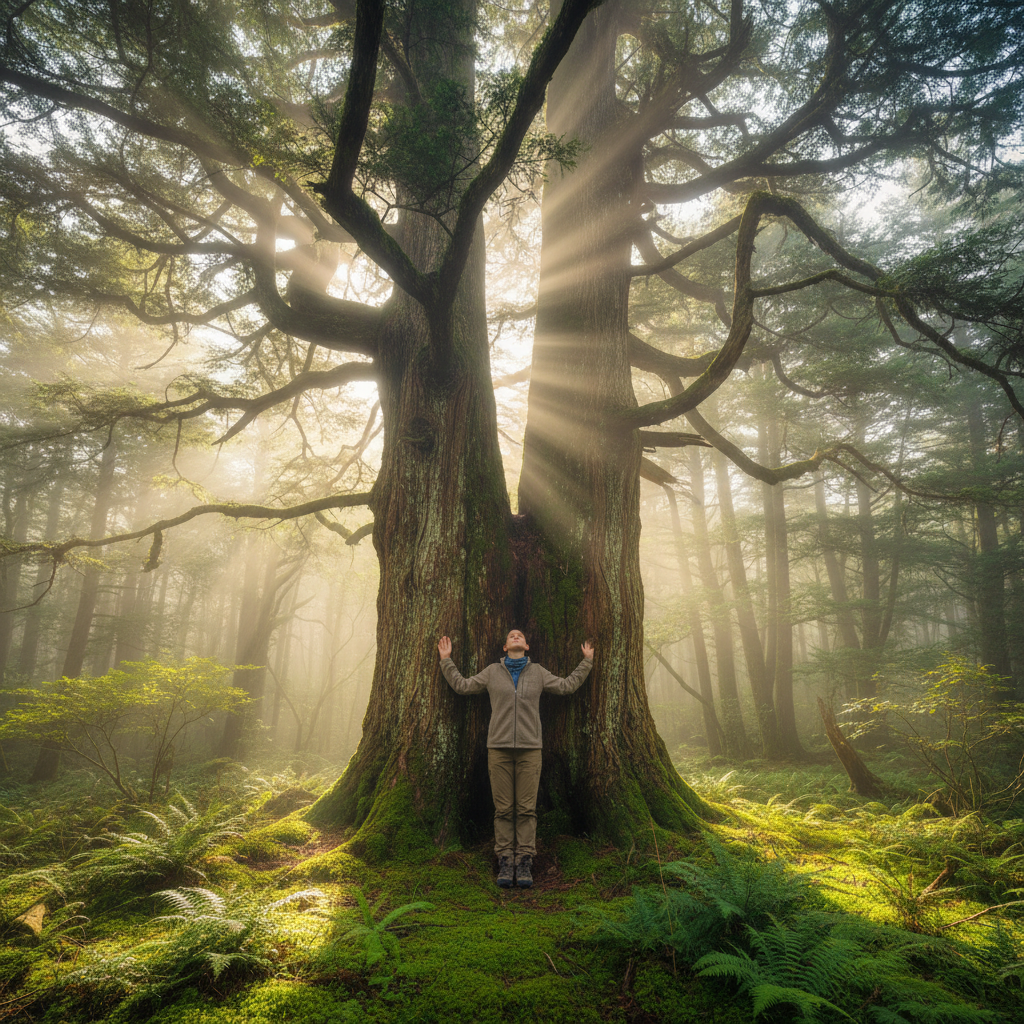
| 3. Touch | 20-35 min | Touch everything: bark textures, moss, cool stones, warm sun patches. Put your hands on a tree trunk for 30 seconds. Feel the aliveness. |
| 4. Smell | 35-50 min | Crush a leaf between your fingers and inhale. Smell the soil. Kneel down. The phytoncides are strongest near the forest floor. |
| 5. Sight | 50-65 min | Lie on your back and look up through the canopy (komorebi — the light filtering through leaves). Watch clouds move. Do not analyze. Just see. |
| 6. Stillness | 65-80 min | Find a spot. Sit. Do nothing. No meditation technique. No mantras. Just sit in the forest and let the forest sit in you. |
| 7. Return | 80-90 min | Walk back slowly. Notice how you feel compared to when you entered. Write one sentence in your journal. One sentence is enough. |
Mindful Trekking: Taking Presence on the Trail
If shinrin-yoku is a 90-minute immersion, mindful trekking is its daily practice — bringing the same quality of attention to a regular hike. Here is how:
- Digital detox protocol. Phone in airplane mode from trailhead to trailhead. No exceptions. The discomfort of the first 20 minutes is the point.
- Breath-step sync. Inhale for 4 steps, exhale for 4 steps. Let the rhythm become automatic. When thoughts intrude, return to counting.
- Single-sense walks. Dedicate 15-minute blocks to one sense only. Hearing-only for 15 minutes. Then sight-only. Then touch. This depth of focus is impossible with a podcast playing.
- Gratitude anchoring. At each trail marker or junction, silently name one thing you are grateful for. Attach gratitude to physical landmarks — your brain remembers both.
- Silent companionship. Hike with a friend in agreed silence. Walk 10 meters apart. Share observations at a designated “talking rock” every 30 minutes.
Tools for Mindful Practice
Oura Ring 4
HRV tracking · Stress score · Sleep quality · See the physiological impact of your practice objectively
Leuchtturm1917 Dotted Notebook
One sentence per session. Date, location, one observation. Over months, patterns emerge.
“Quiet Trails” — The 2026 Movement
In 2026, trail networks in Japan, Germany, Finland, and Oregon have designated “Quiet Trail” sections where speakers, loud conversation, and phone calls are prohibited. These trails are marked with a specific symbol and attract a growing community of walkers seeking genuine silence in nature.
The rules are simple: no Bluetooth speakers, no phone calls, whispers only with companions, and yield to wildlife (stop and observe, do not scare). It is the hiking equivalent of a library — a shared agreement that silence has value.
Shinrin-yoku + Nordic Walking
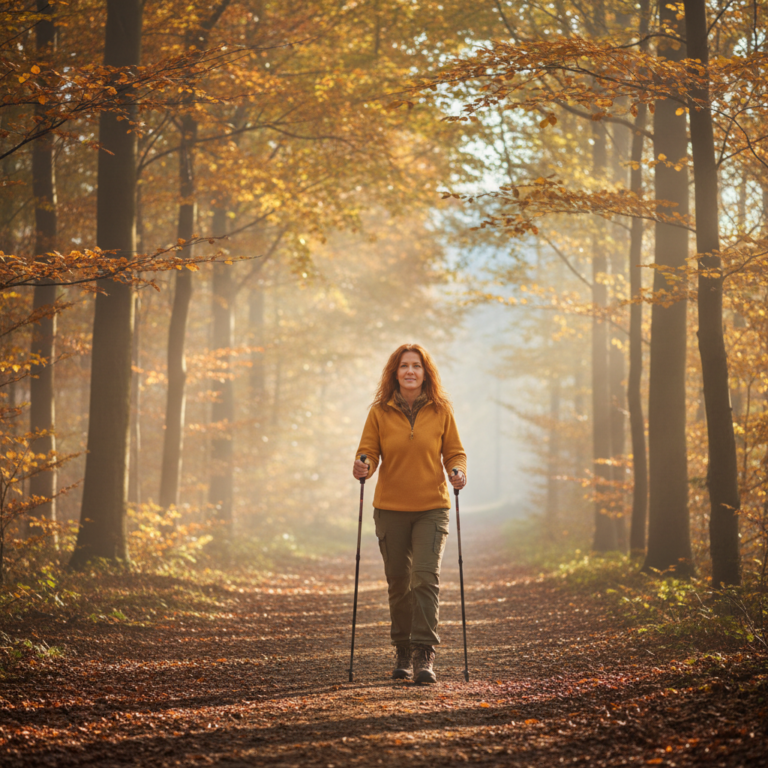
It might seem contradictory — Nordic walking is active, forest bathing is passive. But there is a sweet spot: slow Nordic walking in a forest combines the full-body benefits of the technique with the nervous system reset of shinrin-yoku. Walk at half your normal pace. Use the poles as rhythm anchors, not speed tools. Let each pole plant be a moment of contact with the earth.
For more on Nordic walking’s mental health benefits, see our Nordic Walking and Depression article.
Bottom Line
The forest does not charge for therapy. Ninety minutes among trees — with your phone off and your senses on — produces measurable health benefits that last weeks. You do not need to be spiritual. You do not need to meditate. You just need to slow down, shut up, and let the trees do their work.
Frequently Asked Questions
How long should a forest bathing session last?
About 90 minutes of slow, deliberate sensory immersion is the length used in the research that documents measurable stress and immune benefits.
Is shinrin-yoku the same as hiking?
No. Forest bathing is slow, non-goal-oriented presence with no target distance or pace, whereas hiking is movement toward a destination.
What are the proven benefits of forest bathing?
Medical research documents roughly 16 percent lower cortisol, about 50 percent higher natural-killer immune cell activity, reduced blood pressure, and measurable anti-depressant effects that can last for days.
Can I practice shinrin-yoku in a city park?
Yes. Any green space with trees works, though denser forest with more plant volatile compounds (phytoncides) amplifies the physiological effects.

About the Author
Alex Mercer — INWA Level 2 Nordic Walking Instructor
Certified by the International Nordic Walking Federation (INWA) since 2019, Alex has coached 500+ walkers from beginners to ultra-distance competitors. Sports science background with a focus on biomechanics, gait analysis, and evidence-based training protocols. Regular contributor to walking and outdoor publications.