Hiking With Your Dog: Complete Gear Guide for Trail-Ready Pups
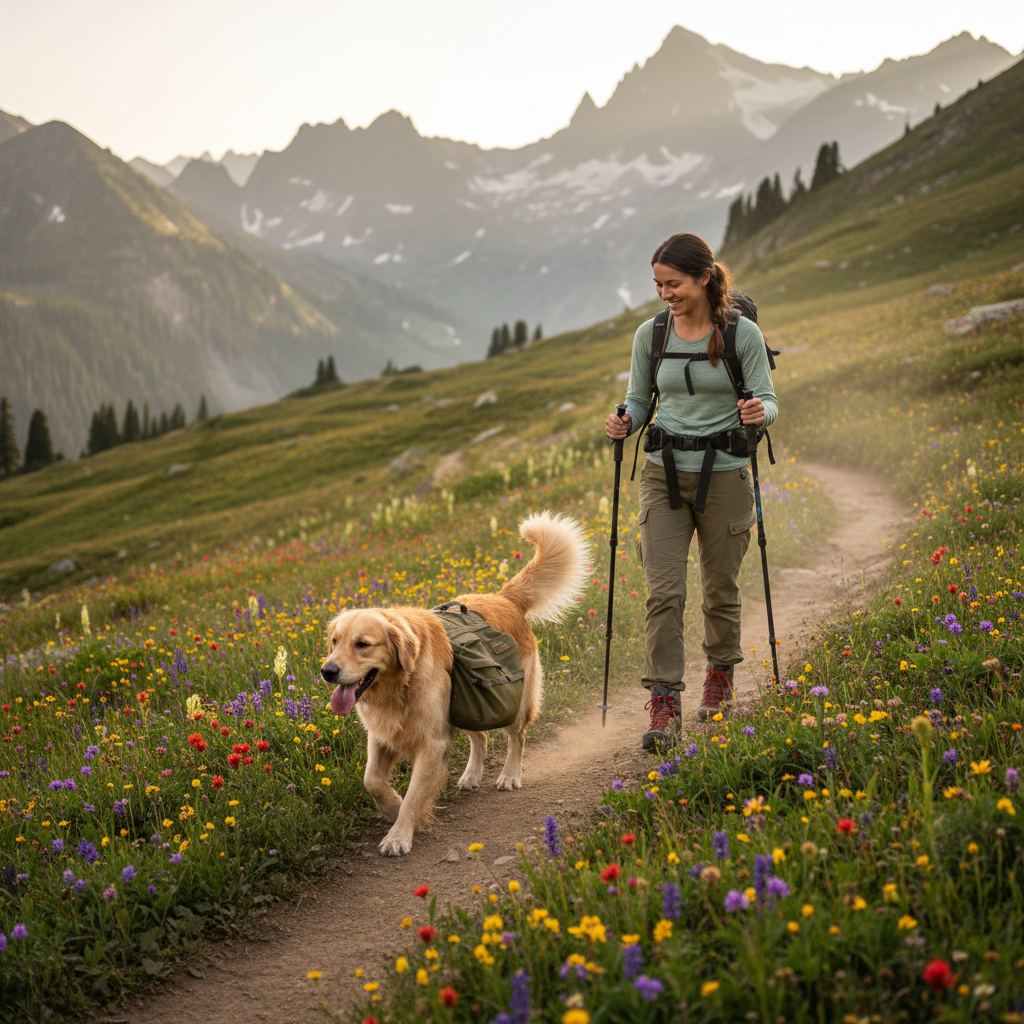
Your dog does not care about your summit photo. They care about the smells, the sticks, the streams, and running beside you on a dirt trail. Hiking with your dog is one of the most rewarding outdoor experiences — but it requires preparation that most hikers overlook. Wrong gear means raw paw pads, dehydration, overheating, or a lost dog in the backcountry. This guide covers everything you need to keep your trail buddy safe, comfortable, and as happy as that tail suggests.
Key Takeaways
Safe dog hiking rests on three non-negotiables: a proper harness (not a collar), paw protection, and enough water – about 1 ounce per pound of dog per hour on the trail.
- Water math: 1 oz per pound per hour, so a 50 lb dog on a 3-hour hike needs about 150 oz (a gallon).
- Harness, not collar: a harness protects the neck and gives control on technical terrain.
- Load capacity: a healthy adult dog can carry 10 to 25% of its body weight in a dog pack.
- Paw care: boots or paw wax prevent the most overlooked trail injury.
- Post-hike: do a full tick check within 4 hours of finishing.
Before the Trail: Is Your Dog Ready?
Not every dog is built for hiking. Before you invest in gear, honestly assess your dog:
| Factor | Ready to Hike | Not Yet / Consult Vet |
|---|---|---|
| Age | 1-8 years (breed-dependent) | Under 1 year (joints still developing) or senior with mobility issues |
| Breed | Herding, sporting, terrier, working breeds | Brachycephalic (pugs, bulldogs) — overheating risk |
| Fitness | Regular daily walks of 30+ min | Couch potato — build up gradually over 4-6 weeks |
| Recall | Responds to “come” command reliably | Ignores recall — leash-only until trained |
| Weight | Healthy body condition (ribs palpable) | Overweight — start with shorter, flat hikes |
| Health | Current on vaccines, flea/tick prevention | Heart conditions, hip dysplasia, recent surgery |
Puppies under 12-18 months should not do strenuous hikes — their growth plates are still open and repetitive impact can cause permanent joint damage. Stick to gentle, short walks on soft terrain until they are fully grown. Large breeds mature later (18 months+).
Essential Dog Hiking Gear
1. Harness — Not a Collar
A collar puts all the pulling force on your dog’s trachea. On rough terrain with sudden stops and scrambles, this can cause tracheal damage or choking. A harness distributes force across the chest and shoulders — safer, more comfortable, and gives you a handle to lift your dog over obstacles.
Ruffwear Web Master Harness
3 attachment points · Padded lift handle · Belly strap prevents escape · Reflective trim
Ruffwear Front Range Harness
Padded chest panel · 2 leash points · Easy on/off · Lighter than Web Master
2. Dog Backpack — Let Them Carry Their Weight
A healthy adult dog can carry 10-25% of its body weight. A dog pack lets them carry their own water, food, and waste bags — reducing your load. Start with an empty pack and add weight gradually over 2-3 hikes.
Ruffwear Approach Pack
2 saddlebags · Cross-load compression · Padded handle · Reflective · Fits 25-85 lb dogs
3. Paw Protection — The #1 Overlooked Item
Hot pavement, sharp rocks, ice, and salt destroy paw pads. If you would not walk barefoot on the surface, your dog should not either. Two options:
QUMY Dog Boots Waterproof
Anti-slip sole · Reflective strips · Adjustable straps · Waterproof · 8 sizes
Musher’s Secret Paw Wax
All-natural wax barrier · No boots needed · Protects against heat, cold, salt, rough terrain
4. Water and Food on the Trail
Dogs dehydrate faster than humans — they cool primarily through panting, which evaporates water rapidly. Rule of thumb: bring 1 oz of water per pound of dog per hour of hiking. A 50-lb dog on a 3-hour hike needs ~150 oz (about 1 gallon).
MalsiPree Dog Water Bottle
Leak-proof · Built-in drinking trough · One-hand operation · BPA-free · 19 oz capacity
Ruffwear Trail Runner Bowl
Collapsible · 1L capacity · Waterproof lining · Clips to pack · 2.6 oz
5. Safety and Visibility
Fi Series 3 GPS Collar
Real-time GPS tracking · Escape alerts · Activity monitoring · 3-month battery · LTE + Bluetooth
Ruffwear Beacon Safety Light
Clip-on LED · Visible at 500m · Waterproof · 20h runtime · Attaches to harness or collar
6. Hands-Free Leash
You need both hands for trekking poles, scrambling, and steadying yourself on rough terrain. A hands-free waist leash keeps your dog connected while freeing your arms.
Tuff Mutt Hands-Free Bungee Leash
Padded waist belt · Dual handle · Bungee absorbs pulls · Reflective · Waste bag dispenser
7. Overnight Gear
If you are backpacking with your dog, they need insulation from the cold ground just like you do. Dogs lose body heat through their belly when lying on cold surfaces.
Ruffwear Highlands Sleeping Bag
Insulated dog sleeping bag · Synthetic fill · Packs into stuff sack · 15 oz · Machine washable
8. Dog First Aid
Your human first aid kit does not cover everything your dog needs. Dog-specific kits include tick removers, paw bandage boots, saline eye wash, and dosage guides for canine medications.
Adventure Dog Medical Kit
By Adventure Medical Kits · Dog-specific supplies · Tick remover · Paw pad repair · Guide booklet
Trail Hazards for Dogs
| Hazard | Signs | Prevention |
|---|---|---|
| Overheating | Excessive panting, drooling, stumbling, red gums | Hike early morning / evening. Wet their belly. Rest in shade every 20 min. |
| Paw injuries | Limping, licking paws, visible cuts or blisters | Paw wax or boots. Check pads at every rest stop. |
| Ticks | Check ears, armpits, groin, between toes after every hike | Preventive medication (Simparica, NexGard). Tick check within 4 hours of hike. |
| Porcupine quills | Quills in face/mouth — DO NOT pull. Go to vet. | Keep dog on leash in porcupine territory. Train “leave it” command. |
| Toxic plants | Vomiting, diarrhea, drooling, seizures | Know local toxic plants. Prevent grazing. Carry activated charcoal in kit. |
| Water toxicity | Bloating, vomiting after swimming. Blue-green algae = lethal. | Do not let dog drink from stagnant water. Avoid algae blooms. Carry clean water. |
| Snake bites | Sudden swelling, pain, lethargy | Keep dog on-trail. Watch where they put their nose. Carry to vet immediately. |
Trail Etiquette With Dogs
- Leash laws. Many trails require dogs on leash. Check before you go. Off-leash dogs cause wildlife disturbance, confront other dogs, and scare hikers.
- Pack it out. Carry all dog waste out. Use biodegradable bags. Do not leave bags on the trail “to pick up later.” You will not.
- Yield to others. Step off-trail and shorten your leash when other hikers pass. Not everyone is comfortable around dogs.
- Control your dog. “My dog is friendly” is not a defense. Keep your dog under control at all times.
- No dog zones. National parks in the US generally prohibit dogs on trails. National forests usually allow them. Always check.
The Complete Dog Hiking Checklist
| Category | Item | Why |
|---|---|---|
| Carry | Harness + leash (hands-free recommended) | Safety and control |
| Carry | Collapsible bowl + water (1 oz/lb/hr) | Hydration |
| Carry | Dog food + treats | Energy on long hikes |
| Carry | Paw wax or boots | Paw pad protection |
| Carry | Waste bags (min 4) | Leave no trace |
| Carry | Dog first aid kit | Emergencies |
| Carry | Tick remover | Post-hike tick check |
| Wear | GPS tracker on collar | Lost dog prevention |
| Wear | LED light (low visibility) | Dawn/dusk visibility |
| Optional | Dog backpack | They carry their own gear |
| Optional | Cooling vest (summer) | Prevent overheating |
| Overnight | Dog sleeping bag + pad | Insulation from cold ground |
Nordic Walking With Your Dog
Nordic walking is ideal for dog owners — the poles provide stability while your dog walks alongside. A hands-free waist leash with a bungee section absorbs sudden pulls without throwing off your balance or pole rhythm. Start on flat, familiar trails and train your dog to walk on your non-dominant side (opposite your dominant pole hand).
For more on getting started with Nordic walking, see our Beginner’s Guide.
Bottom Line
Your dog will follow you anywhere. It is your job to make sure “anywhere” is safe for them. The three non-negotiables: a proper harness, paw protection (Musher’s Secret at minimum), and enough water (1 oz per pound per hour). Everything else makes the experience better — but those three keep your dog safe.
Now leash up and hit the trail. Your dog has been waiting by the door since you started reading this.
Our Top Pick

About the Author
Alex Mercer — INWA Level 2 Nordic Walking Instructor
Certified by the International Nordic Walking Federation (INWA) since 2019, Alex has coached 500+ walkers from beginners to ultra-distance competitors. Sports science background with a focus on biomechanics, gait analysis, and evidence-based training protocols. Regular contributor to walking and outdoor publications.