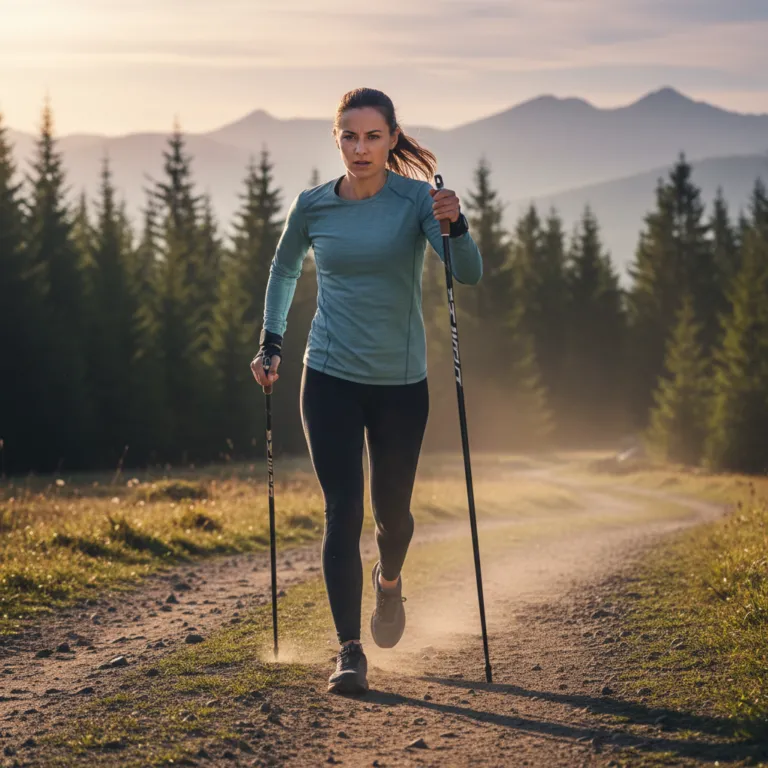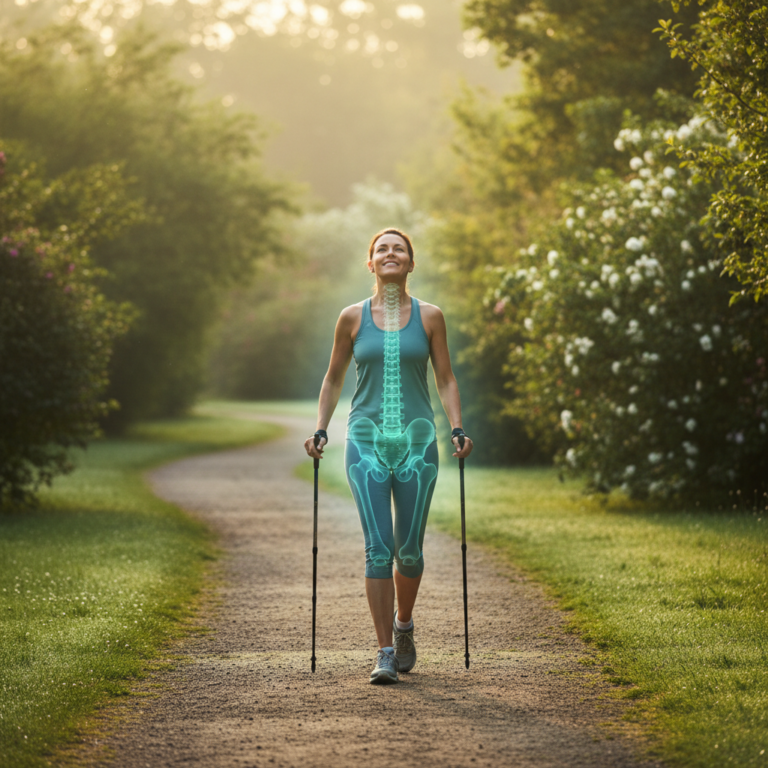
Sleep and Nordic Walking: Why Recovery Is Your Secret Weapon (+ Best Sleep Gadgets)
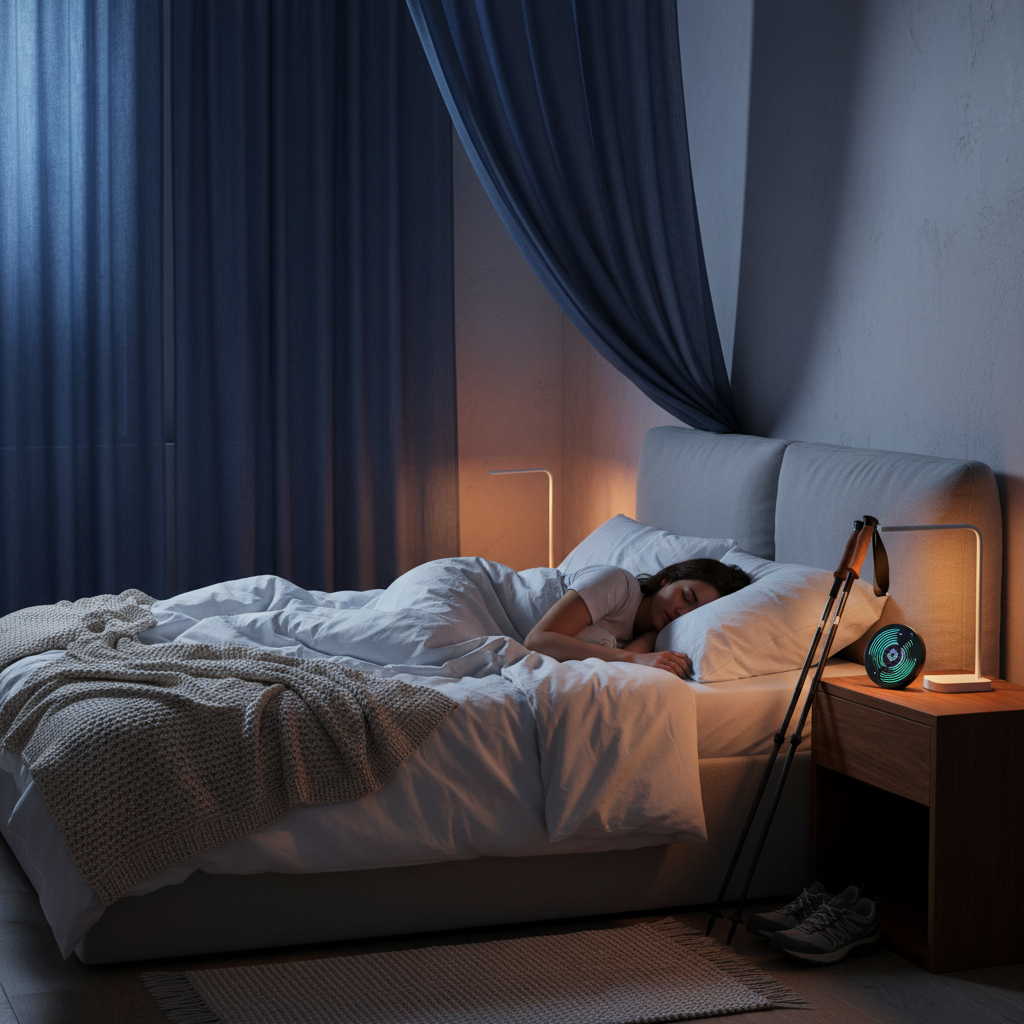
You can walk 10,000 steps with perfect technique, eat clean, and train five days a week — but if your sleep is broken, your body never fully adapts. Sleep is when your muscles repair, your cardiovascular system strengthens, and your brain consolidates the motor patterns you practiced on the trail. For Nordic walkers, poor sleep does not just mean fatigue — it means slower recovery, higher injury risk, and stalled progress.
Key Takeaways
Sleep is the most underrated Nordic walking performance tool: sleeping under 7 hours raises injury risk 1.7x, while Zone 2 walking improves sleep quality without overtraining.
- Injury risk: a 2023 BJSM meta-analysis found under-7-hour sleep increases endurance-athlete injury risk by 1.7x.
- Recovery window: sleep is when muscles repair from Nordic walking’s 600+ contractions per minute.
- Inflammation: exercise-induced IL-6 markers are cleared during quality sleep.
- Best intensity: Zone 2 (60-70% max HR) improves sleep without overtraining.
- Protocol: time walks well, follow the 10-3-2-1 rule, and manage light and bedroom temperature.
Why Sleep Is the Most Underrated Performance Tool
Research from Stanford’s Sleep Medicine Center shows that athletes who extended their sleep to 8-10 hours improved reaction time, sprint speed, and subjective well-being. For Nordic walkers, the implications are direct:
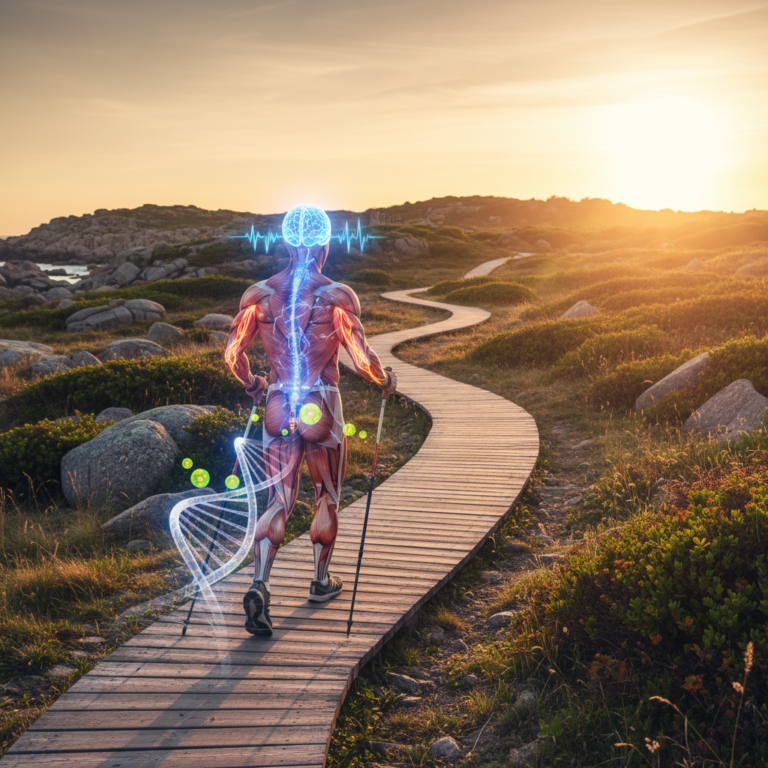
- Muscle repair peaks during deep sleep — Human Growth Hormone (HGH) is released in pulses during Stage 3 (deep/slow-wave) sleep. This is when your muscles recover from the 600+ muscle contractions per minute that Nordic walking demands.
- Motor learning consolidates overnight — The pole technique you practiced today gets “saved” to long-term motor memory during REM sleep. Poor sleep literally erases your technique gains.
- Inflammation drops during sleep — The IL-6 inflammatory markers that spike after intense Nordic walking sessions are cleared during quality sleep. Without adequate rest, chronic inflammation accumulates and leads to overuse injuries.
- Heart Rate Variability (HRV) recovers — Your autonomic nervous system rebalances during sleep. Higher morning HRV = better readiness for your next walking session.
A 2023 meta-analysis in the British Journal of Sports Medicine found that sleeping less than 7 hours increases injury risk by 1.7x in endurance athletes. Nordic walking is lower-impact than running, but the full-body engagement means recovery demands are higher than regular walking.
The Nordic Walking Sleep Connection
How Nordic Walking Improves Your Sleep
Nordic walking is one of the best natural sleep aids — and the science backs this up:
- Daylight exposure — Walking outdoors synchronizes your circadian rhythm. Morning light suppresses melatonin and sets your internal clock for proper evening drowsiness.
- Moderate-intensity exercise — Nordic walking at Zone 2 heart rate (60-70% max) is the sweet spot for improving sleep quality without overtraining. High-intensity exercise too close to bedtime disrupts sleep; moderate Nordic walking does not.
- Stress reduction — The rhythmic, bilateral movement pattern of Nordic walking activates the parasympathetic nervous system. Cortisol drops. Anxiety decreases. You fall asleep faster.
- Core body temperature cycle — Exercise raises core temperature. The subsequent cooldown 4-6 hours later triggers sleepiness. A morning or afternoon Nordic walk creates the ideal temperature curve for bedtime.
How Poor Sleep Sabotages Your Walking
| Sleep Issue | Impact on Nordic Walking | What Happens |
|---|---|---|
| Less than 6 hours | VO2max drops 5-11% | Cardiovascular endurance declines — same route feels harder |
| Fragmented sleep | Reaction time slows 20-30% | Higher risk of trips and falls on uneven terrain |
| Low deep sleep | HGH reduced by up to 60% | Muscle repair stalls — persistent soreness and stiffness |
| Disrupted REM | Motor skill retention drops | Technique improvements from practice sessions are lost |
| High cortisol (poor sleep) | Fat storage increases | Weight loss from Nordic walking plateaus despite effort |
| Low HRV (under-recovery) | Overtraining syndrome risk | Performance declines despite consistent training |
Sleep Optimization Protocol for Nordic Walkers
1. Timing Your Walks for Better Sleep
- Morning walks (6-10 AM) — Best for circadian rhythm. Morning light exposure advances your sleep phase, making you sleepy earlier at night.
- Afternoon walks (2-5 PM) — Good for the core temperature effect. Body cools down by bedtime, promoting deeper sleep.
- Evening walks (after 7 PM) — Keep intensity low (Zone 1-2). Avoid high-intensity intervals within 3 hours of bedtime.
2. The 10-3-2-1 Rule
- 10 hours before bed — Last caffeine (affects adenosine clearance and deep sleep architecture)
- 3 hours before bed — Last large meal (digestion disrupts sleep onset)
- 2 hours before bed — Last intense exercise (let cortisol and core temp drop)
- 1 hour before bed — No screens (blue light suppresses melatonin by up to 50%)
3. Temperature Control
Your ideal sleep temperature is 60-67 degrees F (15-19 degrees C). Core body temperature needs to drop 2-3 degrees F for sleep onset. Active Nordic walkers run hotter due to elevated metabolism — temperature control is especially important for you.
4. Light Management
Morning: get 10+ minutes of outdoor light within 1 hour of waking (your Nordic walk handles this). Evening: dim lights 2 hours before bed. Bedroom: total darkness — even small amounts of light reduce melatonin and disrupt deep sleep.
Best Sleep Gadgets for Nordic Walkers
The right tools can transform your sleep quality. Here are our tested and recommended picks across six categories:
Sleep Trackers
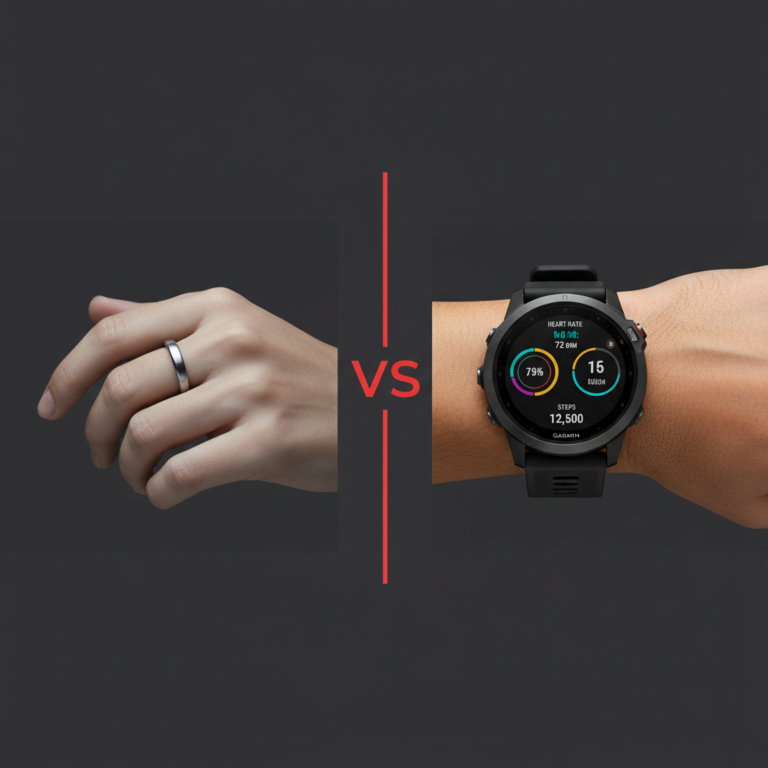
You cannot improve what you do not measure. A sleep tracker reveals your actual sleep stages, HRV trends, and recovery readiness — data that directly informs your training schedule.
| Tracker | Best For | Sleep Metrics | Battery | Buy |
|---|---|---|---|---|
| Oura Ring 4 | Overall Sleep Tracking | Sleep stages, HRV, SpO2, temperature, Readiness Score | 8 days | Check Price |
| Garmin Venu 3 | Walkers Who Want GPS + Sleep | Sleep score, HRV, Body Battery, nap detection, sleep coach | 14 days | Check Price |
| Fitbit Sense 2 | Budget Sleep + Health | Sleep stages, SpO2, skin temp, stress score, ECG | 6 days | Check Price |
| Withings Sleep Pad | No-Wearable Option | Sleep cycles, heart rate, snoring, room environment | Plugged in | Check Price |
Light and Sound
Light is the single most powerful regulator of your circadian rhythm. A sunrise alarm simulates dawn to wake you gently during light sleep — no jarring alarms that spike cortisol. White noise masks environmental disturbances that fragment your sleep cycles.
| Product | Type | Key Feature | Buy |
|---|---|---|---|
| Hatch Restore 2 | Sunrise Alarm + Sound Machine | Customizable sleep/wake routines, app-controlled, reading light | Check Price |
| Philips SmartSleep | Sunrise Alarm | Clinically proven sunrise simulation, 5 natural wake sounds | Check Price |
| LectroFan | White Noise Machine | 20 non-looping sounds, precise volume, compact travel size | Check Price |
| Manta Sleep Mask | Blackout Eye Mask | 100% light-blocking, zero eye pressure, adjustable cups | Check Price |
| Loop Quiet 2 | Sleep Earplugs | 24dB noise reduction, reusable silicone, comfortable for side sleepers | Check Price |
Temperature Regulation
Active walkers generate more metabolic heat and often sleep too warm. Bed cooling systems are the biggest upgrade most athletes make for sleep quality — research shows that lowering skin temperature by just 0.5 degrees C reduces time to fall asleep by 50%.
| Product | Type | Temp Range | Key Feature | Buy |
|---|---|---|---|---|
| Sleepme Dock Pro | Water-Based Cooling Pad | 55-115 degrees F | App-controlled schedules, warm-up wake feature | Check Price |
| BedJet 3 | Air-Based Climate System | 66-104 degrees F | Biorhythm temperature programming, dual-zone option | Check Price |
Pillows and Bedding
Nordic walking engages your neck, shoulders, and upper back through the poling motion. A pillow that properly supports cervical alignment is non-negotiable for recovery. Weighted blankets activate deep pressure stimulation, reducing cortisol and increasing serotonin — proven to improve sleep onset by 20 minutes.
| Product | Type | Key Feature | Buy |
|---|---|---|---|
| Coop Home Goods Original | Adjustable Memory Foam Pillow | Add/remove fill to match your loft — perfect for side and back sleepers | Check Price |
| Tempur-Pedic Cloud | TEMPUR-Material Pillow | Adaptive pressure relief for neck and shoulder support | Check Price |
| Bearaby Cotton Napper | Weighted Blanket (Premium) | Organic cotton, hand-knit, no synthetic fillers, breathable, 15 lbs | Check Price |
| YnM Weighted Blanket | Weighted Blanket (Budget) | 7-layer design, cooling glass beads, 15 lbs, machine washable | Check Price |
Sleep Supplements
Supplements are not a replacement for sleep hygiene, but they can support specific deficiencies common in active walkers. Magnesium is the most evidence-backed — most athletes are deficient, and it directly affects sleep quality and muscle recovery.
| Supplement | Purpose | When to Take | Buy |
|---|---|---|---|
| Momentous Magnesium L-Threonate | Deep sleep + muscle recovery | 30-60 min before bed | Check Price |
| NOW Foods L-Theanine 200mg | Calm without drowsiness, faster sleep onset | 1 hour before bed | Check Price |
| Nordic Naturals Vitamin D3 | Circadian rhythm + bone health | Morning with food | Check Price |
| Natrol Melatonin 5mg Time Release | Sleep onset (travel, jet lag, shift work) | 30 min before bed, short-term use only | Check Price |
Melatonin is a sleep timing signal, not a sedative. Use it for circadian disruptions (travel, schedule changes), not as a nightly habit. For daily sleep support, magnesium L-threonate is safer and more effective for most people — it crosses the blood-brain barrier and promotes deep slow-wave sleep without dependency.
Pre-Sleep Recovery Tools
A 10-minute recovery routine before bed accelerates muscle repair and signals your nervous system to downshift. Nordic walking loads the calves, shoulders, and hip flexors — target these areas.
| Tool | Best For | Pre-Bed Protocol | Buy |
|---|---|---|---|
| Theragun Mini | Targeted muscle relief | 60 sec per muscle group: calves, glutes, upper traps, forearms | Check Price |
| Hyperice Normatec 3 | Full-leg recovery | 20-30 min compression cycle while reading or meditating | Check Price |
| TriggerPoint GRID Roller | Myofascial release | 5 min: IT band, calves, thoracic spine, lats | Check Price |
The Complete Sleep Stack for Nordic Walkers
If you could only pick three investments for better sleep, here are our recommendations by budget:
| Budget | Sleep Tracker | Environment | Supplement |
|---|---|---|---|
| Essential | Fitbit Sense 2 | Manta Sleep Mask + LectroFan | Mag L-Threonate |
| Optimal | Oura Ring 4 | Hatch Restore 2 + Bearaby Napper | Mag L-Threonate + L-Theanine |
| Elite | Oura Ring 4 + Withings Pad | Sleepme Dock Pro + Hatch Restore 2 | Full stack + Theragun Mini |
7-Day Sleep Optimization Challenge
Try this protocol for one week and track the difference in your Nordic walking performance:
| Day | Focus | Action |
|---|---|---|
| Day 1 | Baseline | Track your current sleep with a tracker. Note your walking energy level (1-10). |
| Day 2 | Light | Morning Nordic walk within 1 hour of waking. No screens 1 hour before bed. |
| Day 3 | Temperature | Set bedroom to 65 degrees F. Cool shower 90 minutes before bed. |
| Day 4 | Sound | Add white noise or earplugs. Eliminate all bedroom light sources. |
| Day 5 | Nutrition | No caffeine after noon. Last meal 3 hours before bed. Try magnesium. |
| Day 6 | Recovery | 10-min foam rolling session before bed. Gentle stretching only. |
| Day 7 | Review | Compare sleep data and walking energy (1-10) to Day 1. Note improvements. |
Bottom Line
Sleep is not passive rest — it is active recovery. Every hour of quality sleep amplifies the benefits of your Nordic walking sessions: stronger muscles, better technique retention, lower injury risk, and more efficient fat burning. The best sleep investment for most Nordic walkers is a quality tracker (Oura Ring 4), total darkness (Manta Sleep Mask), and magnesium (Momentous Mag L-Threonate).
Train hard. Sleep harder.

About the Author
Alex Mercer — INWA Level 2 Nordic Walking Instructor
Certified by the International Nordic Walking Federation (INWA) since 2019, Alex has coached 500+ walkers from beginners to ultra-distance competitors. Sports science background with a focus on biomechanics, gait analysis, and evidence-based training protocols. Regular contributor to walking and outdoor publications.