
How to Choose Nordic Walking Poles
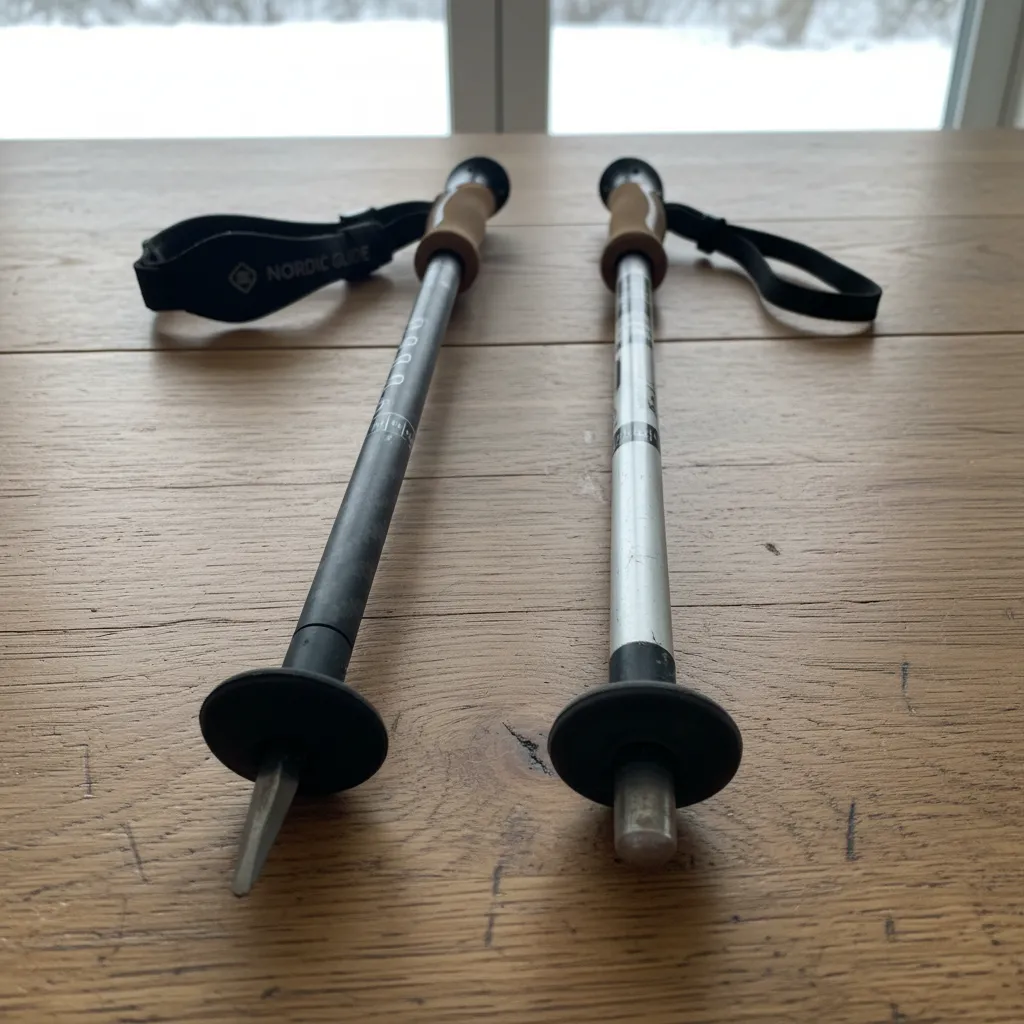
Choosing the right Nordic walking poles is the single most important equipment decision you will make. The wrong poles can cause wrist pain, limit your technique, and drain the fun from every outing. This guide covers materials, sizing, grip systems, and tips so you can buy with confidence.
Before reading further, try our Pole Length Calculator to find your ideal size. It takes 10 seconds and saves you from the most common buying mistake.
Key Takeaways
Choose Nordic walking poles by pole length (your height in cm x 0.68, rounded to the nearest 5 cm), shaft material (aim for at least 50% carbon), and a glove-style strap system.
- Sizing formula: height (cm) x 0.68, rounded to the nearest 5 cm; beginners may drop 5 cm, competitors add 5 cm.
- Material: a 50%+ carbon shaft noticeably reduces vibration on walks longer than 30 minutes.
- Fixed vs telescopic: fixed poles are lighter and stronger; telescopic suit travellers and shared use.
- Straps matter most: glove-style straps let you push and release power; plain loops limit technique.
- Tips: carbide tips for trail and ice, rubber paws for pavement.
Fixed-Length vs. Telescopic Poles
This is the first decision every buyer faces. Here is how they compare:
Pros
- Fixed poles are lighter (150-200g)
- Better vibration dampening
- More durable long-term
- No risk of collapsing mid-walk
Cons
- Cannot adjust for different users
- Harder to transport
- Must buy the exact size
- Less versatile for travel
Shaft Materials Explained
Get Your Free 12-Week Training Plan
Join 2,500+ Nordic walkers. Receive a proven training program PDF and weekly technique tips — free.
Aluminum: Durable and affordable but heavier. Good for beginners.
Carbon Fiber: Significantly lighter and dampens vibration well. Higher cost.
Carbon-Aluminum Blend (40-60%): Best balance of weight, durability, and price.
If budget allows, choose a shaft with at least 50% carbon content. The reduced vibration makes a noticeable difference during walks longer than 30 minutes, especially for walkers with wrist or elbow issues.
Grip Systems
The grip and strap are where your body connects to the pole. Cork grips absorb moisture and mold to your hand over time. Rubber grips are more durable but can cause sweating. The wrist strap should allow you to open your hand completely on the back-swing without losing the pole.
Sizing Guide
The standard formula is height x 0.68 for fitness walking. Beginners may prefer 5 cm shorter; competitive walkers may prefer 5 cm longer. Always round to the nearest 5 cm increment.
Pole Size Calculator
Find your perfect Nordic walking pole length based on your height.
Our Top Picks for 2026
Best Overall: Leki Traveller Carbon — ultralight, excellent grip, premium build quality. Best for regular walkers who want the finest equipment.
Best Value: Exel Nordic Walker — solid carbon-aluminum blend at a mid-range price. Great balance of performance and affordability.
📚 See also:
- champion-grade racing poles — Nordic Walking Champions
What Nobody Tells You About Pole Length
The universal formula — height × 0.68 for Nordic walking — gives you a starting point, but it ignores three critical variables: your torso-to-leg ratio, your technique stage, and your primary terrain. Most people using the formula end up 2-4cm too long, which forces a raised shoulder posture that compresses the shoulder joint instead of propelling the body forward.
A better approach: start with the formula, then adjust based on the 90-degree elbow test (elbow at exactly 90 degrees with tip on flat ground, grip in hand). Then walk 200 meters and observe: if your shoulders rise during the push phase, shorten by 2cm. If you feel like you are pushing down rather than back, lengthen by 2cm.
Strap Systems: The Feature Nobody Reads About
The strap system determines whether your poles actually engage your upper body or just serve as balance aids. There are three types:
- Traditional loop straps — adequate for beginners, but you cannot release your grip at full extension, limiting tricep activation
- Glove-style straps — the correct system for Nordic walking. You push through the strap with an open hand, activating the tricep fully, then the hand opens naturally at arm extension
- Clip-in glove systems (Leki Shark, Swix) — maximum power transfer, preferred by competitive Nordic walkers and those doing 5+ hours per week
If your poles have traditional loop straps and you want to improve your workout, upgrading to glove-strap poles is the single highest-return equipment change you can make — more impactful than switching from aluminum to carbon.
Carbide Tips vs. Rubber Paws: When to Use Each
Carbide tips provide grip on any surface including asphalt. Rubber paws fit over the carbide tip for softer grip on hard floors and in shopping centers. For Nordic walking, keep carbide tips exposed on outdoor surfaces — the grip and feedback are superior. Only use rubber paws when walking through indoor spaces or on surfaces where metal tips are prohibited.
Pole Materials Deep Dive: What the Specs Actually Mean
Pole specifications — carbon percentage, modulus ratings, wall thickness — look impressive on product pages but rarely translate directly into real-world performance differences that beginning or intermediate Nordic walkers will notice. Here is what actually matters at each price tier.
Entry-level aluminum poles ($25-60): Heavy but forgiving. Aluminum absorbs vibration less efficiently than carbon, which means you feel more impact through the wrist and elbow on hard surfaces like asphalt or concrete. For grass, trail, and mixed-surface walking, the vibration difference is negligible. If you are testing whether Nordic walking is for you, aluminum is the rational starting point.
Mid-range carbon composite ($70-130): Most poles in this range use 50-70% carbon fiber mixed with glass fiber. They are 20-30% lighter than comparable aluminum and noticeably reduce vibration on paved surfaces. This is the sweet spot for most regular walkers — you get the primary benefits of carbon without the fragility and cost of full-carbon premium poles.
Premium full-carbon ($150-300+): Full carbon provides maximum vibration damping and the lightest possible weight. The performance advantage over mid-range carbon composite is real but subtle — most walkers will feel it on long sessions (90+ minutes) when cumulative fatigue from grip vibration becomes noticeable. The fragility cost is real: full carbon poles crack rather than bend under lateral stress, and cracking is not repairable.
The Strap System Matters More Than Most Buyers Realize
A high-quality glove strap that secures the hand while allowing full finger extension during the push phase is more important than the difference between mid-range and premium carbon. A cheap strap on expensive carbon poles defeats half the purpose of the investment. When comparing poles, test the strap’s ergonomic profile before the shaft material — it is the interface between your body and the equipment.
Where to Buy Nordic Walking Poles: Online vs In-Store
The purchase decision has two distinct dimensions: price optimization and fit validation. These two goals push in opposite directions — online offers the best prices, physical retail lets you handle the product before buying. The resolution is simple: research and shortlist online, then test fit in-store if possible, then buy wherever the price is better.
What to test in person: Grip ergonomics are highly individual. Some walkers prefer a cork grip (warmer, absorbs moisture, molds to the hand over time); others prefer rubber (grippy when dry, slippery when wet); others prefer foam (lightest, softest, but least durable). Gloves change grip feel significantly — test with the gloves you actually walk in. Strap width and buckle position vary across brands and interact with individual wrist anatomy in ways that are impossible to evaluate from a product photo.
Recommended brands by tier: Budget — Leki Poles (aluminum, basic strap), Nordic Walker basics; Mid-range — Exel Nordic, Komperdell Carbon Team; Premium — Leki Instructor Shark, Swix CT4 Carbon. All four premium-tier manufacturers use a similar glove-strap mechanism with different ergonomic profiles — each has loyal advocates, and personal hand geometry determines which feels best.
Return policies matter. Buy from retailers with free return shipping when possible. Even with in-store testing, a 5km real-walk test reveals fit characteristics that a 2-minute shop trial does not. Most major online retailers (Amazon, REI, specialty running stores) accept returns on unused poles with original packaging.
Frequently Asked Questions
What is the difference between Nordic walking and trekking poles?
Nordic walking poles have glove-strap systems for the pushing technique, are lighter, and have angled tips. Trekking poles have loop straps, are heavier, and are designed for stability on rough terrain.
Should I buy fixed or adjustable Nordic walking poles?
Fixed-length poles are lighter and more stable. Adjustable poles are better if you share with others or travel frequently. For dedicated walkers, fixed length is recommended.
Are carbon or aluminum poles better?
Carbon poles are lighter and absorb more vibration but can break on impact. Aluminum poles are more durable and affordable. Choose carbon for performance, aluminum for durability and value.