Essential Gear for Multi-Day Trekking: The Complete Packing List
Packing for a multi-day trek is an exercise in prioritization: every gram in your pack is carried on your back, yet leaving out critical gear can turn an adventure into a survival situation. This comprehensive list helps you find the right balance for your specific route and conditions.
Key Takeaways
Smart multi-day packing centres on the Big Three (pack, shelter, sleep system) and a base weight under 7 kg, because a pack above 20 percent of body weight measurably degrades gait efficiency.
- Base weight target: aim for under 7 kg (everything except food and water); 7-10 kg is realistic for most.
- 20% rule: loads above 20% of body weight (e.g. 15 kg for a 75 kg hiker) reduce efficiency and raise injury risk.
- Pack fit: a properly fitted hip belt carries 70 to 80% of the load.
- Common waste: most beginners carry 5 to 8 kg of gear they never use.
- Non-negotiable: always pack the 10 Essentials for safety.
The Big Three: Pack, Shelter, Sleep System
Pros
- Modular system scales from 2-day to 7-day trips
- Big Three optimization reduces base weight dramatically
- Modern materials deliver warmth with minimal weight
- Layering system adapts to changing conditions
- Established gear categories prevent forgetting essentials
- Quality gear lasts 10+ years with basic care
Cons
- Quality Big Three costs $500-1500 combined
- Weight of pack affects pace and joint stress directly
- Gear choice varies by climate — no universal list
- Over-packing is the most common beginner mistake
Backpack
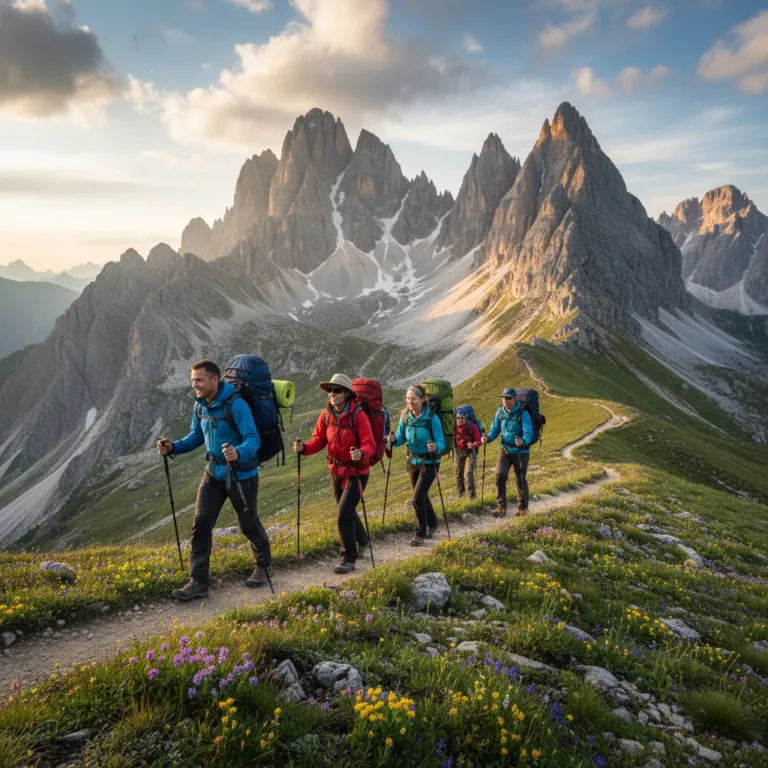
For 2–7 day treks: 50–65 liter pack. Features to prioritize: hip belt (carries 70–80% of load), torso length fitting, external pockets for water bottles and snacks, rain cover included or integrated. Modern ultralight options (Osprey, Gregory, Hyperlite) can weigh as little as 900g.
Shelter
- Tent: 3-season tent rated to at least -5°C. Double-wall construction prevents condensation. Weight: aim for under 1.5 kg per person
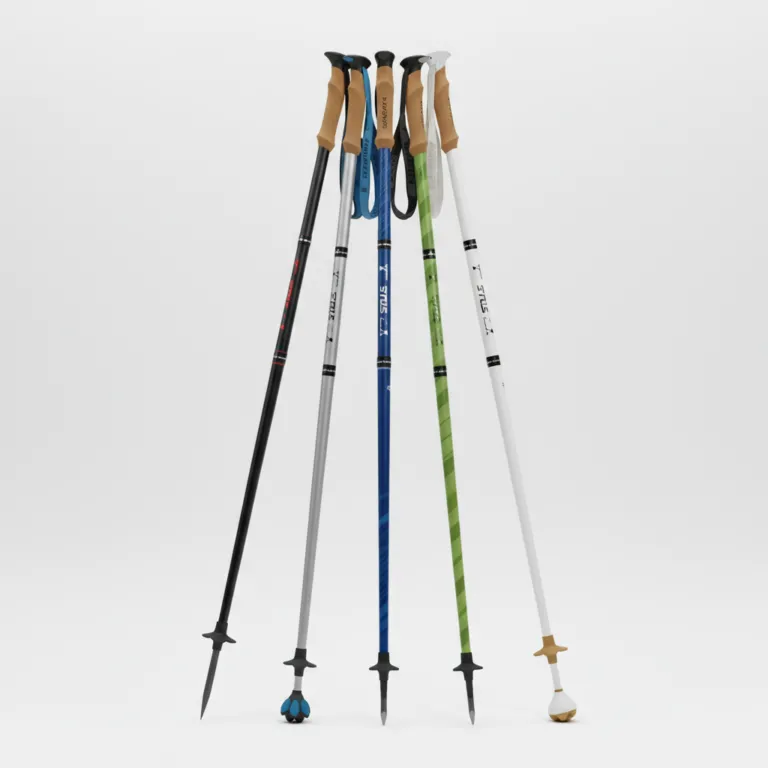
- Trekking poles as tent poles: Many ultralight shelters (Zpacks, Big Agnes) use trekking poles, eliminating dedicated tent poles
- Alternatives: Tarp + bivy for ultralight; hut systems in well-developed trekking regions (Alps, Dolomites, Inca Trail)
Sleeping System
- Sleeping bag: Temperature rating should be 5–10°C below minimum expected overnight temperature. Down is lighter and more compressible; synthetic is better when wet
- Sleeping pad: Insulates from ground (critical even in warm weather). R-value of 3+ for three-season use. Inflatable pads (Therm-a-Rest) balance weight and comfort; foam pads are bulletproof but bulky
- Pillow: Inflatable ultralight pillow or compression stuff sack filled with spare clothing
Clothing: The Layering System
| Layer | Purpose | Best Materials |
|---|---|---|
| Base (skin contact) | Moisture wicking | Merino wool or synthetic |
| Mid (insulation) | Warmth retention | Fleece or down jacket |
| Outer (protection) | Wind and rain barrier | Gore-Tex or similar |
Clothing Packing List
- 2–3 merino wool or synthetic t-shirts
- 1 warm midlayer (fleece or puffy jacket)
- 1 waterproof/windproof hard shell jacket
- 2 pairs trekking pants (1 lightweight, 1 waterproof)
- 4–5 pairs merino wool or synthetic socks (avoid cotton)
- Hiking underwear ×3
- Warm hat and sun hat
- Lightweight gloves
- Neck gaiter/buff (versatile: sun protection, warmth, dust barrier)
Navigation and Safety
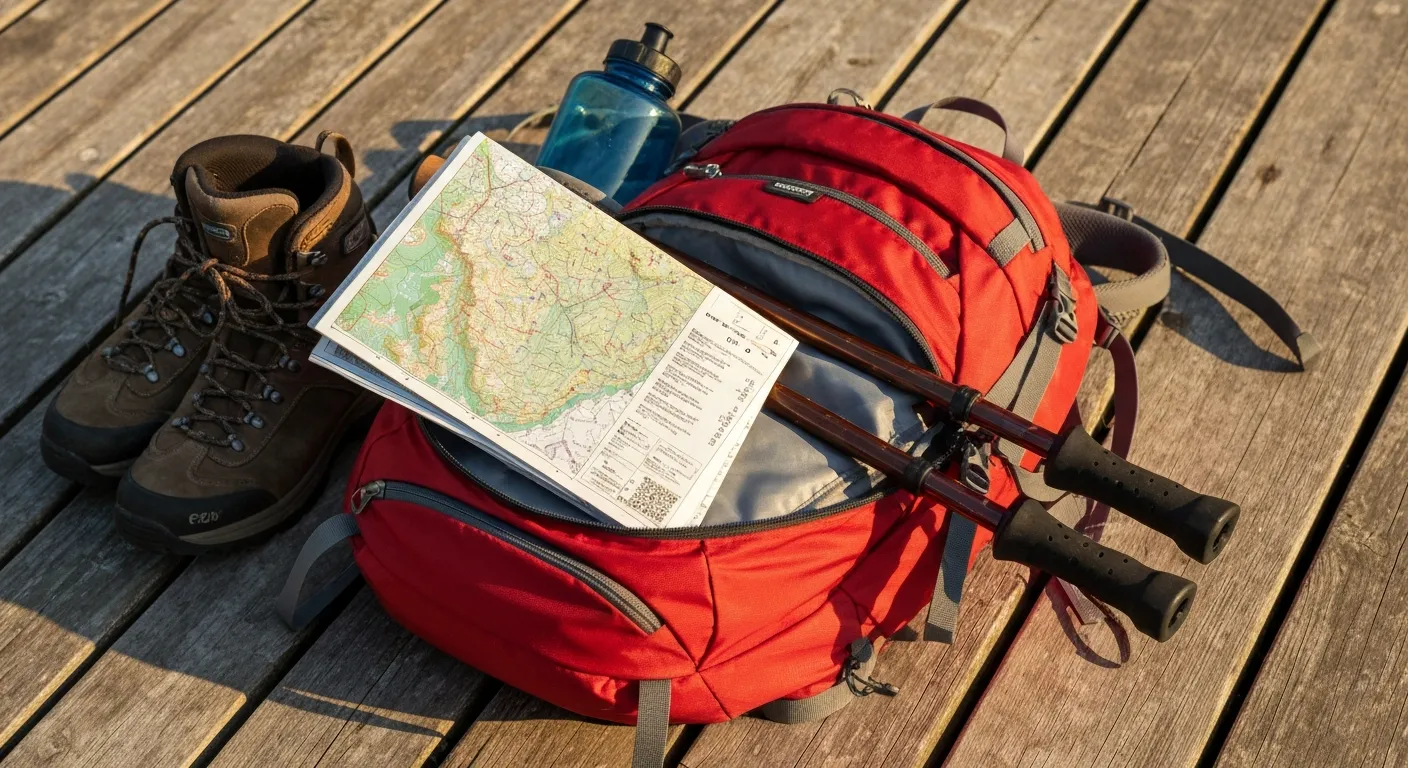
- Paper topographic map of the entire route
- Compass (baseplate, declination adjustable)
- GPS device or phone with offline maps downloaded (Gaia GPS, Maps.me)
- Personal locator beacon (PLB) or satellite communicator (Garmin inReach) for remote routes
- First aid kit: blister care, bandages, pain relief, antihistamine, SAM splint, emergency whistle
- Emergency bivouac bag (reflects body heat; weighs 100g)
- Headlamp with spare batteries (or rechargeable + solar charger)
- Fire starting: lighter + waterproof matches + firestarter
Food and Water
- Water treatment: Filter (Sawyer Squeeze or Katadyn BeFree) + chemical backup (iodine/chlorine tablets)
- Water containers: 2–3 liters minimum capacity between resupply points
- Stove system: Canister stove (MSR PocketRocket) for most treks; alcohol or wood-burning for ultralight
- Cooking pot: 700–900ml titanium or aluminum pot
- Nutrition: 2,800–4,000 kcal/day depending on intensity. Mix of freeze-dried meals, bars, nuts, dried fruit, jerky
The 10 Essentials (Never Leave These Behind)
- Navigation tools (map + compass)
- Sun protection (sunscreen SPF50+ + sunglasses)
- Insulation (extra layers beyond what you’re wearing)
- Illumination (headlamp)
- First aid supplies
- Fire starting tools
- Repair tools and knife
- Nutrition (emergency food beyond planned meals)
- Hydration system
- Emergency shelter
Weight Targets by Pack Category
| System | Budget Target | Ultralight Target |
|---|---|---|
| Big Three (pack+shelter+sleep) | 5–7 kg | 2–3 kg |
| Clothing | 2–3 kg | 1–1.5 kg |
| Kitchen | 1–1.5 kg | 400–600g |
| Safety/Nav | 800g–1.2 kg | 600–800g |
| Base weight total | ~10 kg | ~5 kg |
The perfect packing list doesn’t exist — it evolves with experience, route conditions, and personal preference. Every unnecessary gram left at home is a gift to your knees and lungs on day 3. Every essential item carried is insurance for when things don’t go as planned. Find your balance, and adjust with every trek.
Explore More
Related tools: Pace Calculator
Recommended reading: How to Choose Trekking Boots | Map Reading Guide
Weigh everything before packing. Most beginners carry 5-8kg of gear they never use on trail. A simple rule: if you did not use an item on your last 3 treks, it stays home next time. Target a base weight (everything except food and water) of under 7kg for most routes.
Weight Management: The Difference Between a Heavy Pack and a Miserable Trip
Pack weight is the variable that most determines whether a multi-day trek is enjoyable or an ordeal. Research on hiking performance consistently shows that load above 20% of bodyweight significantly increases energy expenditure, reduces gait efficiency, and accelerates the onset of fatigue-related injury. For a 75kg person, this means a pack above 15kg begins meaningfully degrading performance.
The practical target for most multi-day treks is a base weight (pack without consumables: food, water, fuel) of 7-10kg. Including 1-2 days of food and a full water bottle, most hikers should be carrying 9-12kg for a typical day on a point-to-point route with hut accommodation. Trekkers carrying camping equipment will typically add 2-3kg for tent, sleeping bag, and cooking system.
The three categories that drive pack weight: Shelter system (tent vs bivvy vs hut), sleeping system (bag weight rating), and water treatment method (filter vs tablets vs relying on hut supply). Optimizing these three categories alone accounts for 80% of the weight difference between a 8kg and a 14kg base weight. Clothing and equipment accessories rarely offer the weight savings that beginner gear-optimizers expect — a 200g lighter headlamp saves 200g; a 500g lighter sleeping bag saves 500g while costing substantially more.
The counterintuitive rule: investing in lighter core gear (pack, shelter, sleep system) is more cost-effective per gram saved than buying lightweight versions of every individual accessory. A single high-quality lightweight sleeping bag purchase saves more weight and lasts longer than buying lightweight versions of 10 smaller items.
📚 See also:
- bushcraft skills for self-sufficiency — Bushcraft Skills Guide
- fastpacking for lightweight multi-day trips — Fastpacking Guide
Check Deuter Backpacks on Amazon →
Browse Lightweight Sleeping Bags on Amazon →
Food Strategy: Eating Well on Multi-Day Trails
Food planning for multi-day trekking is a balancing act between calorie density, weight, palatability, and nutritional completeness. The average multi-day trekker burns 400-600 calories per hour on trail, requiring 3,000-4,500 calories per day of full activity. Carrying enough food without breaking your back requires a systematic approach.
The calorie-per-gram metric is your primary tool. Target 100+ calories per 100g of food weight. This naturally leads you to: nuts and nut butter (580-600 cal/100g), chocolate (530 cal/100g), hard cheese (400 cal/100g), salami/jerky (300-400 cal/100g), and dense crackers (400-450 cal/100g). Fresh fruits and vegetables fail this test (mostly water weight) — save them for town stops.
The Three-Meal Framework
- Breakfast: Fast-cook oats with powdered milk and nuts. High carbohydrates for morning energy. Preparation time: 10 minutes. Weight: 120-150g per serving.
- Trail lunch: No cooking. Hard cheese, crackers, salami, dates, nut butter. Eat continuously in small amounts rather than one large midday stop.
- Dinner: Freeze-dried meals (Mountain House, Backpacker’s Pantry) or instant noodles with added salami and olive oil. Aim for 700-900 calories. Prioritize protein for overnight muscle recovery.
Carry a 200ml bottle of olive oil. It adds 180 calories per tablespoon and transforms bland trail food without adding significant weight. Drizzle on freeze-dried meals, crackers, or noodles. Experienced backpackers consider this the single highest-value food item per gram.
Frequently Asked Questions
How heavy should a multi-day trekking pack be?
Target total pack weight (including food and water) at 20-25% of your body weight maximum. For a 70kg person, that is 14-17kg. Base weight (everything except consumables) should be under 7kg for comfortable multi-day trekking. Over 25% of body weight causes significant joint stress on downhill sections.
Do I need trekking poles for a multi-day hike?
For routes with elevation gain over 500m per day or loaded packs over 10kg, trekking poles are highly recommended. They reduce knee stress on descents by 25-30%, improve balance on stream crossings, and assist uphill rhythm. Most experienced multi-day trekkers consider them essential rather than optional.
What is the most important piece of multi-day trekking gear?
Your footwear. A failed boot ruins any trip regardless of how good your other gear is. Invest in quality, well-fitted, broken-in trekking boots before anything else. The second most critical item is your sleep system — poor sleep ruins your energy and judgment on subsequent days.