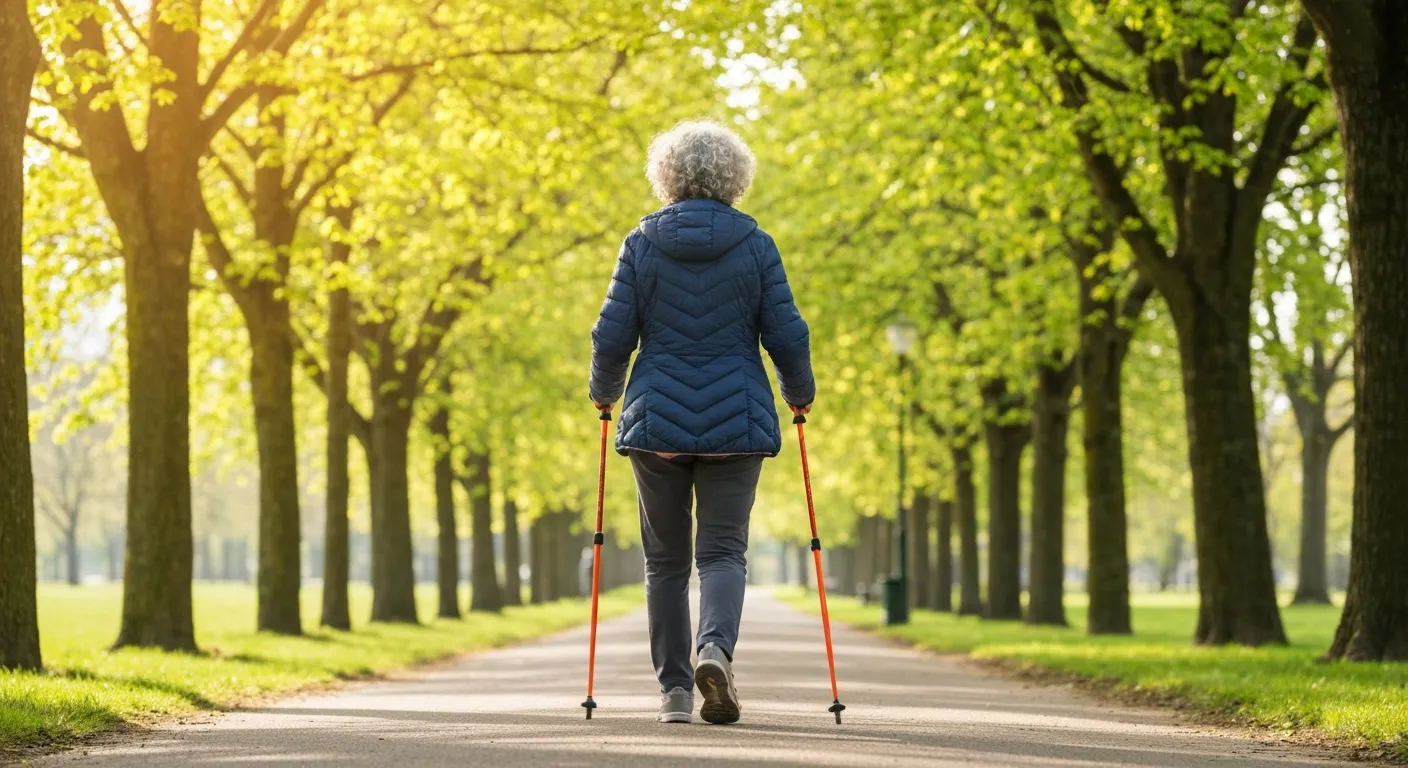
Nordic Walking with Arthritis: Benefits, Precautions and Getting Started
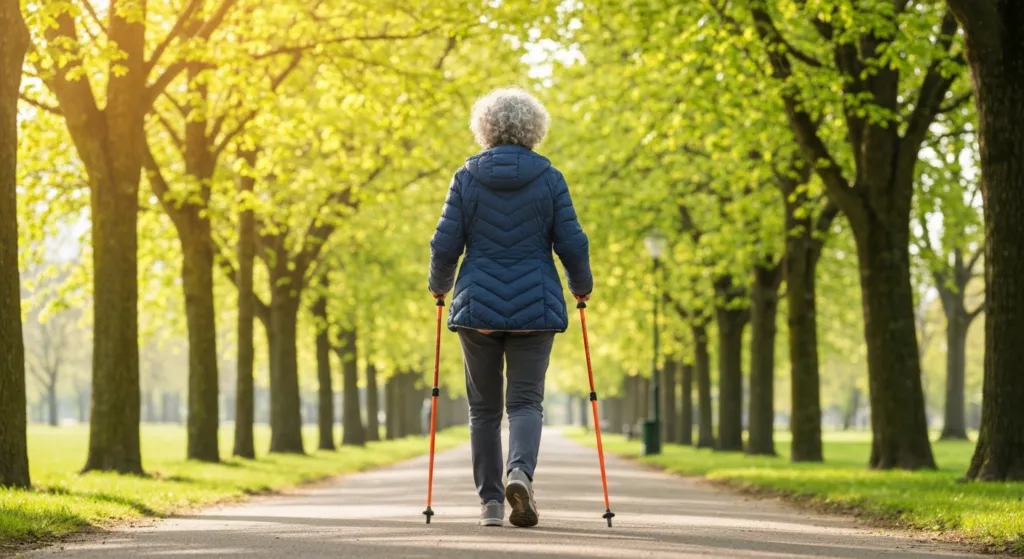
Arthritis affects over 350 million people worldwide, and one of the most consistent recommendations from rheumatologists is low-impact exercise. Nordic walking has emerged as one of the most effective and accessible options — reducing pain, improving joint function, and enhancing overall quality of life.
Key Takeaways
Nordic walking is one of the most effective low-impact exercises for the 350+ million people with arthritis, cutting joint loading by 20 to 30 percent versus regular walking while easing pain and stiffness.
- Joint offloading: ground-reaction-force studies show 20-30% less joint loading than normal walking.
- Inflammation: regular moderate aerobic exercise lowers systemic markers such as CRP, IL-6 and TNF.
- Start gently: begin with 10-15 minute sessions, adding 5 minutes per week.
- Best-suited types: osteoarthritis, rheumatoid and psoriatic arthritis with tailored modifications.
- Footwear: replace walking shoes every 500-700 km regardless of visible wear.
Why Movement Helps Arthritis
Pros
- Poles reduce joint load by 20-30% vs walking without poles
- Synovial fluid circulation reduces stiffness
- Gentle aerobic conditioning reduces systemic inflammation
- Works on good days and mild flare days
- Medically endorsed by rheumatology guidelines
- Strengthens stabilizing muscles around affected joints
Cons
- High-intensity sessions may worsen active flares
- Cold weather can increase joint stiffness
- Improper technique may stress wrists (consult physio)
- Effect timeline is 4-8 weeks minimum for noticeable benefit
The instinct to protect painful joints by avoiding movement is understandable but counterproductive. Cartilage receives its nutrients not from blood vessels (it has none) but from synovial fluid — and this fluid only circulates through movement. Regular gentle exercise lubricates joints, strengthens the muscles around them, and reduces inflammation through multiple biochemical pathways.
What Research Shows
Multiple clinical studies have examined Nordic walking specifically for arthritis patients:
- A 2019 study in Arthritis Care & Research found that 12 weeks of Nordic walking significantly reduced knee pain scores in osteoarthritis patients compared to a control group
- Research on rheumatoid arthritis patients showed improved hand grip strength and reduced morning stiffness duration after 8 weeks of Nordic walking
- Hip arthritis studies demonstrate reduced loading on the hip joint by 12–24% when using properly fitted poles
How Poles Protect Your Joints
The mechanics are straightforward: when you plant a pole and push, you transfer a portion of your body weight through the poles and into the ground, bypassing your knees, hips, and ankles. Studies measuring ground reaction forces confirm a 20–30% reduction in joint loading during Nordic walking compared to regular walking at the same pace.
This means you can walk faster, farther, and on more varied terrain than you could without poles — without increasing joint stress.
Which Types of Arthritis Benefit Most
Osteoarthritis (OA)
Most studied and most benefited. OA of the knee and hip responds particularly well. Nordic walking maintains cartilage health, strengthens stabilizing muscles, and reduces pain through improved blood flow and endorphin release.
Rheumatoid Arthritis (RA)
Walking during remission periods is safe and beneficial. During flares, reduce intensity or rest. The systemic anti-inflammatory effects of aerobic exercise can actually reduce RA disease activity over time. Important: always follow your rheumatologist’s current activity recommendations.
Psoriatic Arthritis
Similar guidance as RA — moderate aerobic exercise reduces systemic inflammation and improves functional capacity. Poles help protect affected joints during flares.
Getting Started: Precautions and Adaptations
- Consult first: Discuss with your rheumatologist or physiotherapist before starting. Some joint conditions require specific exercise modifications
- Start shorter: Begin with 10–15 minute sessions and increase by 5 minutes per week. More is not better when joints are adapting
- Choose terrain wisely: Flat, even surfaces are ideal initially. Avoid very hard concrete if possible — grass paths and packed earth are gentler
- Choose shoes carefully: Cushioned, supportive footwear is essential. Replace walking shoes every 500–700 km regardless of visible wear
- Listen to your joints: Mild muscle soreness after exercise is normal. Joint pain during exercise is a signal to stop and rest
Pole Setup for Arthritis Walkers
Grip style matters enormously for people with hand or wrist arthritis. Look for:
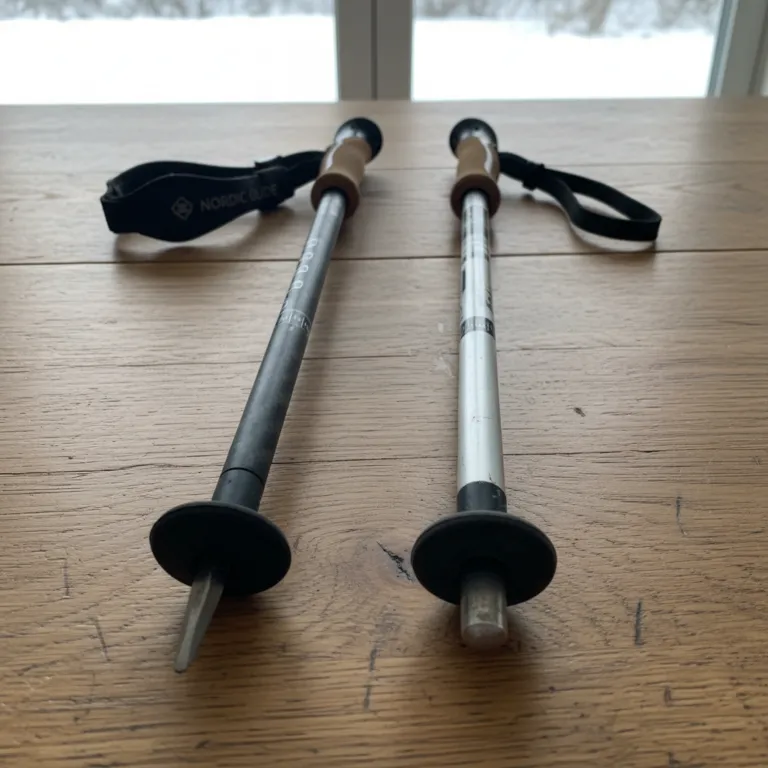
- Ergonomic grips: Angled slightly to reduce wrist extension strain
- Glove-strap systems: Allow you to push with the strap rather than gripping tightly with the hand
- Shock-absorbing poles: Some models include internal springs that reduce vibration transmitted to hands and wrists
- Soft rubber tips: For urban surfaces — reduce jarring impact up the pole shaft
Managing Flares: When to Walk and When to Rest
During an acute arthritis flare — characterized by significant swelling, warmth, and severe pain — rest the affected joints. Light range-of-motion exercises in water (pool walking) may be tolerated. Return to Nordic walking as symptoms subside, starting at reduced intensity.
The goal is consistent, moderate activity over months and years — not heroic efforts on good days followed by forced rest on bad ones.
Many people with arthritis report that regular Nordic walking not only reduces their pain but restores a sense of capability and independence that the condition had taken away. The combination of physical and psychological benefit makes it one of the most valuable interventions available for managing arthritis long-term.
Explore More
Related tools: Pole Length Calculator | Walking Style Quiz
Recommended reading: Nordic Walking for Seniors | Post-Surgery Recovery Guide
On days with mild arthritis flare, reduce session length by 50% but do not skip entirely. Light movement pumps synovial fluid through the joint, which reduces inflammation faster than complete rest. Use the “talk test” — if you cannot hold a conversation, you are pushing too hard.
Shop Ergonomic Poles for Arthritis on Amazon →
Recommended Gear for Walking with Arthritis
LEKI Micro Flash Carbon — Ergonomic Cork Grip →
Black Diamond Trail Ergo — Comfortable Cork Handle →
Currex RunPro Insoles — Arch Support →
Compression Gloves for Arthritis →
📚 See also:
- fibromyalgia and chronic pain protocols — Nordic Walking for Fibromyalgia
References & Scientific Sources
All claims about Arthritis & Joint Health on this page are supported by peer-reviewed clinical research. Below are the primary sources cited:
- Tschentscher M, Niederseer D, Niebauer J. (2013). Health benefits of Nordic walking: a systematic review. Am J Prev Med. [PubMed]
- Fransen M, McConnell S, Harmer AR, et al. (2015). Exercise for osteoarthritis of the knee: a Cochrane systematic review. Br J Sports Med. [PubMed]
- Knapik A, Brzęk A, Famuła-Wąż A, et al. (2019). The Influence of Nordic Walking on Quality of Life in Persons with Knee Osteoarthritis. Med Sci Monit. [PubMed]
Citations follow APA-style format. Full-text access varies by source. This article is for informational purposes only and does not replace medical advice — consult your healthcare provider before starting any exercise program for Arthritis & Joint Health.
The Role of Nordic Walking in Anti-Inflammatory Management
Arthritis is, at its core, an inflammatory condition. The relationship between exercise and inflammation is well-established: regular moderate aerobic exercise reduces systemic inflammatory markers (CRP, IL-6, TNF-alpha) by 20-40% over 8-12 weeks. Nordic walking delivers this anti-inflammatory benefit through the same mechanisms as any aerobic exercise — with the advantage that the lower joint load allows people with arthritis to maintain consistency when higher-impact exercise would trigger flares.
A 2019 meta-analysis examining exercise interventions for knee OA found that aerobic exercise was among the most effective interventions for pain reduction — more effective than many pharmacological approaches for functional outcomes. Nordic walking specifically was highlighted as a preferred modality due to its pole-assisted load reduction.
Adapting Technique for Arthritic Hands
People with rheumatoid arthritis affecting the hands and wrists need to modify Nordic walking technique to avoid grip-related flares. Recommendations:
- Use glove-style strap systems — these minimize required grip strength by transferring force to the wrist and forearm
- Choose poles with ergonomic cork or foam grips rather than hard rubber
- On flare days, reduce session length and avoid technical terrain that requires tight grip for control
- Wrist braces worn under gloves can provide additional support during learning phases
Your rheumatologist or occupational therapist can advise on specific modifications for your hand involvement. Most people with hand-affected RA find they can safely Nordic walk with appropriate technique modifications.
Frequently Asked Questions
Is Nordic walking safe for severe arthritis?
Consult your rheumatologist or physiotherapist before starting if you have severe OA or RA with significant joint damage. For most people with moderate arthritis, Nordic walking is not only safe but recommended. Start with 15-20 minute sessions and monitor joint response for 24-48 hours before progressing.
How long before I see joint pain improvement?
Most people with arthritis notice reduced morning stiffness within 3-4 weeks of consistent Nordic walking (3+ sessions per week). Measurable pain reduction on validated scales typically appears at 6-8 weeks. Cartilage and structural changes require 3-6 months of consistent activity.
Should I push through arthritis flare-ups?
Mild flares (increased stiffness without acute pain): reduce intensity and duration but continue light activity. Moderate flares (moderate pain + swelling): rest for 1-2 days, then resume at 50% volume. Severe flares (significant swelling, heat, severe pain): full rest and contact your doctor — do not walk through severe inflammation.